Introduction
The Fournoi island group, located in the eastern Aegean between Ikaria and Samos, occupies a maritime landscape shaped by narrow passages, rocky coastlines, and numerous small islands. Its location made the surrounding waters relevant to sailors navigating between the northern and southern Aegean.
During the medieval and early modern periods, the eastern Mediterranean experienced intense competition between maritime powers. Venice developed an extensive network of commercial routes and fortified possessions, while Ottoman expansion gradually transformed political control across the region.
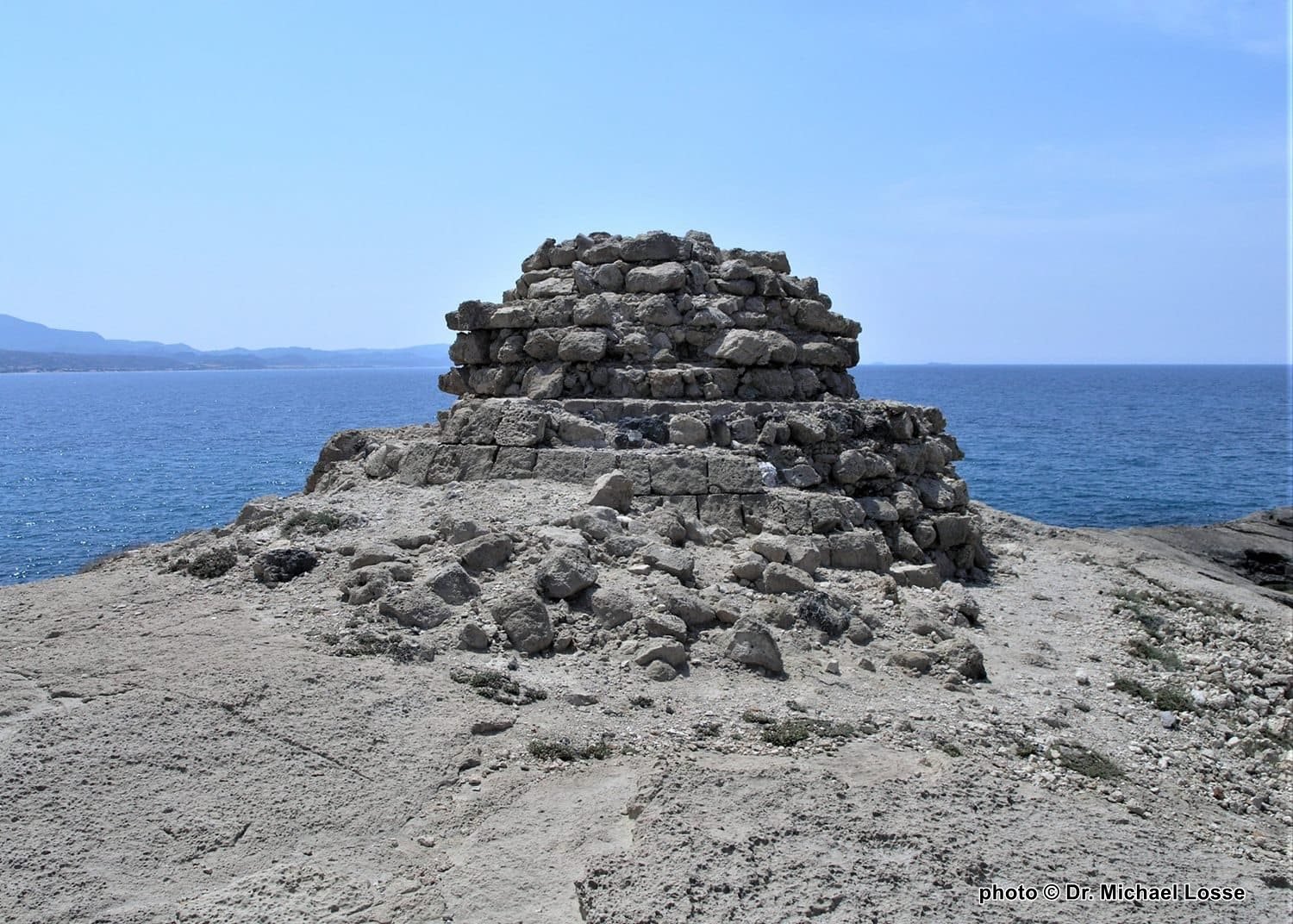
The possibility of Venetian watchtowers on or near the Fournoi islets raises questions about coastal defense, maritime surveillance, and regional control. However, individual structures must be securely dated before they can be identified as Venetian installations.
Fournoi and Its Strategic Position
Fournoi consists of several islands and numerous smaller rocky formations. Its surrounding waters contain sheltered bays and passages that could provide useful stopping points for vessels.
The island group's location between larger Aegean islands made it part of a broader maritime corridor. Ships traveling between Samos, Ikaria, Chios, and other destinations could pass through its surrounding waters.
Such geography was important in periods when maritime travel depended heavily on local knowledge of winds, currents, anchorages, and safe passages.
Venetian Maritime Power
The Republic of Venice developed one of the Mediterranean's most influential maritime networks. Its commercial interests depended on secure sea routes, overseas trading centers, naval bases, and diplomatic relationships.
Venetian power in the Aegean expanded and contracted through warfare, treaties, and competition with other states. Islands and coastal fortifications could provide strategic advantages by supporting navigation, protecting shipping, and monitoring maritime movement.
Venetian influence was not uniform across the eastern Aegean. Some locations were directly controlled, others were connected through commercial relationships, and many remained under different political authorities.
Consequently, the presence of a medieval or early modern tower in the Fournoi area would not by itself prove Venetian ownership.
The Purpose of Maritime Watchtowers
Watchtowers were used in many Mediterranean coastal defense systems. Their principal function was to observe approaching vessels, monitor movement along the coastline, and communicate warnings to nearby settlements or fortified centers.
A tower positioned on an elevated point could provide a wide field of view. Depending on the local system, signals might be transmitted through fires, smoke, flags, or other visible methods.
Some towers also served as refuges or defensive positions. Their design reflected the threats faced by the community and the resources available for construction.
Identifying Venetian Architecture
A tower's historical identity cannot be determined solely by its appearance. Cylindrical, square, and rectangular defensive structures were built across the Mediterranean by different communities and during different periods.
Researchers examine masonry techniques, mortar composition, architectural details, construction phases, and associated archaeological materials.
Inscriptions, heraldic symbols, and archival records can provide especially valuable evidence of political ownership or construction dates.
A tower may also have been modified several times, meaning that its earliest foundations and later upper sections could belong to different historical periods.
The Fournoi Coastline as a Surveillance Landscape
The geography of Fournoi offers several elevated locations from which maritime activity could be observed. Rocky promontories and hills overlooking sheltered bays would have been useful for surveillance.
However, a location with a good view is not automatically evidence of a historical watchtower. Archaeological investigation must establish whether surviving stone structures were deliberately constructed for observation or defense.
The relationship between a suspected tower and nearby settlements, landing places, and other fortified sites would also be important.
A coordinated system of towers would be more convincing if their locations allowed visual communication across the surrounding maritime landscape.
Archaeological and Historical Evidence
Investigating a possible Venetian watchtower requires combining architectural survey with historical research.
Archaeologists may examine masonry, foundations, building materials, and nearby surface pottery. Researchers can compare these features with securely dated towers elsewhere in the Aegean.
Historical documents may contain references to coastal defenses, naval activity, or territorial administration. Venetian and Ottoman records could provide useful context, although references to a region do not necessarily identify a particular surviving structure.
The strongest conclusions emerge when documentary evidence and physical remains support one another.
Preservation of Coastal Fortifications
Small coastal structures are vulnerable to wind erosion, salt exposure, vegetation, earthquakes, and unauthorized stone removal.
Their remote locations can make regular monitoring difficult. Some may also be mistaken for abandoned agricultural buildings or ordinary ruins.
Recording their dimensions, construction techniques, and surrounding landscape can help preserve information even when the structures are severely damaged.
Digital photography and three-dimensional modeling are useful tools for documenting fragile remains without extensive physical intervention.
Conclusion
The idea of Venetian watchtowers off the Fournoi islets provides an interesting framework for exploring maritime surveillance and political competition in the eastern Aegean. The island group's strategic geography makes it reasonable to investigate its role in historical coastal defense networks.
Nevertheless, specific towers should not be described as Venetian without reliable dating, architectural analysis, or documentary support. The broader history of Mediterranean watchtowers demonstrates how small coastal structures could contribute to the security of maritime communities and the monitoring of important sea routes.