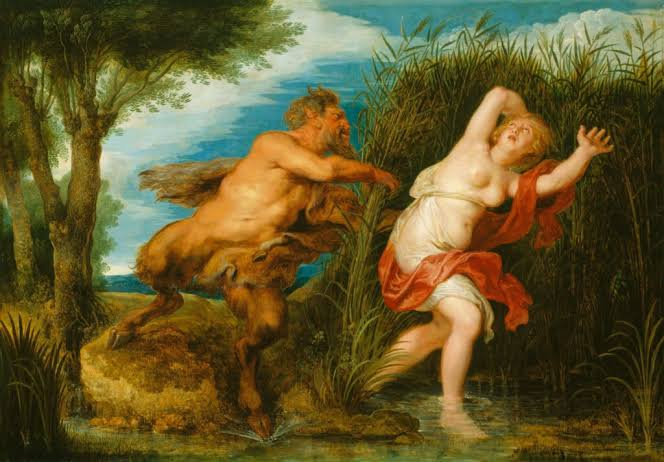
Pan was an ancient Greek deity associated with wild landscapes, shepherds, flocks, caves, and rustic music. Arcadia, particularly its mountainous and wooded areas, became closely associated with the god in ancient literature and religious imagination.
Pan’s connection with shepherds made the sounds of the countryside important to his mythology. His panpipes, traditionally described as being made from reeds, became a symbol of pastoral music. Ancient stories also associated the god with sudden fear, a concept later expressed through the word “panic.”
The Menalon mountain range provides an appropriate setting for studying the relationship between Pan and Arcadian landscapes. Its forests, pastures, and rural settlements reflect the environmental conditions that supported pastoral life. Ancient worship of Pan was connected with caves, rural sanctuaries, and places outside the central civic spaces of Greek cities.
The phrase “goat calls” may refer to the sounds of herds, shepherding practices, or folklore inspired by Pan’s association with animals. However, it should not be treated as proof of a formal ritual in which villagers imitated goat calls as a religious ceremony. Such a practice would require specific ethnographic documentation.
A study of Pan in Arcadia could combine ancient literary sources, archaeological evidence, landscape studies, and local oral traditions. It would examine how the god represented the uncertain boundary between human society and the natural world.
Pan’s enduring significance lies in his connection with pastoral life, music, wilderness, and the emotional power of unfamiliar sounds in remote landscapes.