Introduction and Historical Background
Coinage was an important part of ancient economic and political life. Coins facilitated exchange, supported taxation and military payments, and communicated the authority of issuing states through images and inscriptions.
Epirus, in northwestern Greece, developed a distinctive political and cultural history. Its communities included different tribal groups and political centers, and its rulers participated in the wider economic and diplomatic systems of the Greek world.
Lefkada, located in the Ionian Sea, was connected to the western Greek mainland and the maritime routes of the Ionian region. The proposed study of Epirote coin dies from a Lefkada extension raises questions about monetary production, political influence, and the circulation of minting technology. The phrase Lefkada extension requires clarification because it may refer to a particular archaeological excavation, geographic area, or proposed expansion of a research site.
Coinage in Ancient Epirus
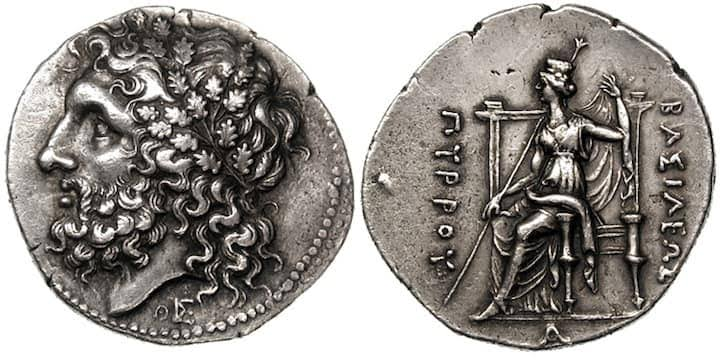
Ancient coinage served both practical and political purposes. Coins carried images and inscriptions that identified the issuing authority and communicated messages about rulers, communities, and religious traditions.
Epirote coinage developed within the broader Greek monetary system. Its designs could include deities, animals, symbols, and portraits associated with political authority.
The study of Epirote coins can contribute to understanding regional economic activity, political organization, and cultural relationships with neighboring communities.
Coin Dies and Minting Technology
Coin dies were engraved tools used to produce the designs on coins. In many ancient minting systems, a blank metal piece was placed between two dies and struck with a hammer.
One die was generally fixed, while the other was used to impress the design. The resulting coin carried images and inscriptions that had been engraved into the dies.
Dies required considerable skill because the engraver had to produce a design that would transfer clearly onto a small metal surface. Their production involved metalworking, engraving, and knowledge of the striking process.
The Archaeological Importance of Coin Dies
Coin dies are especially valuable archaeological objects because they provide direct evidence of minting activity. Their engraved designs can be compared with surviving coins to identify possible connections between a die and a particular issue.
A die found in a secure minting context may help identify the location of coin production. However, dies could also be transported, reused, or removed from their original workshops.
A die recovered without secure archaeological context should not automatically be assigned to the nearest ancient mint.
Epirus and Lefkada
The relationship between Epirus and Lefkada requires careful historical examination. Lefkada was part of the wider western Greek world and had connections with neighboring regions through political, commercial, and maritime activity.
The presence of an Epirote coin or coin die on Lefkada could reflect trade, political influence, military movement, or the relocation of minting equipment.
The discovery of an actual coin die would be particularly significant because it might indicate a direct relationship with coin production. Nevertheless, its origin would need to be confirmed through inscription, iconography, metal composition, and comparison with documented Epirote coinage.
Minting Workshops and Production Organization
Ancient mints required access to metal, tools, skilled engravers, and a system for distributing finished coins.
Production could be organized under the authority of a city, ruler, or political institution. The minting process also required control over the weight and quality of the metal used.
Archaeological evidence of minting workshops may include coin blanks, metalworking debris, furnaces, molds, tools, and unfinished objects. The presence of such materials can strengthen the identification of a production site.
Scientific and Numismatic Analysis
Numismatic analysis examines the weight, dimensions, inscriptions, imagery, and metal composition of coins and related objects.
For a proposed coin die, researchers should document the engraved design, dimensions, surface condition, and manufacturing traces. Comparisons with known coins may help identify the issuing authority and chronological period.
Elemental analysis can contribute to the study of metal composition, although it cannot independently establish the geographical origin of an object.
Conclusion
The proposed study of Epirote coin dies from a Lefkada extension offers a framework for examining ancient minting, regional political relationships, and the circulation of monetary technology.
The identification of specific Epirote dies requires clarification of the recovery location and comparison with securely documented numismatic evidence. If confirmed, such finds could contribute to understanding the economic and political connections between Epirus and the Ionian region.