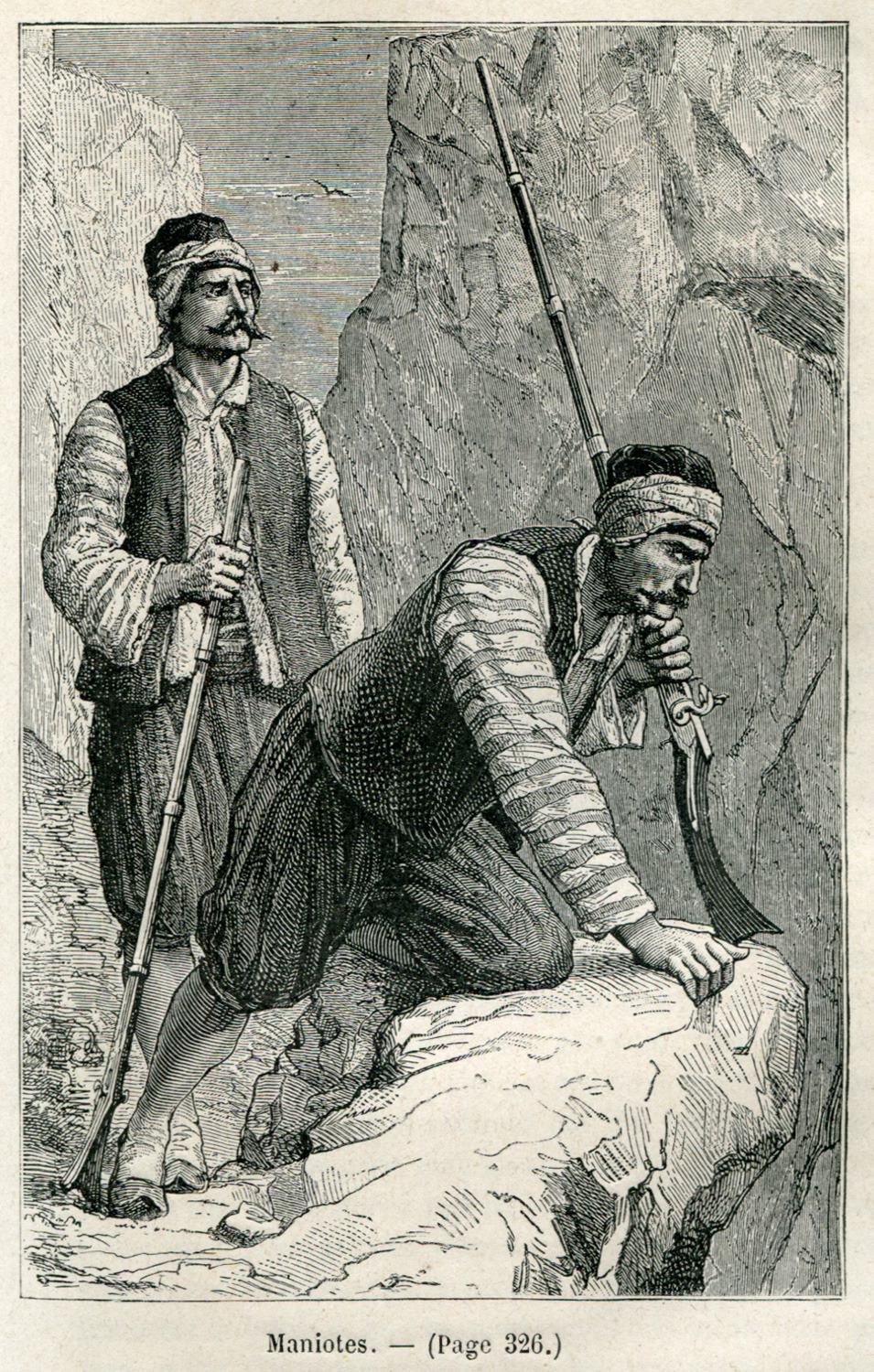
The Mani region of southern Peloponnese is historically associated with fortified tower houses, strong kinship networks, and traditions of family honor. Its rugged landscape and complex political history contributed to the development of distinctive local social structures.
Blood feuds, or cycles of retaliatory violence between families, appear in accounts of Maniot history and folklore. Such conflicts were connected to disputes over honor, property, marriage, political influence, and perceived injuries. Tower houses became important symbols of family strength and security, while also serving practical defensive functions in periods of instability.
Folk tales about feuds often preserve memories of conflict, but they should not be treated as straightforward historical records. Stories may exaggerate acts of bravery, simplify complicated disputes, or present events from the perspective of one family. Oral narratives can also transform historical violence into moral lessons about loyalty, pride, revenge, and reconciliation.
The tower landscape is central to these stories. A fortified residence could represent both protection and social authority. Its height, defensive openings, and relationship to neighboring buildings reflected the importance of family security in a region where local rivalries could become prolonged.
A historical examination of Maniot feuds should compare oral narratives with archival documents, family genealogies, travel accounts, legal records, and architectural evidence. It should also avoid romanticizing violence. Although folk tales may portray feuding families as defenders of honor, actual conflicts could cause lasting harm to individuals and entire communities.
The subject is significant because it reveals how architecture, kinship, memory, and local ideas of justice became intertwined in Maniot society.