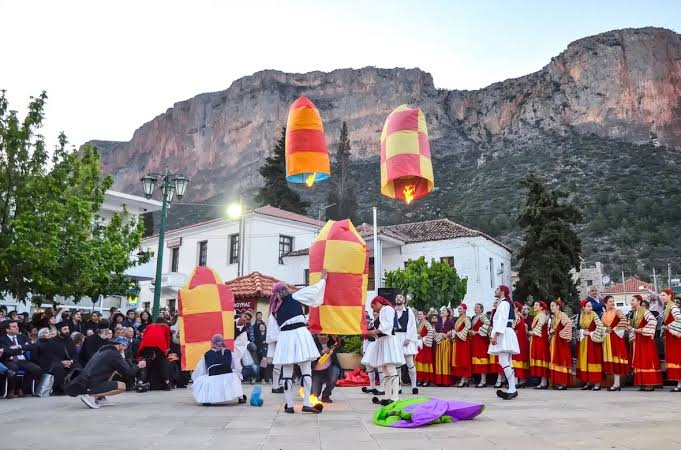
The Tsakonians of the southeastern Peloponnese are known for a distinctive linguistic and cultural heritage. Their traditional communities are associated with the area around Mount Parnon and settlements near Leonidio. Tsakonian, a variety with a distinctive historical development from ancient Greek, has been an important marker of local identity.
Harvest work provided opportunities for collective singing. Agricultural tasks often involved groups of people working in coordinated routines, and songs could help regulate rhythm, reduce the monotony of repetitive labor, and strengthen cooperation. Chants might also carry humor, praise, local knowledge, or references to family and village life.
In the Leonidio region, agricultural life has been shaped by the surrounding terrain, including valleys, slopes, and cultivated land. The seasonal calendar influenced the timing of work and community gatherings. Songs associated with harvesting would have been part of this wider relationship between labor, landscape, and social life.
A careful study should distinguish Tsakonian-language songs from Greek-language songs performed in Tsakonian communities. Language, melody, and performance context may overlap, but they are not necessarily identical. Researchers should also avoid assuming that all harvest songs were ancient survivals. Many oral traditions change as communities adopt new instruments, migrate, or shift from agricultural work to other occupations.
The proposed harvest chants near Leonidio could be investigated through local song collections, recordings, interviews with older residents, and comparisons with documented Tsakonian oral poetry. Their value would lie in showing how language and music helped maintain local identity during periods of social change.