Introduction and Historical Background
Signal towers were important components of communication and defense systems in many ancient and medieval societies. They allowed communities to transmit information across long distances through visible signals such as fire, smoke, flags, or other forms of communication.
Lemnos is an island in the northern Aegean Sea with a strategic geographical position. Its location near routes connecting the northern Aegean, the Hellespont, and the western coast of Asia Minor made it relevant to maritime movement and regional security.
The proposed study of Roman signal towers on Lemnos capes offers an opportunity to examine coastal surveillance, communication systems, and the military use of elevated landscapes. However, the identification of particular structures as Roman signal towers requires archaeological evidence. A tower on a headland could also have served as a watchtower, fortification, lighthouse-related structure, or another type of installation.
Roman Communication Systems
The Roman Empire required reliable communication across a large geographical area. Roads, relay stations, military installations, couriers, and maritime routes all contributed to the movement of information.
Visual signaling could supplement these systems, particularly in areas where elevated locations allowed messages to be transmitted over long distances.
The effectiveness of visual communication depended on visibility, weather conditions, distance, and the presence of other signaling points. A network of towers could potentially transmit warnings or information across a region more rapidly than a messenger traveling on foot.
However, the existence of a coordinated signaling network must be demonstrated through historical or archaeological evidence rather than inferred from the presence of isolated towers.
Coastal Surveillance and Strategic Geography
Headlands were useful locations for observation because they provided wide views of surrounding land and sea. A tower placed on an elevated coastal point could monitor maritime approaches and nearby settlements.
Lemnos's position in the northern Aegean makes the study of coastal surveillance relevant to research on Roman maritime activity. Researchers may investigate whether elevated structures were positioned to observe important routes, anchorages, or vulnerable coastal areas.
The visibility between towers is an important factor when reconstructing a possible signal network. Terrain models and viewshed analysis can help determine whether one location could communicate visually with another.
Architecture of Roman Towers
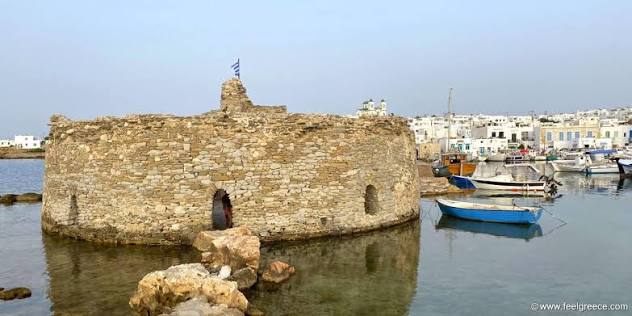
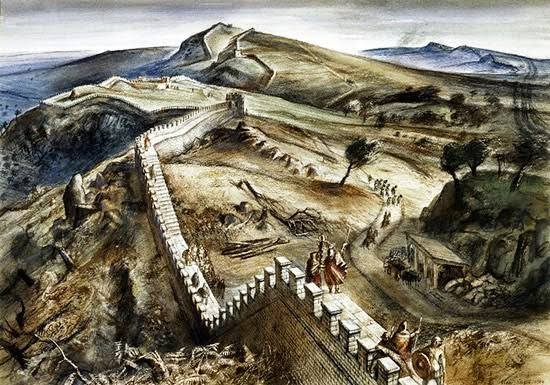
Roman towers varied in size, construction, and function. Some were integrated into defensive walls, while others were independent structures positioned along roads, frontiers, or coastal areas.
A tower's architectural features may include thick stone walls, narrow entrances, elevated floors, observation openings, and defensive elements. Its design depended on the purpose of the building and the local construction tradition.
The presence of a square or circular tower does not automatically establish a military function. Researchers must examine the structure's relationship to nearby settlements, roads, fortifications, and other archaeological remains.
Signaling Methods
Visual signaling could use fire, smoke, or other visible markers. The use of fire was particularly useful at night, while smoke could be visible during daylight under suitable conditions.
Different signaling methods may have communicated different types of information. A simple signal could warn of approaching danger, while a sequence of signals might convey more complex messages if a shared system existed.
The precise methods used at Roman towers on Lemnos cannot be established without historical documentation or strong comparative evidence.
Lemnos and the Roman Aegean
During the Roman period, the Aegean was an important area of commercial and military movement. Maritime routes connected islands, ports, administrative centers, and coastal settlements.
An island's strategic importance could influence the development of defensive structures and observation points. Towers may have supported local security, monitored maritime movement, or formed part of broader communication arrangements.
Research should distinguish between a structure built specifically for signaling and one that was primarily intended for observation or defense.
Archaeological Survey and Landscape Analysis
The identification of Roman signal towers requires detailed architectural survey and archaeological dating. Researchers should record the structure's dimensions, masonry techniques, building materials, entrances, and associated deposits.
Surface survey may identify pottery, coins, roof tiles, and other materials that help establish the period of occupation. Excavation may reveal construction phases and the relationship between the tower and nearby structures.
Geographic information systems and digital elevation models can help reconstruct visibility between possible tower locations. Such analysis can test whether a proposed network would have been operationally practical.
Conservation and Interpretation
Towers on exposed headlands are vulnerable to wind, erosion, vegetation, and human disturbance. Their remains may be difficult to preserve because of their exposed positions and the gradual collapse of masonry.
Conservation work should include architectural recording, structural assessment, and protection of the surrounding archaeological landscape.
Public interpretation should distinguish between confirmed Roman structures, later constructions, and hypothetical signaling networks. This is particularly important when evidence is incomplete.
Conclusion
The proposed study of Roman signal towers on Lemnos capes provides a framework for investigating coastal surveillance, military communication, and Roman strategic activity in the northern Aegean.
The identification of specific towers as Roman signaling installations requires secure dating, architectural analysis, and landscape-based research. When supported by reliable evidence, such structures could contribute to understanding how Roman communities monitored and communicated across maritime environments.