The Sarakatsani are historically associated with mobile pastoralism in mainland Greece. Their seasonal movement between grazing areas shaped their housing, clothing, household organization, and material culture. Portable shelters were practical responses to a way of life that required families to move with their herds.
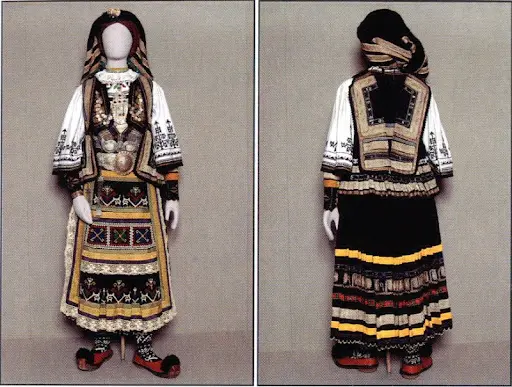
Textiles were essential to pastoral households. Woven materials could serve as clothing, blankets, coverings, bags, and other domestic objects. Their patterns and construction techniques reflected local resources, available equipment, practical needs, and inherited knowledge. Weaving was also a form of cultural expression, since designs could be repeated across generations and associated with particular communities or family traditions.
The reference to “Vikos tents” places the subject in the mountainous landscape of Epirus. The wider Pindus region has supported both Vlach and Sarakatsani pastoral traditions, although the two groups should not be treated as interchangeable. Ethnographic research emphasizes that they differ in linguistic and cultural identity, even where their pastoral practices and adaptations to mountain environments resemble one another.
A study of Sarakatsani weaving would examine the relationship between textile design and mobility. Researchers could document geometric patterns, colors, materials, loom structures, and the uses of woven objects in temporary shelters. Oral histories could help identify the names given to patterns and whether particular designs were associated with family identity, marriage, status, or regional affiliation.
It is important, however, not to assume that a single, fixed collection of patterns belonged exclusively to Sarakatsani tents in the Vikos area. Such a claim would require surviving textiles, dated photographs, museum records, or detailed field documentation. The broader significance of the subject lies in how textile traditions preserved knowledge and identity within a mobile pastoral society.