Introduction
The Amvrakikos Gulf, located in northwestern Greece, is one of the country's important coastal wetland environments. Connected to the Ionian Sea through a relatively narrow entrance, the gulf contains shallow waters, lagoons, estuaries, and extensive coastal habitats. Its sheltered geography and ecological diversity support numerous marine organisms, including fish, crustaceans, mollusks, and gelatinous plankton such as jellyfish.
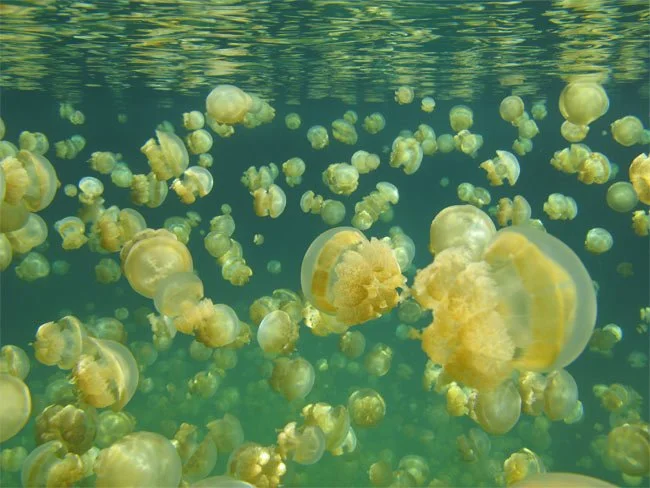
Jellyfish swarms can become particularly noticeable in enclosed or semi-enclosed coastal waters. Their appearance may be influenced by currents, temperature, salinity, food availability, and seasonal reproduction. Studying jellyfish aggregations in Amvrakikos Gulf can therefore reveal important relationships between marine ecology and environmental change.
The Geography of Amvrakikos Gulf
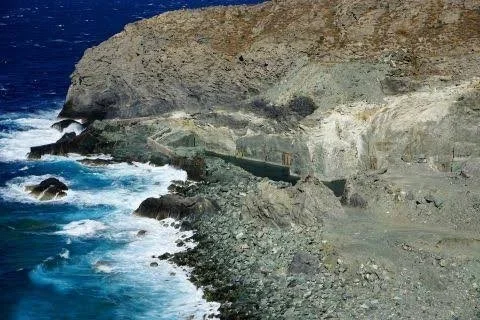
Amvrakikos Gulf is a large semi-enclosed marine basin in the region of Epirus. It is connected to the Ionian Sea through a narrow channel near Preveza and receives freshwater from rivers, including the Arachthos and Louros.
The surrounding landscape contains wetlands, lagoons, mudflats, and agricultural areas. These habitats create a complex environment where freshwater and seawater interact.
The restricted connection with the open sea influences water circulation. Some areas experience relatively slow water exchange, allowing organisms and nutrients to accumulate under favorable conditions.
These characteristics make the gulf an important location for studying plankton communities and the environmental factors that influence jellyfish populations.
Understanding Jellyfish
Jellyfish are gelatinous marine animals belonging to several groups within the broader phylum Cnidaria. They are not all members of one single biological class, although the term commonly refers to free-swimming medusae.
Their bodies are composed largely of water and contain specialized cells called cnidocytes. These cells are used for capturing prey and, in some species, defense.
Jellyfish feed on a variety of organisms, including zooplankton, small fish, fish eggs, and other gelatinous animals. They also serve as food for certain marine predators, including sea turtles and some fish species.
Their life cycles can include different stages. Many species alternate between a swimming medusa stage and a stationary polyp stage, although life cycles vary considerably among groups.
Why Jellyfish Form Swarms
Jellyfish aggregations may develop through a combination of biological and physical processes. Ocean currents can concentrate individuals in particular areas, while wind-driven surface circulation may move them toward sheltered coastlines.
Temperature and salinity also influence their distribution. Some species tolerate a wide range of conditions, while others prefer specific environmental ranges.
Food availability is another important factor. When plankton and other prey organisms become abundant, jellyfish may find favorable feeding conditions.
Reproduction can contribute to seasonal population increases. In species with a polyp stage, environmental changes may influence the release of young medusae into the water.
A large aggregation does not necessarily mean that the entire regional population has increased. It may simply indicate that currents have concentrated animals in one location.
Species Diversity in the Gulf
The Mediterranean Sea supports several jellyfish species, including moon jellyfish, mauve stingers, and barrel jellyfish. Their abundance varies according to geography, season, and environmental conditions.
Identifying the species responsible for a particular aggregation is essential. Different jellyfish have different ecological roles, feeding strategies, and potential effects on fisheries and tourism.
Researchers examine body shape, coloration, tentacle structure, reproductive organs, and other anatomical characteristics. Photographs and collected specimens can support identification, while genetic analysis may help distinguish closely related species.
Specific claims about recurring large swarms in Amvrakikos Gulf should be based on local monitoring records rather than general observations from the wider Mediterranean.
Environmental Conditions and Population Changes
Several environmental factors can influence jellyfish abundance.
Warmer water may affect growth, reproduction, and seasonal distribution. Changes in rainfall and river discharge can alter salinity, especially in coastal lagoons and estuaries.
Nutrient inputs from rivers and human activities may influence plankton productivity. In some circumstances, increased nutrient availability can support greater quantities of prey organisms, although the relationship between nutrients and jellyfish populations is complex.
Fishing pressure may also influence marine food webs. Changes in fish populations can affect competition and predation, potentially creating conditions that benefit some jellyfish species.
These factors do not operate independently. Jellyfish abundance often reflects several interacting ecological processes.
Jellyfish and Fisheries
Large jellyfish aggregations can affect fishing activities. Jellyfish may clog fishing nets, damage catches, and interfere with certain fishing operations.
Some species consume fish eggs and larvae, potentially influencing the early life stages of commercially important fish. Others compete with fish for zooplankton and other prey.
However, jellyfish are also natural components of marine ecosystems. Their presence does not automatically indicate ecological damage.
Fisheries research must consider species composition, abundance, timing, and interactions with other organisms before determining whether a jellyfish aggregation represents a significant problem.
Monitoring Jellyfish Populations
Marine researchers use several techniques to monitor jellyfish. Visual surveys from boats can document the number and distribution of visible animals.
Plankton nets help collect smaller organisms and early life stages. Underwater cameras and remotely operated equipment can provide additional observations.
Environmental monitoring stations record temperature, salinity, oxygen levels, and other conditions. These measurements can be compared with jellyfish observations to identify possible relationships.
Long-term monitoring is especially valuable because a single swarm may be a temporary event rather than evidence of a persistent population change.
Conservation and Ecological Importance
Amvrakikos Gulf is an important wetland and marine environment. Protecting its biodiversity requires attention to water quality, habitat degradation, fishing pressure, and coastal development.
Jellyfish research can contribute to broader environmental monitoring by revealing changes in plankton communities and water conditions.
Rather than treating jellyfish only as nuisances, scientists increasingly examine their ecological roles within marine food webs.
Conclusion
Jellyfish swarms in Amvrakikos Gulf provide an interesting subject for investigating marine population dynamics in a semi-enclosed Mediterranean environment. The gulf's sheltered geography, river inputs, lagoons, and changing water conditions create a complex ecosystem where gelatinous organisms can accumulate.
However, identifying the causes of any particular swarm requires local species surveys and environmental measurements. Currents, reproduction, temperature, salinity, and food availability may all contribute to aggregations.
Through long-term monitoring, researchers can better understand jellyfish populations and their relationships with fisheries, biodiversity, and environmental change in one of Greece's important coastal ecosystems.