Introduction
For centuries, the territories of modern Greece formed part of the Ottoman Empire's extensive commercial and transportation networks. Merchants, sailors, craftspeople, farmers, and officials moved goods across mountains, ports, islands, and inland markets.
The concept of VR Archives of Ottoman-Greek Trade Routes explores how virtual reality could reconstruct these historical networks and make them accessible to students, researchers, and the general public.
Rather than presenting trade routes as simple lines on a map, a virtual archive could allow visitors to experience the landscapes, marketplaces, ports, and transportation systems that connected communities during the Ottoman period.
Trade in Ottoman Greece
Ottoman-era Greece was connected to a broad commercial system.
Agricultural products, textiles, livestock, metals, timber, salt, and manufactured goods moved between villages, towns, and regional markets.
Some communities specialized in particular products or services.
Others became important transportation centers because of their location near mountain passes, rivers, harbors, or major roads.
Trade was shaped by geography, taxation, political authority, and access to maritime transportation.
Important Commercial Corridors
Several regions played significant roles in historical commerce.
Thessaloniki was an important port and commercial center.
Ioannina developed into a major inland center of trade and craftsmanship.
The Peloponnese contained agricultural and maritime networks connecting inland settlements with coastal ports.
The islands of the Aegean and Ionian Seas participated in maritime commerce extending beyond the Greek peninsula.
A digital archive could connect these places through historical maps and documented transportation routes.
What Is a Virtual Reality Archive?
A virtual reality archive is a digital environment that combines historical information with immersive visualization.
Users could explore reconstructed locations through a computer, VR headset, or other compatible device.
Instead of reading about a historical port, a visitor might enter a three-dimensional reconstruction showing its warehouses, ships, market stalls, and surrounding buildings.
Interactive elements could provide access to maps, documents, images, and historical explanations.
Reconstructing Historical Landscapes
Developing an accurate VR archive would require extensive historical research.
Researchers could use Ottoman administrative records, travel accounts, historical maps, archaeological evidence, architectural surveys, and merchant documents.
These sources could help reconstruct the appearance and function of important commercial locations.
Where evidence is incomplete, digital models should clearly identify which features are hypothetical.
A visually convincing reconstruction should never be mistaken for direct archaeological evidence.
Simulating Merchant Journeys
One possible feature would allow visitors to follow a historical merchant's journey.
A user might explore a route connecting an inland production village with a regional market and a coastal port.
The experience could explain transportation methods, travel conditions, tolls, market regulations, and the types of goods being exchanged.
Different routes could be compared to demonstrate how geography influenced commercial decisions.
These experiences would need to be based on documented historical patterns rather than invented personal stories presented as fact.
Mapping Maritime Trade
Maritime commerce was essential to the Ottoman economy.
Ports connected mainland settlements with islands and destinations across the Mediterranean.
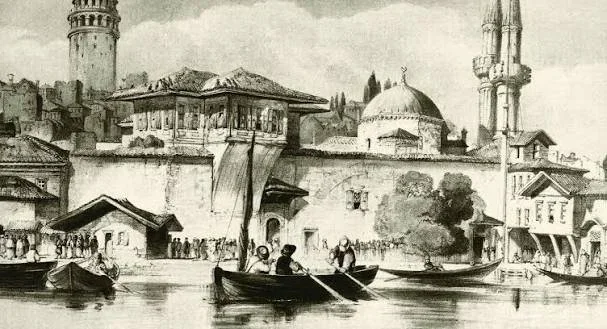
A VR environment could reconstruct historical harbors and display the movement of different types of vessels.
It could also explain the importance of winds, seasonal navigation, cargo handling, and maritime regulations.
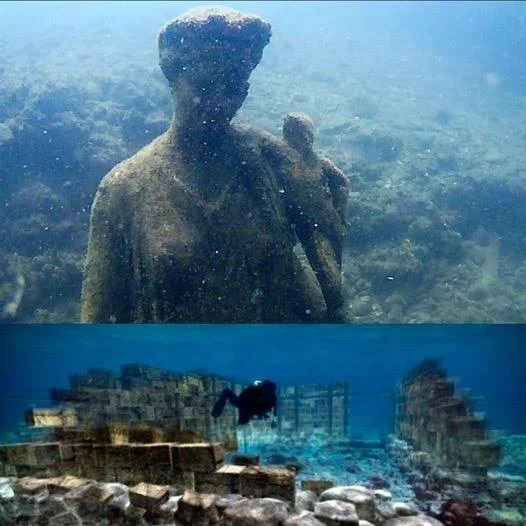
Shipwreck archaeology and surviving port structures could provide additional information.
Digitizing Ottoman Documents
Historical documents are among the most valuable resources for reconstructing trade.
Ottoman archival materials may include tax registers, customs records, administrative correspondence, and commercial regulations.
Many documents require specialized paleographic and linguistic expertise.
Digital imaging and transcription could make these materials easier to search and study.
Machine-assisted transcription may help researchers, but expert verification remains essential because historical handwriting and terminology can be difficult to interpret.
Education and Public Access
A virtual archive could support history classes, university research, museums, and cultural tourism.
Students could compare different historical periods and examine how trade routes changed under political and economic pressures.
Visitors could explore locations that have been heavily modified or are no longer accessible.
Multilingual explanations would also help international audiences understand the interconnected history of the eastern Mediterranean.
Historical Accuracy and Ethical Interpretation
Ottoman Greece was socially and culturally diverse.
Trade involved Muslim, Christian, Jewish, and other communities.
A responsible archive should avoid presenting commerce as the activity of only one ethnic or religious group.
It should also explain inequalities, taxation, forced labor, conflict, and the political structures that shaped economic life.
Historical reconstruction is most valuable when it includes complexity rather than reducing the past to an idealized marketplace.
Conclusion
VR Archives of Ottoman-Greek Trade Routes offer an opportunity to combine digital technology with historical research.
Virtual environments could help reconstruct ports, markets, roads, and merchant journeys while connecting archival documents with physical landscapes.
The strongest project would be built through collaboration among historians, archaeologists, archivists, digital artists, and local cultural institutions.
By making historical evidence immersive and accessible, a VR archive could reveal how communities in Ottoman-era Greece participated in commercial networks extending across the Mediterranean.