The myth of Pygmalion and Galatea is one of the most enduring stories in Greek mythology, exploring the boundary between art, desire, and divine intervention.
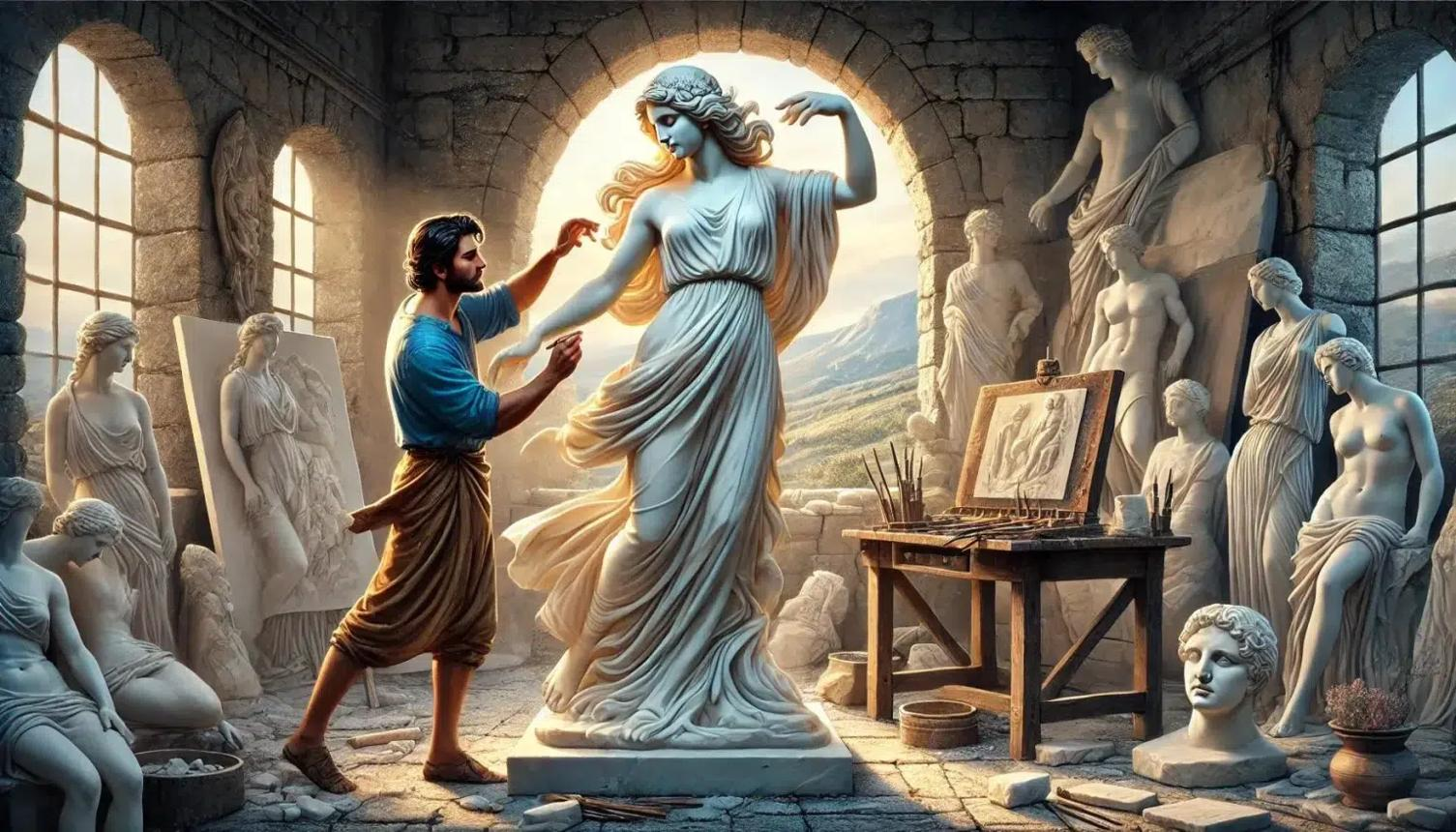
Pygmalion was a gifted sculptor who became disillusioned with human relationships. Rejecting the flaws he saw in real women, he carved an ivory statue of his ideal woman—perfect in form, grace, and beauty. Over time, he fell deeply in love with his own creation.
During a festival dedicated to Aphrodite, Pygmalion prayed for a wife resembling his statue. Moved by his devotion, Aphrodite granted his wish. When Pygmalion touched the statue, it softened into living flesh, and Galatea was born.
Symbolism and Interpretation
This myth has been interpreted in multiple ways:
The power of artistic creation
The relationship between imagination and reality
The dangers and beauty of idealized love
The role of divine favor in human desire
In modern readings, it also raises ethical questions about obsession, autonomy, and creation itself.