Strait of Hormuz on Edge Again: A Fragile Calm or the Brink of Escalation?
The Strait of Hormuz — one of the most strategically vital waterways on the planet — is once again at the center of a rapidly escalating geopolitical crisis. What appeared, briefly, to be a step toward de-escalation has now turned into yet another chapter of uncertainty, threats, and fragile promises.
At the heart of the issue lies a dangerous contradiction.
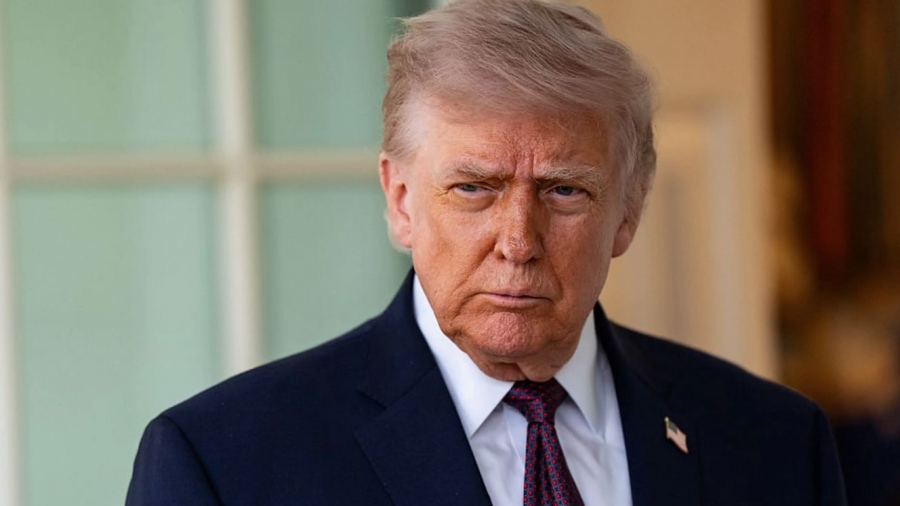
On one side, Donald Trump stated that Iran had committed to keeping the strait open, signaling a potential easing of tensions. On the other, officials in Iran are issuing stark warnings: if the American naval presence continues to pressure the region, the Strait of Hormuz could be closed again.
This is not merely rhetoric. It is a high-stakes standoff with global consequences.
A Strategic Chokepoint Under Threat
The Strait of Hormuz is far more than a narrow passage between the Persian Gulf and the open ocean. It is the lifeline of global energy markets, with roughly one-fifth of the world’s oil supply passing through its waters daily.
Any disruption — even temporary — sends immediate shockwaves across international markets. Oil prices spike, shipping routes destabilize, and uncertainty ripples through economies far beyond the Middle East.
That is why even the suggestion of closure carries enormous weight.
The Clash of Narratives
The current crisis reveals a deep divide in perception and strategy.
The United States maintains that its naval presence is necessary — a form of pressure aimed at ensuring compliance and securing a broader agreement. From Washington’s perspective, control and deterrence are essential tools.
Tehran, however, frames the situation very differently.
Iranian officials describe the ongoing blockade as a form of “economic warfare,” arguing that continued pressure leaves them with few options. Their warning to close the strait is presented not as escalation, but as retaliation — a response to what they perceive as sustained aggression.
Between these two positions lies a volatile gray zone where miscalculation becomes increasingly likely.
A Region on a Knife’s Edge
What makes the situation particularly dangerous is its instability.
In just a short span of time, the Strait of Hormuz has shifted from:
Closure
To reopening
Back to renewed threats of closure
Such rapid reversals point not to control, but to fragility.
Reports of tankers being diverted and incidents at sea further underscore how quickly tensions can spill over into direct confrontation. In such an environment, even a minor incident — a misinterpreted maneuver, a warning shot — could ignite a broader crisis.
Global Consequences Beyond the Gulf
While the confrontation is geographically concentrated, its implications are undeniably global.
A sustained disruption in the strait would affect:
Energy prices worldwide
Supply chains already under strain
Inflation levels in major economies
For countries dependent on imported energy, the stakes are especially high. For global markets, the uncertainty alone is enough to trigger volatility.
In essence, what happens in this narrow stretch of water does not stay there.
Fragile Promises, Uncertain Future
Perhaps the most striking aspect of the current situation is the gap between diplomatic messaging and reality.
Public statements suggest progress, agreements, even reassurance. Yet developments on the ground tell a more complicated story — one of mistrust, competing narratives, and unresolved tensions.
The result is a paradox: a ceasefire without confidence, a reopening without security.
Conclusion
The unfolding situation in the Strait of Hormuz serves as a stark reminder of how interconnected and fragile the modern world remains.
A single waterway, a single decision, can reverberate across continents.
For now, the strait remains open — but the question is not whether it is open today.
The real question is: for how long?