The myth of Io is one of the most harrowing examples of divine jealousy in Greek mythology. Unlike other mortals who found themselves in the crosshairs of the gods, Io’s story isn't about a single moment of punishment, but a relentless, global pursuit that transformed her from a royal priestess into a wandering beast.
1. The Priestess and the Cloud
Io was the daughter of the river god Inachus and a high priestess of Hera in Argos. Her beauty caught the eye of Zeus, who attempted to hide his infidelity by shrouding the earth in a thick, unnatural cloud.
The Deception: When a suspicious Hera descended from Olympus to investigate the mist, Zeus quickly transformed Io into a snow-white heifer (a young cow).
The "Gift": Hera, seeing through the ruse, praised the animal's beauty and demanded it as a gift. To refuse would be to admit his guilt, so Zeus handed Io over to his wife.
2. The Hundred-Eyed Jailer: Argus Panoptes
Hera didn't just take Io; she imprisoned her. She appointed Argus Panoptes, a giant with a hundred eyes, to watch her.
The Sleepless Watch: Argus was the perfect guard because he never slept with all his eyes closed at once; while some rested, others remained wide open and fixed on Io.
The Rescue: Zeus, pained by Io’s suffering, sent Hermes to free her. Hermes disguised himself as a shepherd and played his flute until every one of Argus’s hundred eyes finally lulled to sleep. Hermes then slew the giant.
The Peacock’s Tail: To honor her fallen servant, Hera took the hundred eyes of Argus and placed them on the tail of her sacred bird, the peacock.
3. The Gadfly and the Endless Wandering
Free from Argus, Io was still not free from Hera. The goddess sent a gadfly (the oistros) to sting and torment the heifer incessantly. Driven to madness by the pain, Io began a desperate, wandering flight across the known world.
Geographic Legacy: Her journey was so vast that it gave names to major landmarks:
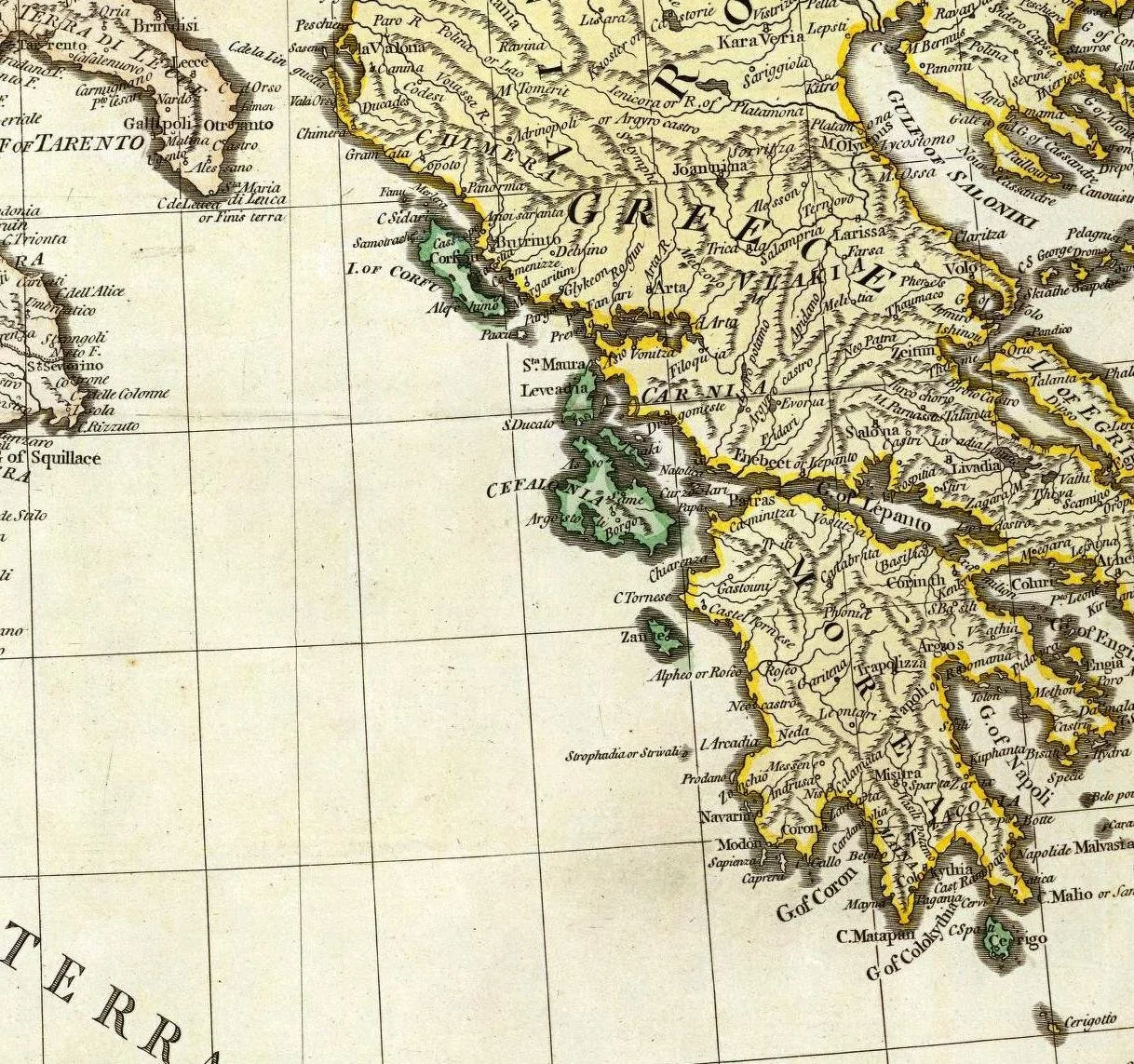
The Ionian Sea: Which she swam across to escape the fly.
The Bosphorus: Meaning "Ox-Ford," the strait she crossed between Europe and Asia.
4. The Meeting with Prometheus
One of the most famous episodes in her wandering occurs in the Caucasus Mountains, where she encounters the Titan Prometheus, who was chained to a rock for giving fire to humanity.
Two Victims of Zeus: In Aeschylus’s play Prometheus Bound, the two share their miseries. Prometheus, who has the gift of prophecy, gives Io hope. He tells her that her wanderings will eventually end in Egypt and that one of her descendants (Heracles) will eventually be the one to set him free.
5. Restored in Egypt
Finally reaching the banks of the Nile, Io’s torment ended. Zeus was able to persuade Hera to let her go, promising he would never look at her again.
The Touch of Zeus: Zeus touched Io with his hand, and she was instantly restored to her human form.
The Birth of a Dynasty: She gave birth to a son, Epaphus, who became the King of Egypt and the ancestor of many great heroes, including Perseus and Heracles. In later traditions, Io was often identified with the Egyptian goddess Isis.
6. Symbolic Meaning: The "Stinging" of Fate
The story of Io is often interpreted as a metaphor for the "wandering soul."
The Gadfly of Conscience: In philosophy, the "gadfly" became a symbol for anything that stings a person out of their lethargy (Socrates famously called himself the "gadfly of Athens").
The Innocent Victim: Io is unique because she did absolutely nothing wrong—she was a victim of Zeus’s lust and Hera’s institutional power. Her story highlights the "cosmic unfairness" that the Greeks often explored in their tragedies.
Hera’s wrath toward Io was particularly cruel because it stripped Io of her voice and her humanity, leaving her as a creature that could only "low" in distress. It’s a stark reminder that in the Greek world, being "chosen" by a god was often a death sentence for one's normal life.