The story of the Necklace of Harmonia is one of the most enduring "cursed object" narratives in Greek mythology. While most artifacts are cursed by dark magic, this necklace was cursed by the sheer intensity of divine jealousy and betrayal, bringing ruin to every woman who wore it over several generations.
1. The Divine Origin
The necklace was created for the wedding of Harmonia (the daughter of Ares and Aphrodite) and Cadmus, the founder of Thebes.
The Smith: It was forged by Hephaestus, the god of fire and craftsmanship.
The Motive: Hephaestus was still deeply bitter over his wife Aphrodite’s affair with Ares. To avenge himself, he created a gift that was exquisitely beautiful but carried a powerful curse: it would bring disaster to anyone who possessed it.
The Appearance: It was described as two serpents made of gold, their open mouths forming a clasp around a magnificent jewel.
2. The Chain of Disaster
The necklace traveled through the royal line of Thebes, acting as a catalyst for some of the greatest tragedies in Greek myth.
Semele: Harmonia's daughter wore the necklace and was later consumed by fire when she asked to see Zeus in his true divine form.
Jocasta: Generations later, the necklace came to the Queen of Thebes. Its "magical" beauty was said to preserve her youth, which indirectly led to her marrying her own son, Oedipus, and the subsequent downfall of their family.
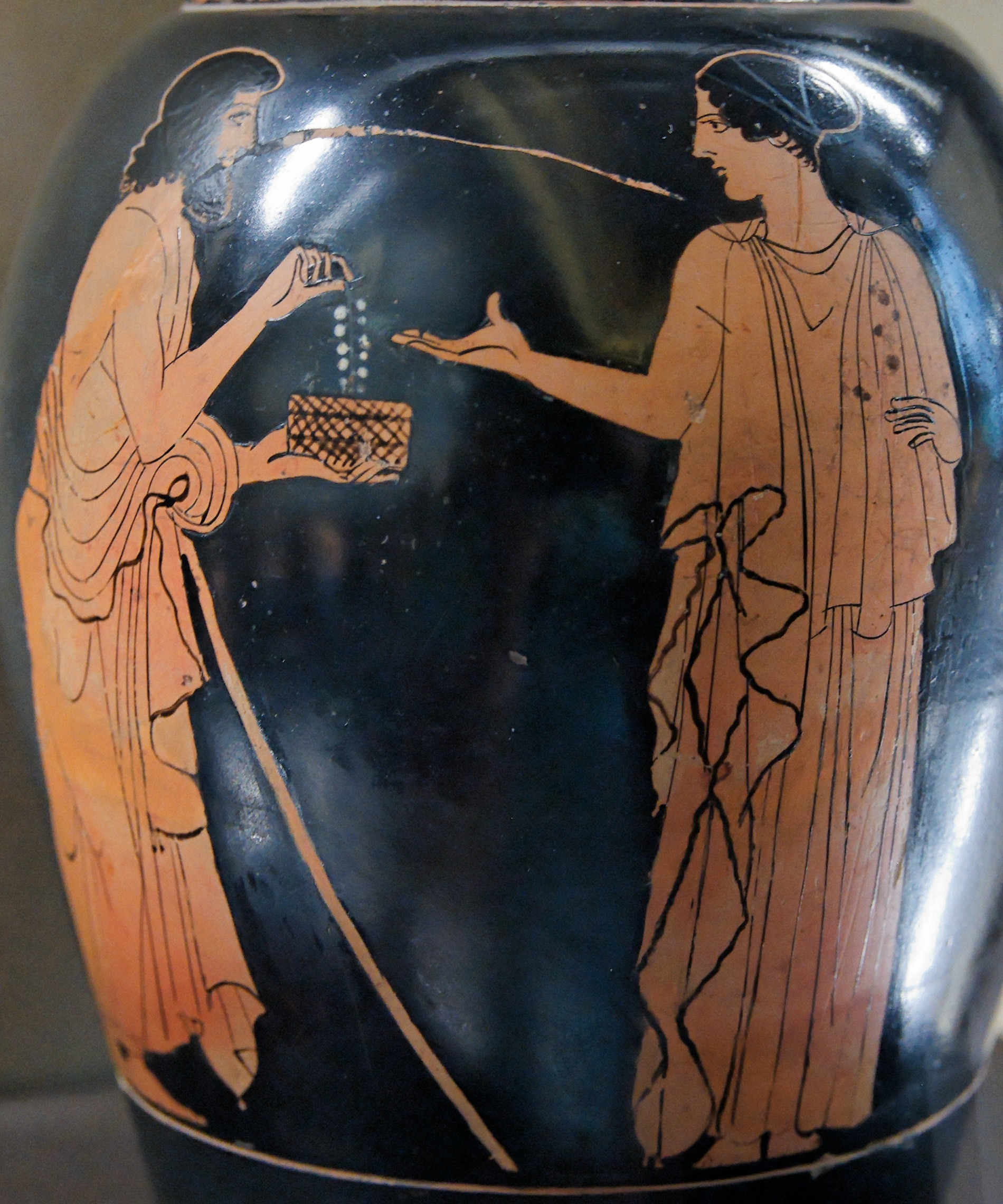
Eriphyle: This is perhaps the most famous chapter of the curse. To persuade her husband, Amphiaraus, to join the "Seven Against Thebes" (a war he knew would kill him), a conspirator bribed Eriphyle with the necklace. She chose the jewelry over her husband’s life, leading to his death and her own eventual murder by her son, Alcmaeon.
3. The End of the Curse
The necklace's journey of blood finally ended with Alcmaeon. After killing his mother to avenge his father, he was hounded by the Furies. He attempted to give the necklace to his new wife to find peace, but the cycle of greed and murder continued.
Eventually, the necklace was dedicated to the Temple of Athena at Delphi. According to local lore, it remained there for centuries, safely removed from the world of mortal desire, until it was allegedly stolen by a tyrant during the Third Sacred War—only to bring a final, violent end to his own family.
The myth of the Necklace of Harmonia serves as a stark warning: some "gifts" from the gods are burdens in disguise, and the pursuit of physical beauty can sometimes lead to moral and physical decay.