The social structure of Ancient Greece was not a single, unified system, but a complex hierarchy that varied between city-states like democratic Athens and militaristic Sparta. However, across most of the Greek world, your status was determined by three primary factors: your birth, your gender, and your legal relationship to the land.
1. The Citizen Class (Politai)
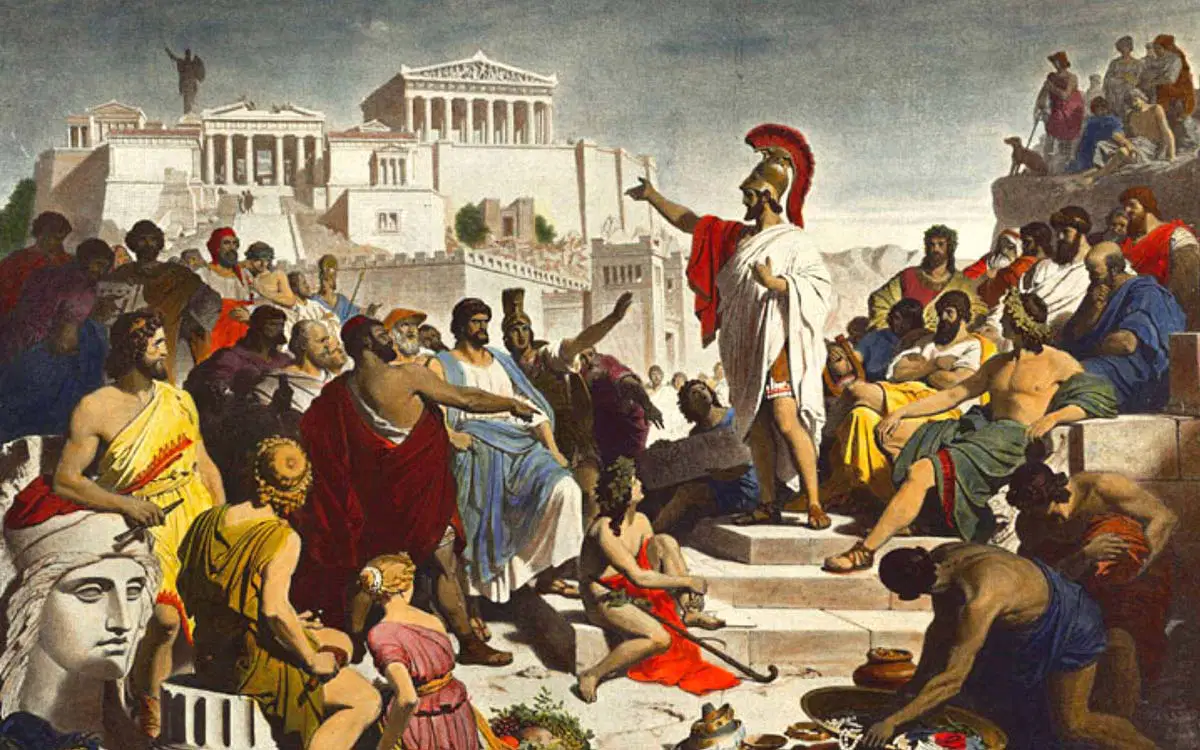
At the top of the social pyramid were the adult male citizens. Citizenship was a hereditary privilege, not a right granted to everyone born in the city.
Political Power: Only citizens could vote, hold public office, and serve on juries. In Athens, this meant participating in the Assembly; in Sparta, it meant being part of the Gerousia (Council of Elders).
Military Duty: Citizens were expected to serve as hoplites—infantrymen who provided their own armor and weapons. A man’s status was often linked to his ability to defend the polis.
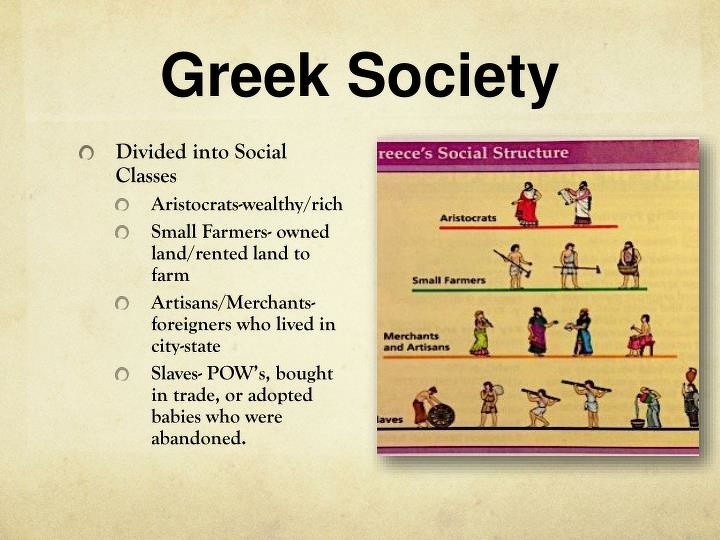
Aristocracy vs. Commoners: Even among citizens, there was a divide. The Aristoi (the "best people") were wealthy landowners who claimed descent from gods or heroes, while the Demos were small-scale farmers and craftsmen.
Shutterstock
2. Women: The Private Sphere
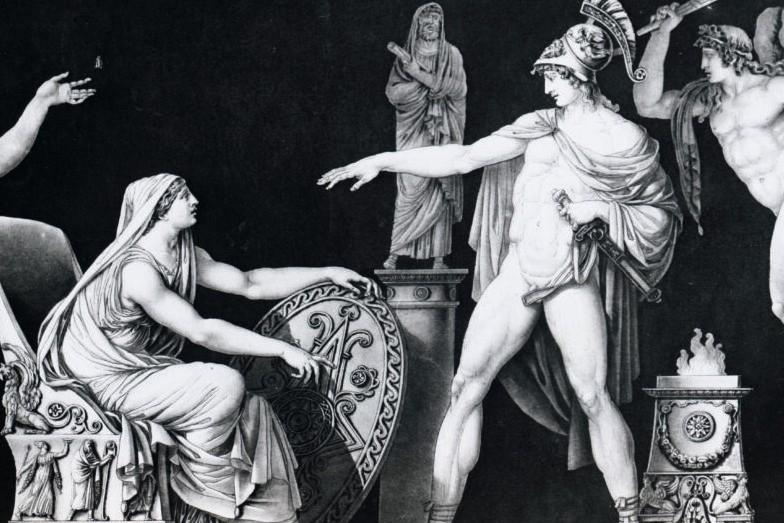
Women held a paradoxical position in Greek society. While they were essential for the continuation of the citizen class, they were legally and socially subordinate to men.
Legal Standing: Women were never full citizens. They could not vote or own significant property. Every woman had a kyrios (guardian), usually her father or husband, who handled her legal affairs.
Social Roles: High-status women were expected to manage the household (oikos) and remain out of public view. However, women played vital roles in religion as priestesses, such as the Pythia at Delphi, and participated in major festivals like the Thesmophoria.
3. Metics: The Resident Aliens
Metics (metoikoi) were free people who had moved to a city-state from elsewhere. They were often the economic engine of the city but remained "outsiders."
Economic Impact: Many metics were wealthy merchants, bankers, or skilled craftsmen. In Athens, they were responsible for much of the city's maritime trade and industrial production.
Restrictions: They could not own land or houses, and they were ineligible for citizenship. They were required to pay a special tax (metoikion) and needed a citizen sponsor to represent them in court.
4. Enslaved People: The Labor Force
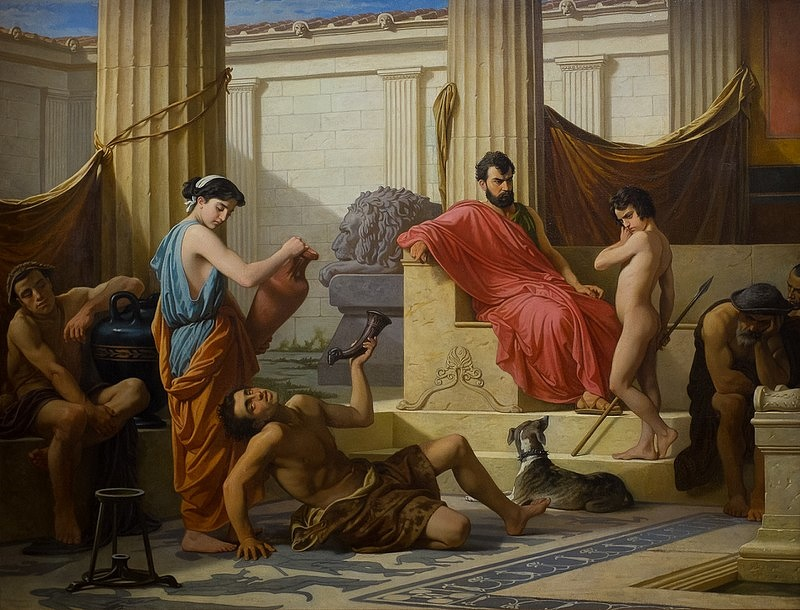
Slavery was a fundamental part of the Greek economy and social order. It is estimated that in Athens, enslaved people made up roughly one-third of the total population.
Origins: Most were non-Greeks captured in war or purchased through the Mediterranean slave trade.
Roles: Their lives varied wildly. Some worked in the brutal conditions of the silver mines, while others lived in the city as domestic servants, tutors, or even "public slaves" who served as police or low-level clerks.
Legal Status: Under the law, they were considered property (chremata) rather than people, though some were eventually "manumitted" (freed) and became metics.
5. The Spartan Hierarchy: A Unique Model
Sparta operated on a radically different social system designed to maintain its military supremacy.
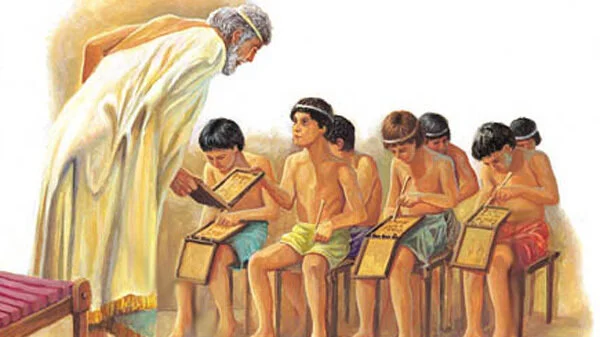
Spartiates: The elite warrior class who underwent the rigorous Agoge training. They were forbidden from engaging in trade or farming.
Perioikoi: The "dwellers around." These were free people who lived in the surrounding territory of Sparta. They were craftsmen and traders who served in the army but had no say in Spartan politics.
Helots: A state-owned serf population. Unlike Athenian slaves, Helots were Greeks who had been conquered. They farmed the land for the Spartiates and lived in constant fear of the Spartan secret police, the Krypteia.
6. Social Mobility and the Rise of the Middle Class
While the hierarchy was rigid, it was not entirely frozen. In the 5th and 4th centuries BC, the expansion of trade allowed for the rise of a "nouveau riche" class. Wealthy craftsmen and merchants began to challenge the traditional landed aristocracy for influence. This social tension often led to political reforms, such as those by Solon in Athens, which gradually shifted power from birthright to wealth and eventually to the broader body of male citizens.