The Contributions of Hipparchus to Astronomy
Hipparchus of Nicaea (c. 190–c. 120 BCE) was a Greek astronomer, geographer, and mathematician, widely regarded as the greatest astronomical observer of antiquity. Working over a millennium and a half before the invention of the telescope, he combined the geometric traditions of Greece with the quantitative observations of the Babylonians. By applying rigorous mathematics to his measurements, Hipparchus transformed astronomy from a primarily descriptive or speculative art into an exact, predictive science.
1. Discovery of the Precession of the Equinoxes
Perhaps his most celebrated achievement, Hipparchus discovered that the positions of the equinoxes shift gradually westward along the ecliptic relative to the fixed background of the stars.
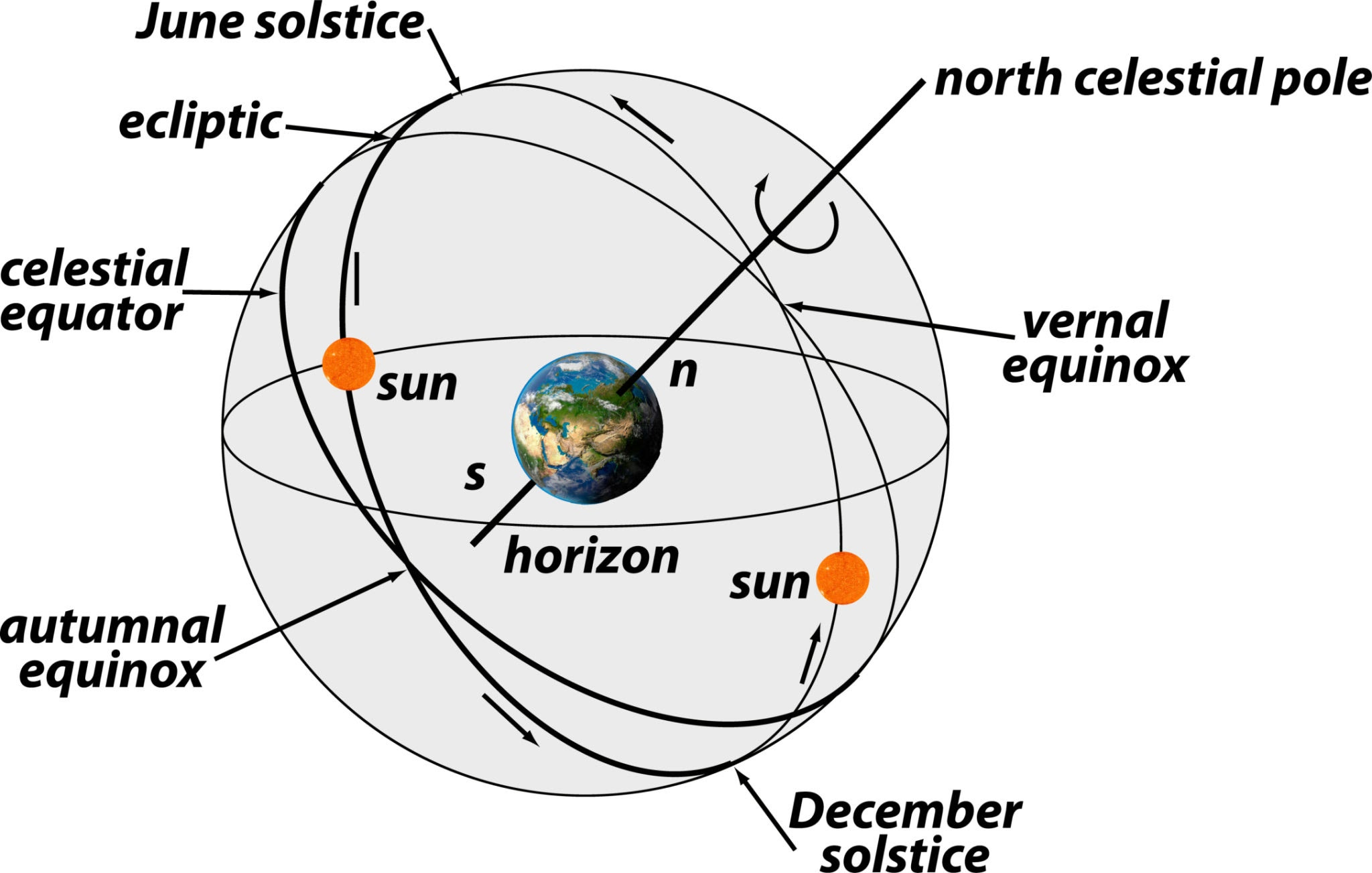
The Observation: By comparing his own precise measurements of stellar longitude with those recorded by earlier astronomers like Timocharis and Aristillus roughly 150 years prior, he noticed that the stars had shifted by approximately $2^\circ$.
The Calculation: He determined the rate of precession to be at least $1^\circ$ per century. This crucial insight—that the Earth's axis of rotation undergoes a slow wobble—was necessary to explain discrepancies in the mapping of the heavens and helped to accurately determine the length of the solar year.
2. The First Star Catalog and Magnitude System
Driven by his desire to detect stellar or planetary motion over long periods, Hipparchus created the first comprehensive star catalog of the Western world, recording the positions and brightness of approximately 850 stars.
The Magnitude System: He classified the stars using a numerical scale of brightness from 1 to 6. The brightest stars were designated as being of the first magnitude, and the faintest stars visible to the naked eye were of the sixth magnitude. This classification forms the basis of the modern stellar magnitude system used by astronomers today.
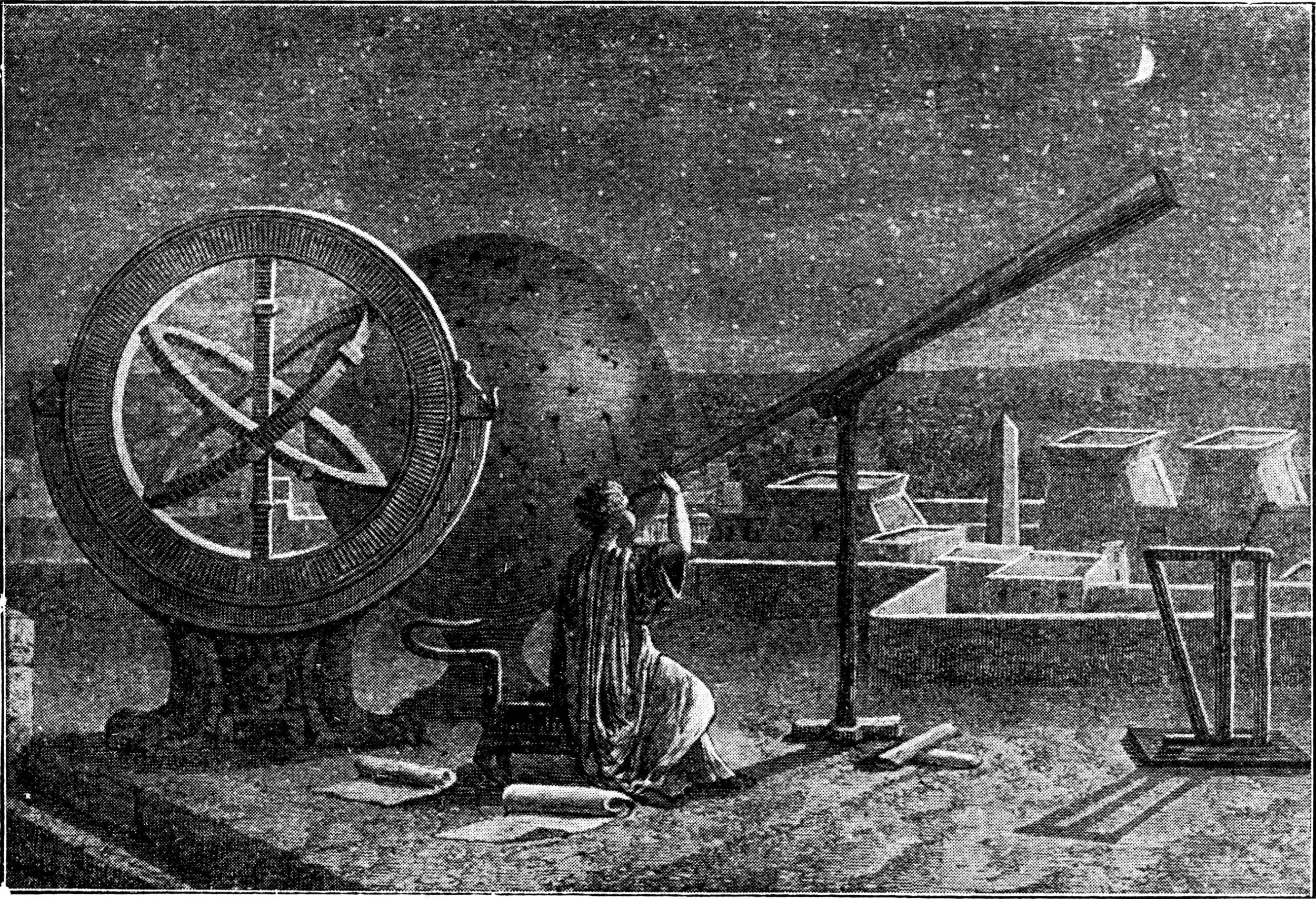
Celestial Coordinates: He utilized instruments like the armillary sphere and the dioptra to pinpoint stellar positions, pioneering the systematic use of celestial coordinates.
3. Mathematics and Foundations of Trigonometry
To model and calculate celestial motions, Hipparchus developed the foundational tools of modern trigonometry.
Chord Tables: He compiled a 12-book treatise containing early trigonometric tables. By calculating the lengths of chords in a circle for various angles, he essentially created the precursor to modern sine tables.
Orbital Geometry: He used these techniques to analyze the eccentric and epicyclic paths of the Sun and the Moon, allowing him to determine their movements accurately.
4. Lunar and Solar Theory
Hipparchus analyzed the orbits of the Sun and Moon with unprecedented precision, which also allowed him to calculate their distances and sizes.
Length of the Year: He calculated the tropical year with an error of only 6.5 minutes compared to modern measurements.
Distance to the Moon: By comparing a total solar eclipse observed near the Hellespont with a partial eclipse observed simultaneously in Alexandria, he used parallax to estimate the Moon's mean distance at roughly 60 to 77 times the Earth's radius—an incredibly accurate measurement for the 2nd century BCE.