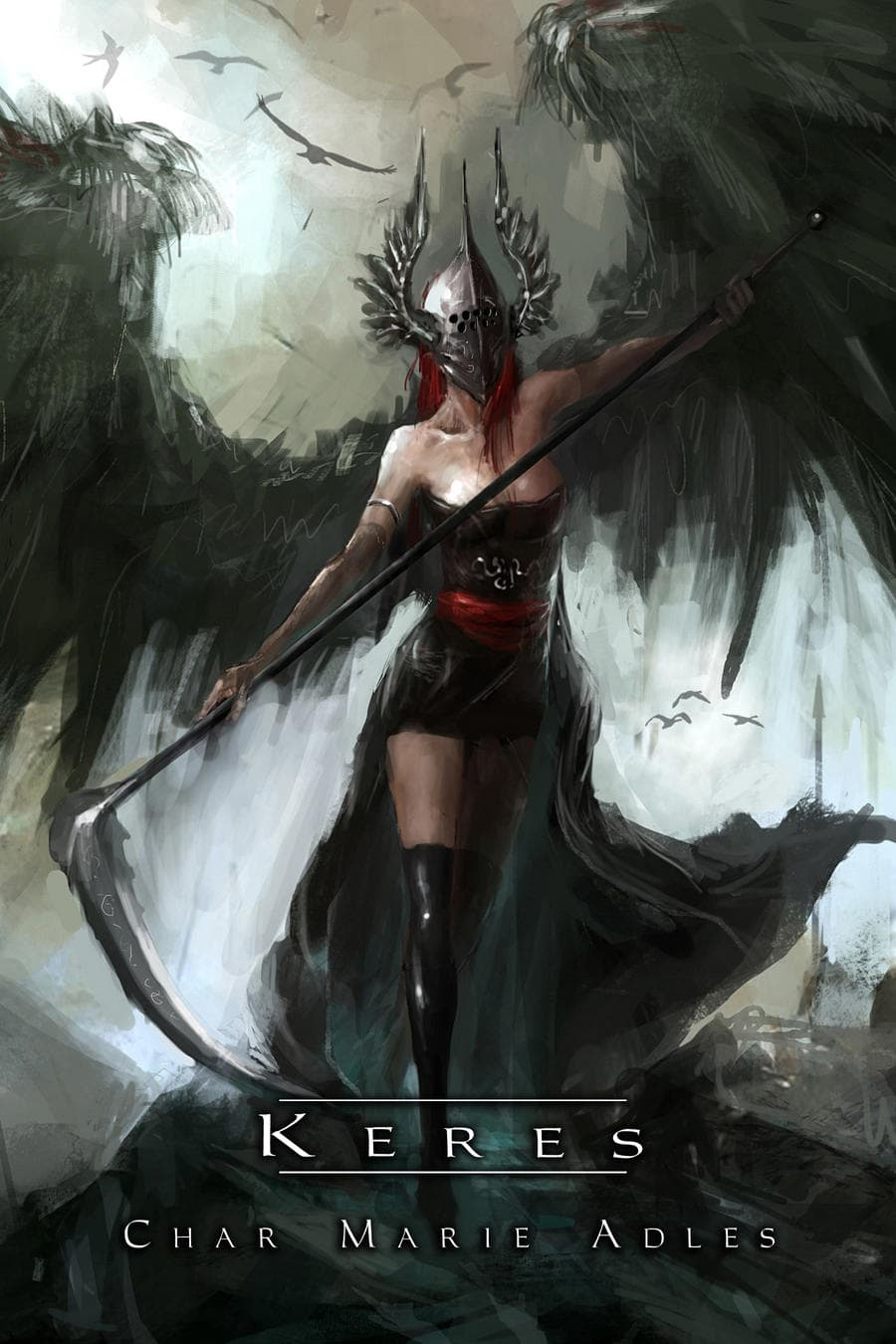
The Myth of the Keres: Spirits of Violent Death
While classical mythology features personifications of peaceful, natural rest—such as Thanatos (Sleep's gentle brother)—the ancient Greeks recognized that death on the battlefield or during a plague was rarely peaceful. To capture the raw, gory horror of an unnatural demise, they feared the Keres.
The Daughters of Night
The Keres ($\text{K}\tilde{\eta}\rho \varepsilon \varsigma$) were chthonic, predatory spirits of violent death, slaughter, and pestilence. Born from the primordial womb of Nyx (Night) alongside other dark abstract forces like Nemesis and Eris, they were depicted as terrifying, monstrous entities:
Winged, gaunt hags with sharp, elongated talons.
Armed with gnashing, metallic teeth.
Clad in heavy cloaks that were permanently stained red with the fresh blood of dying men.
They did not cause death through legal decrees or divine destiny; instead, they were parasitic opportunists who hovered over areas of intense human suffering, waiting to feast on the life force of the fallen.
The Battlefield Feasters
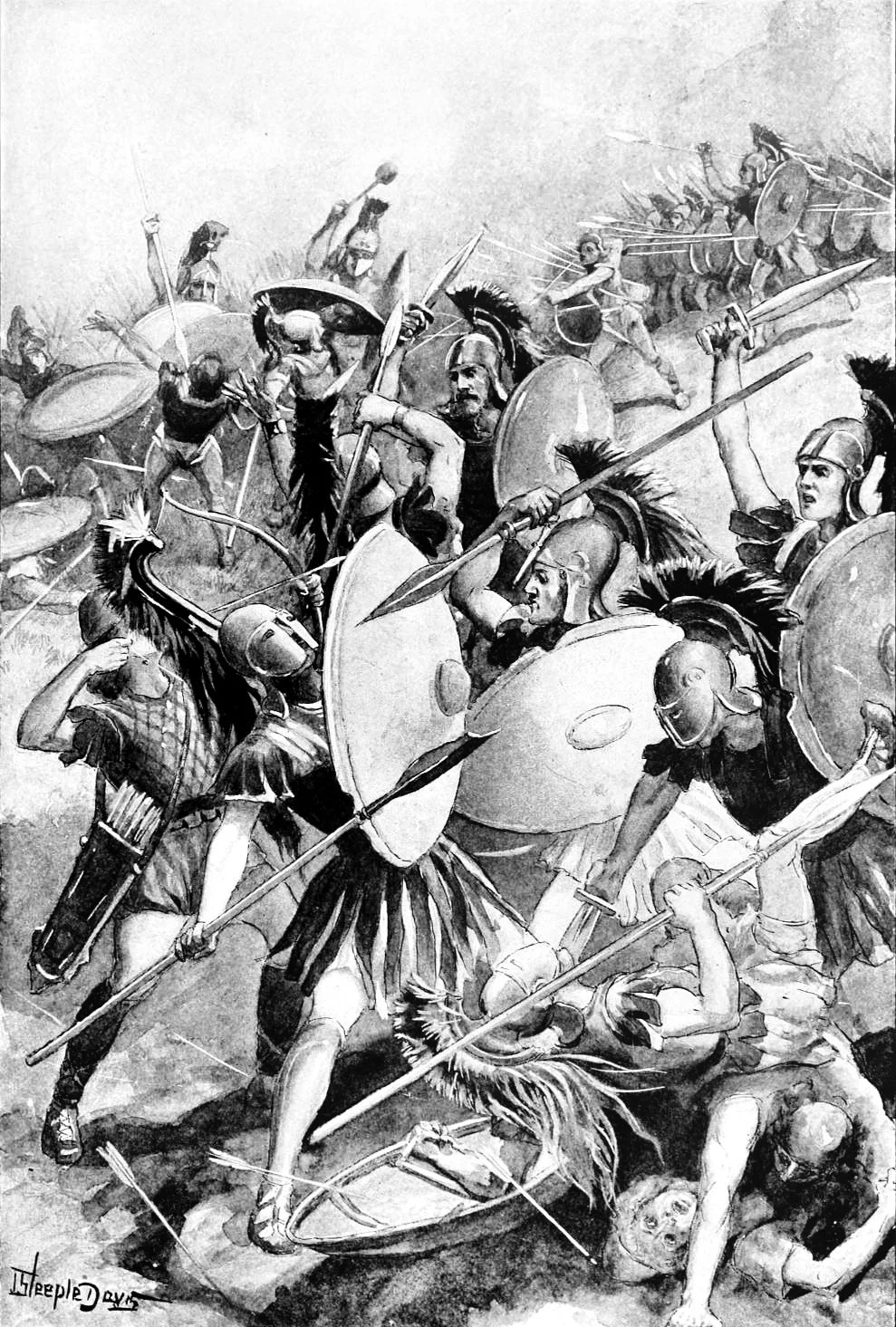
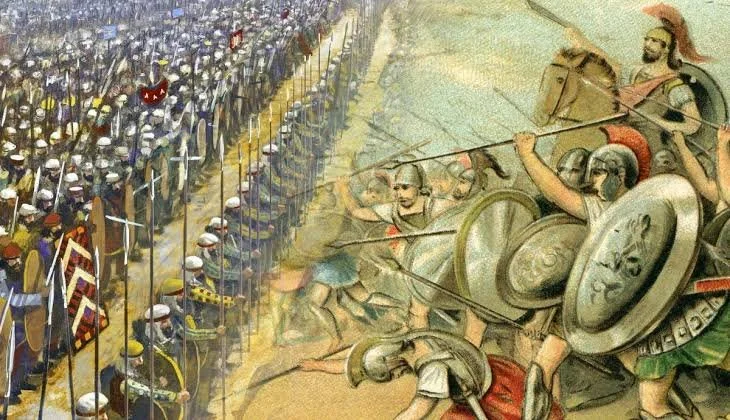
The Keres lived for the front lines of warfare. Whenever two great armies collided—such as the Greeks and Trojans—the sky above the shield wall would fill with a dark, swirling cloud of invisible Keres.
As described in the vivid shield descriptions of Homer and Hesiod, the Keres would watch the fighting with frantic hunger. The moment a warrior was pierced by a bronze spear or brought low by an arrow, the Keres would swoop down like vultures:
They would fight one another bitterly for possession of the dying man.
They would drive their long talons deep into the open wound to drink the warm, dark blood escaping the body.
Once they had drained the warrior’s life force and pulled his soul out of his flesh, they would cast his cold corpse aside and fly back into the melee to hunt for another victim.
The Weighing of the Fates: Kerostasia
The Keres operated on a deep cosmic layer through a ritual known as Kerostasia—the weighing of a mortal's violent doom. During critical moments of combat, Zeus would lift his golden scales before the assembled gods on Mount Olympus.
                          [ THE GOLDEN SCALES OF ZEUS ]
                                         │
                   ┌─────────────────────┴─────────────────────┐
                   ▼                                           ▼
         [ THE GREEK KER ]                           [ THE TROJAN KER ]
         Rises Upward (Life)                         Plunges Downward (Death)
                                                               │
                                                               ▼
                                                  [ THE DEATH OF HECTOR ]
He would place two individual Keres onto the opposing balance pans—one representing the violent fate of a hero, and the other representing his opponent.
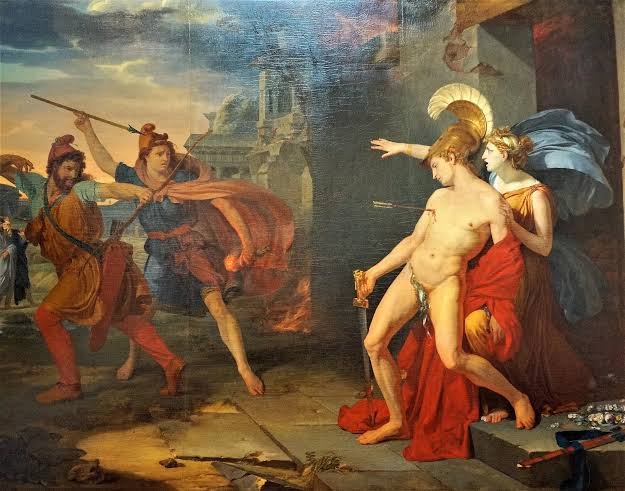
During the climatic duel between Achilles and Hector, Zeus raised the scales. Hector’s Ker sank heavily downward, plunging straight toward the dark halls of Hades. The moment the scale tipped, the gods abandoned Hector to his fate, and the waiting Keres descended to claim his blood on the dusty plains of Troy.