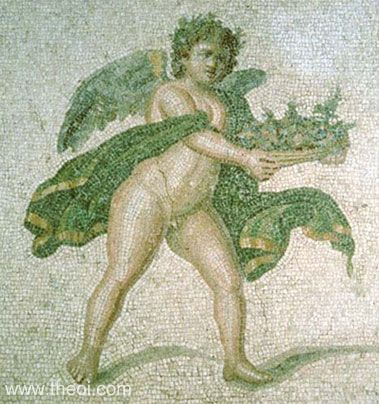
The Role of the Anemoi: The Greek Gods of Wind
To the ancient Greeks, the wind was not an abstract, atmospheric weather pattern driven by barometric pressure; it was a volatile crew of immortal, winged deities known as the Anemoi ($\text{'A}\nu \varepsilon \mu \text{o}\iota$).
Operating under the strict command of Aeolus, the Keeper of the Winds who kept them locked inside the cavernous hollows of Mount Haemus, these gods were the literal breath of the cosmos—capable of guiding trade fleets to prosperity or scattering navies across the rocks.
While there were many minor winds, classical literature focuses on the four primary brothers, each corresponding to a cardinal direction and a specific seasonal temperament.
1. Boreas: The North Wind (The Bringer of Ice)
Boreas was the coldest, most violent brother of the crop. The personification of winter, he blew down from the frozen mountain ridges of Thrace, bringing blinding blizzards, freezing sleet, and destructive gales.
The Appearance: He was depicted as a fierce, bearded old man wearing a heavy, billowing cloak, with wild, frozen hair and ankles that dissolved into coiling serpent tails.
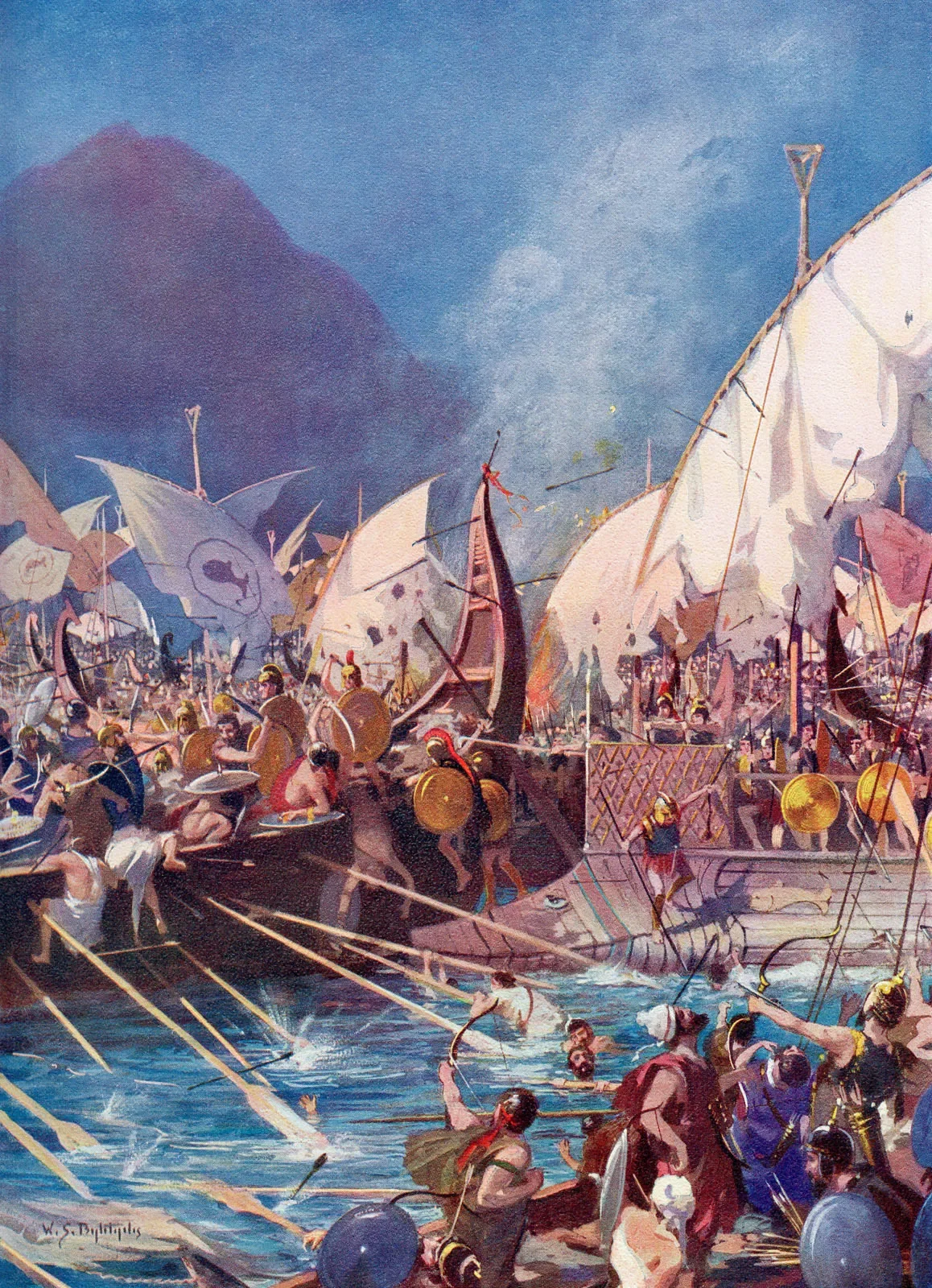
The Political Savior: Despite his brutality, Athens held him in high esteem. During the Persian Wars, when Xerxes’s massive armada threatened Greece, the Athenians prayed to Boreas. The North Wind answered by unleashing a colossal three-day storm that smashed over 400 Persian warships against the cliffs, securing Greece's survival.
2. Zephyrus: The West Wind (The Gentle Spring)
Operating as the absolute structural opposite of Boreas, Zephyrus was the gentler, most beloved brother. The bringer of spring and early summer, his breath was a warm, moist breeze that woke the dormant seeds of the earth and thawed the winter frost.
The Appearance: He was depicted as a handsome, bare-chested youth with soft, butterfly-like wings, drifting through the air while scattering fresh spring flowers from the folds of his tunic.
The Dark Side: Despite his gentleness, Zephyrus could be driven to toxic jealousy. When he and Apollo competed for the affection of the beautiful youth Hyacinthus, Zephyrus became enraged when the boy chose the sun god. As Apollo threw a heavy bronze discus, Zephyrus blew a sudden, violent gust of wind that altered its trajectory, causing the heavy disk to crash directly into Hyacinthus’s skull, killing him instantly.
3. Notus: The South Wind (The Scorching Summer)
Notus was the bringer of the late summer and early autumn heat. He blew up across the Mediterranean from the arid deserts of Africa, dragging heavy, oppressive humidity, blinding sea fogs, and sudden, violent rainstorms (the Sirocco).
The Appearance: He was depicted as a weeping, water-logged deity with wings made of dark storm clouds, his beard permanently dripping with heavy moisture, routinely destroying agricultural crops by rot if he blew too early in the harvest season.
4. Eurus: The East Wind (The Turbulent Autumn)
Eurus was the least defined and most chaotic brother of the four, corresponding to the east or southeast. He was a turbulent, dark wind that brought heavy rain, high-pressure squalls, and warm, unseasonal heat waves.
The Appearance: He was often depicted as a dark, rugged figure holding an upturned water jar, closely associated with the violent maritime storms that plagued sailors attempting to navigate the treacherous waters around Cape Malea.