he Tale of Arion: The Musician Saved by Dolphins
The story of Arion of Lesbos is a beautiful testament to the ancient Greek belief in the cosmic, universal power of music. Nestled between myth and historical folklore, this narrative explores how artistic mastery can bridge the gap between human civilization and the wild consciousness of nature.
The Wealth of the Virtuoso
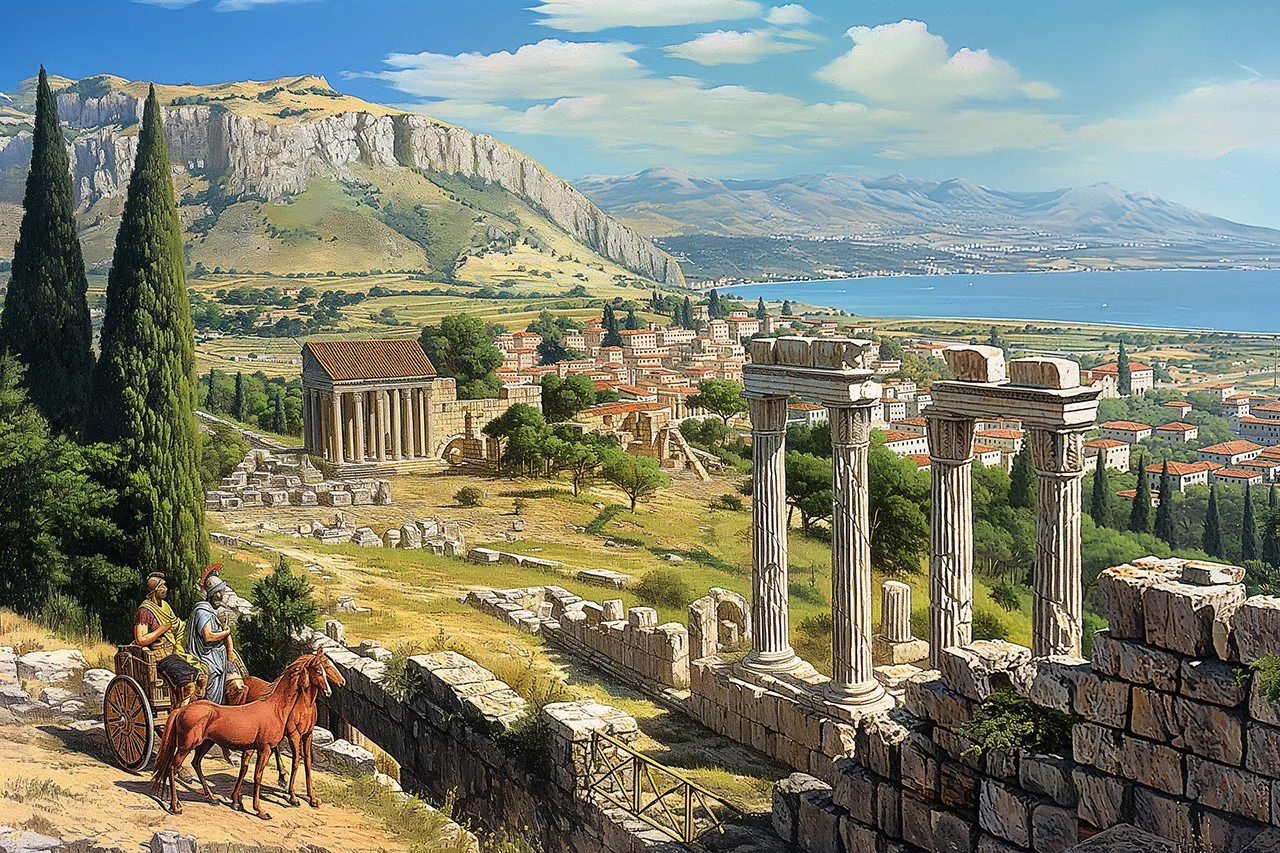
Arion was a real historical figure from the 7th century BCE, universally celebrated as the absolute greatest citharode—a professional singer who accompanied himself on the cithara (a sophisticated, heavy form of the lyre)—of his generation. He lived at the royal court of Corinth under the patronage of the tyrant Periander, where he revolutionized the dithyramb, a passionate, choral hymn sung in honor of Dionysus.
Desperate to test his skills abroad, Arion traveled to Sicily and southern Italy to compete in a prestigious music festival. He swept the competition, earning an immense fortune in gold, silver, and precious tripods. Loaded with wealth, he hired a Corinthian merchant ship to carry him back home across the Ionian Sea, trusting his fellow citizens to sail him safely to port.
The Maritime Betrayal
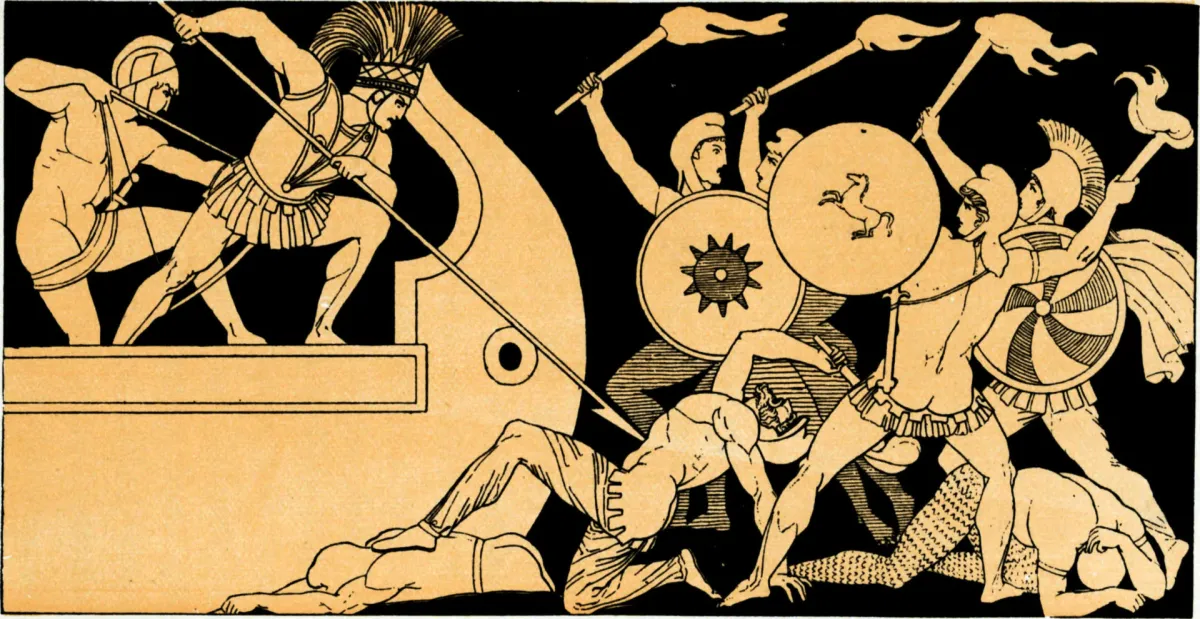
Once the ship reached the deep, open waters of the Mediterranean, the sailors were consumed by absolute greed. They mutinied, surrounding Arion with drawn swords and delivering a ruthless ultimatum: he must either commit suicide on deck so they could give him a proper burial on land, or cast himself directly into the sea to drown.
Recognizing that no amount of gold could buy his life from the corrupt crew, Arion made one final, poetic request:
"Since my fate is sealed," Arion begged, "allow me to stand upon the prow of the ship, dressed in my full professional robes, and sing one final song. When my music is finished, I swear I will cast myself into the waves."
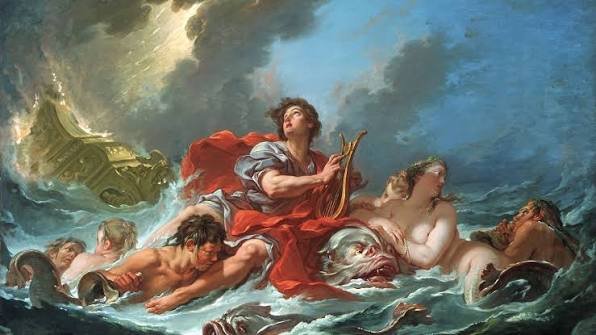
The sailors, amused by the prospect of hearing the world's greatest musician perform one last time, agreed and stepped back. Arion donned his ceremonial, pleated tunic and lifted his ivory cithara. He struck the strings, channeling his terror into a magnificent, high-pitched hymn to Apollo, the god of music and light.
His voice rolled out across the silent ocean, generating a powerful acoustic resonance that traveled deep beneath the waves. The pure harmony did not move the hearts of the human sailors, but it captivated the ocean.
The Cetacean Rescue
The moment Arion completed his song, he kept his word and leaped over the side of the ship into the churning wake. The merchant vessel instantly sailed away into the horizon, leaving him to drown.
However, Arion did not sink. His transcendent music had attracted a massive pod of dolphins (delphines), who had surrounded the ship, mesmerized by the divine chords. To the ancient Greeks, dolphins were not mere animals, but highly spiritual, music-loving creatures who had once been human pirates transformed by Dionysus.
One large dolphin swam directly beneath the flailing musician, hoisting Arion onto its slippery back. Holding fast to the dolphin's dorsal fin, Arion rode the creature across the sea. The pod escorted them with joyful leaps, swimming with incredible speed until they deposited the musician safely onto the rocky shores of Cape Taenarum.
Arion marched back to Corinth and revealed the crime to King Periander. When the unsuspecting merchant sailors arrived at port claiming Arion had died abroad in an accident, the king revealed the fully alive musician standing in his ceremonial robes. The sailors confessed to the mutiny and were promptly executed, while Arion's rescue was immortalized by a bronze monument of a man riding a dolphin, dedicated at Taenarum.