To the modern global citizen, a dream is typically viewed as a subjective firing of synapses—a personal psychological processing of sub-conscious memories. To the ancient Greeks, however, a dream—known as an oneiros ($\ddot o\nu\epsilon\iota\rho o\varsigma$)—was an objective, external reality.
The Greeks believed that when a person slept, their soul did not invent images; rather, a literal divine messenger or a chthonic phantom (eidolon) entered the bedroom through the keyhole, stood at the head of the bed, and delivered a physical message from the gods, the ancestors, or the underworld.
                         [ THE GREEK ONIRIC MATRIX ]
                                      │
         ┌────────────────────────────┴────────────────────────────┐
         ▼                                                         ▼
 [ THE GATES OF HORNS ]                                  [ THE GATES OF IVORY ]
 * True, prophetic visions (*oneiroi*)                   * Deceptive, chaotic illusions
 * Direct communication from Apollo / Asclepius         * Manifestations of anxiety or minor spirits
The foundational architecture of Greek dream theory was beautifully summarized by Homer in the Odyssey, where he described the two distinct gates from which dreams emerge: the Gates of Horn, which send forth true, prophetic visions that unfold in reality, and the Gates of Ivory, which unleash deceptive, chaotic illusions designed to confuse mortal minds.
Oneirocritica: The First Science of the Subconscious
Because the stakes of decoding a true dream were life and death, the Greeks developed a highly sophisticated discipline known as oneirocritica (the art of dream analysis). Professional dream interpreters (oneirokritai) set up tables in the public Agoras, charging citizens to analyze their night visions using a complex linguistic and symbolic matrix.
The absolute masterpiece of this ancient science is the Oneirocritica, an exhaustive, five-volume encyclopedia compiled by the 2nd-century CE scholar Artemidorus. Artemidorus was an exceptionally rigorous empirical researcher; he traveled across Greece, Italy, and Asia Minor, interviewing thousands of dreamers and tracking whether their dreams actually came true.
He discovered that dreams operate via a highly complex system of metaphors, puns, and cultural symbols:
The Context of the Dreamer: Artemidorus argued that a dream could never be interpreted in isolation. A dream of losing a tooth meant sudden financial ruin for a merchant, but meant the death of an elderly family member for a regular citizen, or the release of a secret for a politician.
Metaphorical Inversions: Many dreams meant the exact opposite of their visual contents. To dream of a joyful, laughing death was a highly positive sign of a long, prosperous life, whereas dreaming of marrying a wealthy god was a terrifying omen of imminent death, as marriage and death were viewed as identical spiritual transitions.
The Incubation Rituals of Asclepius
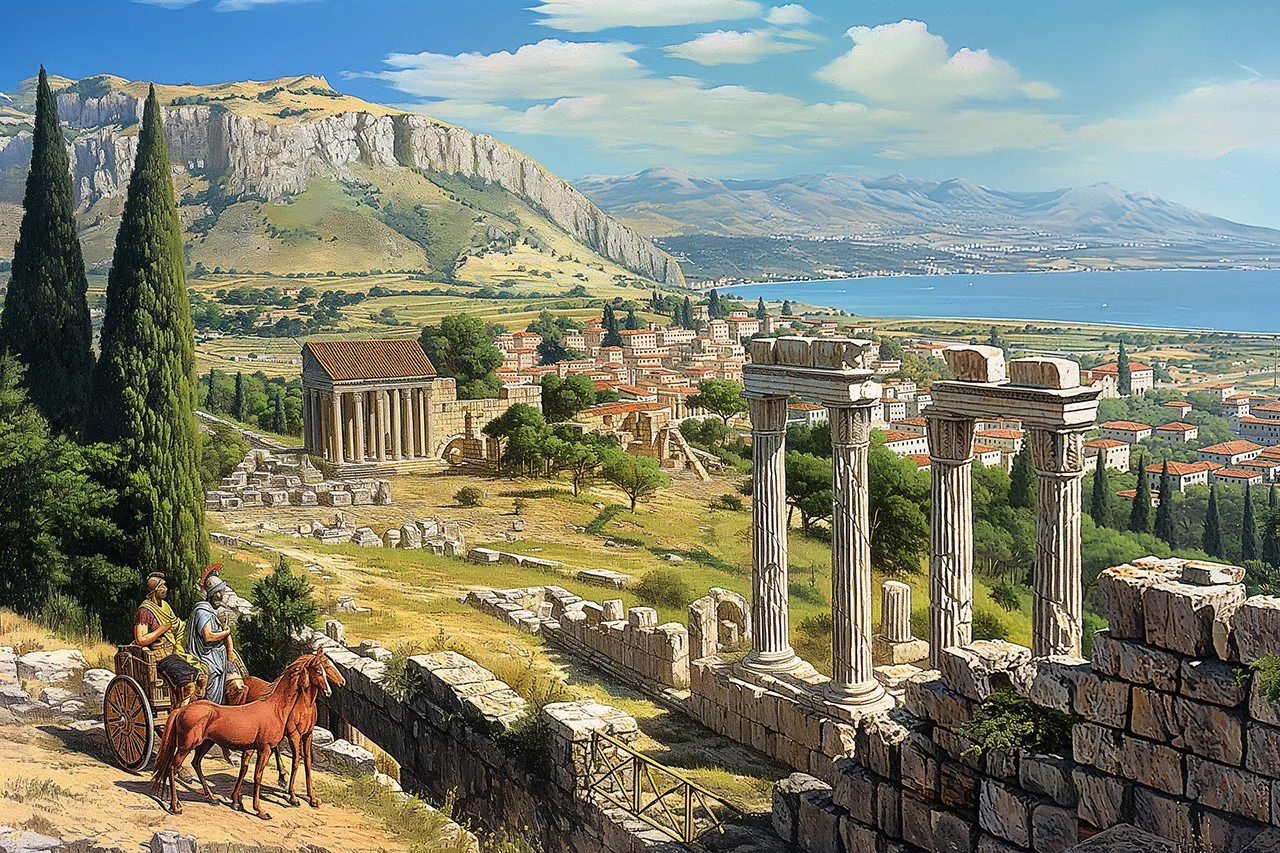
The most radical and practical application of dream interpretation occurred within the realm of ancient medicine. When traditional physicians failed to cure an illness, patients traveled to the great healing sanctuaries of Asclepius (the god of medicine) at Epidaurus or Pergamum. This process was known as incubation (enkoimesis).
The ritual followed a strict, sacred chain of operations:
Purification: The patient underwent rigorous fasting, took cold ritual baths, and offered sacrifices to appease the chthonic deities.
The Abaton Descent: At nightfall, the sick wrapped themselves in sheepskins and lay down on the cold floor of the Abaton—a long, dark, subterranean portico.
The Dream Apparition: As the patient slept, non-venomous sacred snakes (Asclepian snakes) crawled freely over their bodies. In the deep state of sleep, the god Asclepius would appear to the patient in a dream, either performing an instant, miraculous surgical operation or delivering a clear, explicit recipe for a medical cure (such as drinking a specific herbal tea, bathing in a cold river, or avoiding certain foods).
The next morning, the patient related their dream to the resident temple priests, who interpreted the medical prescription, bridging the gap between divine mysticism and practical, natural healthcare.