To a modern observer, the theater of classical Athens would present an extraordinary social paradox. The plays produced for the City Dionysia feature some of the most powerful, complex, and vocal female protagonists in Western literature—characters like Medea, Antigone, and Clytemnestra who challenge male authority, debate legal ethics, and drive political plots. Yet, within the actual physical and institutional production of these plays, real women were completely marginalized and silenced.
[ LITERARY REALITY ] ────────► Hyper-Vocal, Complex Female Protagonists (Medea, Antigone)
                                        │
                            (The Athenian Social Divide)
                                        │
                                        ▼
[ PRODUCTION REALITY ] ───────► Total Disenfranchisement: Exclusively Male Actors & Playwrights
The All-Male Stage
In classical Greece, theater was a state-sponsored, religious, and civic institution reserved exclusively for free male citizens. No women were ever allowed to perform on the professional stage. Every female role, from young virgins to elderly queens and monstrous furies, was played by male actors (hypokritai).
To successfully portray women to an audience numbering up to 14,000 spectators, male actors relied on a highly stylized, performative vocabulary:
The Costuming: Actors wore heavily padded, floor-length robes (chitons) to mask their masculine physiques and elevate their stature.
The Masks: The definitive tool of transformation was the lightweight mask made of stiffened linen, leather, or wood. Female masks were painted with distinct, stark white skin tones (in contrast to the sun-bronzed, darker skin tones of male masks) and featured stylized hairstyles that clearly communicated the character's age, social status, and emotional state.
Vocal Modulation: Actors trained extensively in vocal control, modulating their pitch, breath delivery, and cadence to project a feminine presence across the massive, open-air stone theaters without degenerating into caricature.
Were Women Even in the Audience?
One of the most enduring debates among classical historians is whether free women were legally or socially permitted to sit in the audience at the Theater of Dionysus. While the evidence is conflicting, a consensus has emerged:
While aristocratic women were expected to remain secluded inside the private quarters of the home (oikos), they were likely permitted to attend the grand tragic trilogies of the City Dionysia, accompanied by their husbands or male guardians. However, they were segregated into the highest, furthest stone tiers of the theater, physically removed from the elite civic seating reserved for the male citizens, foreign ambassadors, and war orphans.
The Sacred Exception: The Chorus and Ritual
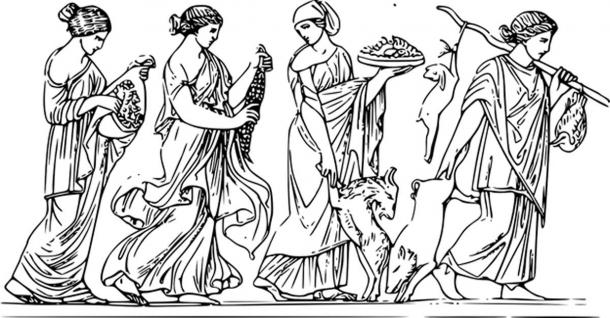
While women were excluded from the creative and professional production of drama, their theatrical presence was deeply rooted in ritual mimicry. Long before the invention of formal theater, young girls participated in sacred choral dances and musical processions during women-only festivals like the Thesmophoria and the Brauronia.
When male playwrights like Aeschylus or Euripides wrote tragic choruses composed of Trojan women or Phoenician maidens, they were directly appropriating the traditional dance steps, mournful laments (goos), and rhythmic hand gestures engineered by generations of real women within the sacred sphere of religious mourning.
The powerful women of the Greek stage were ultimately a collective male projection—a safe, highly managed theatrical sandbox where the patriarchal democracy of Athens could confront its deepest anxieties regarding female power, emotional expression, and cosmic justice.