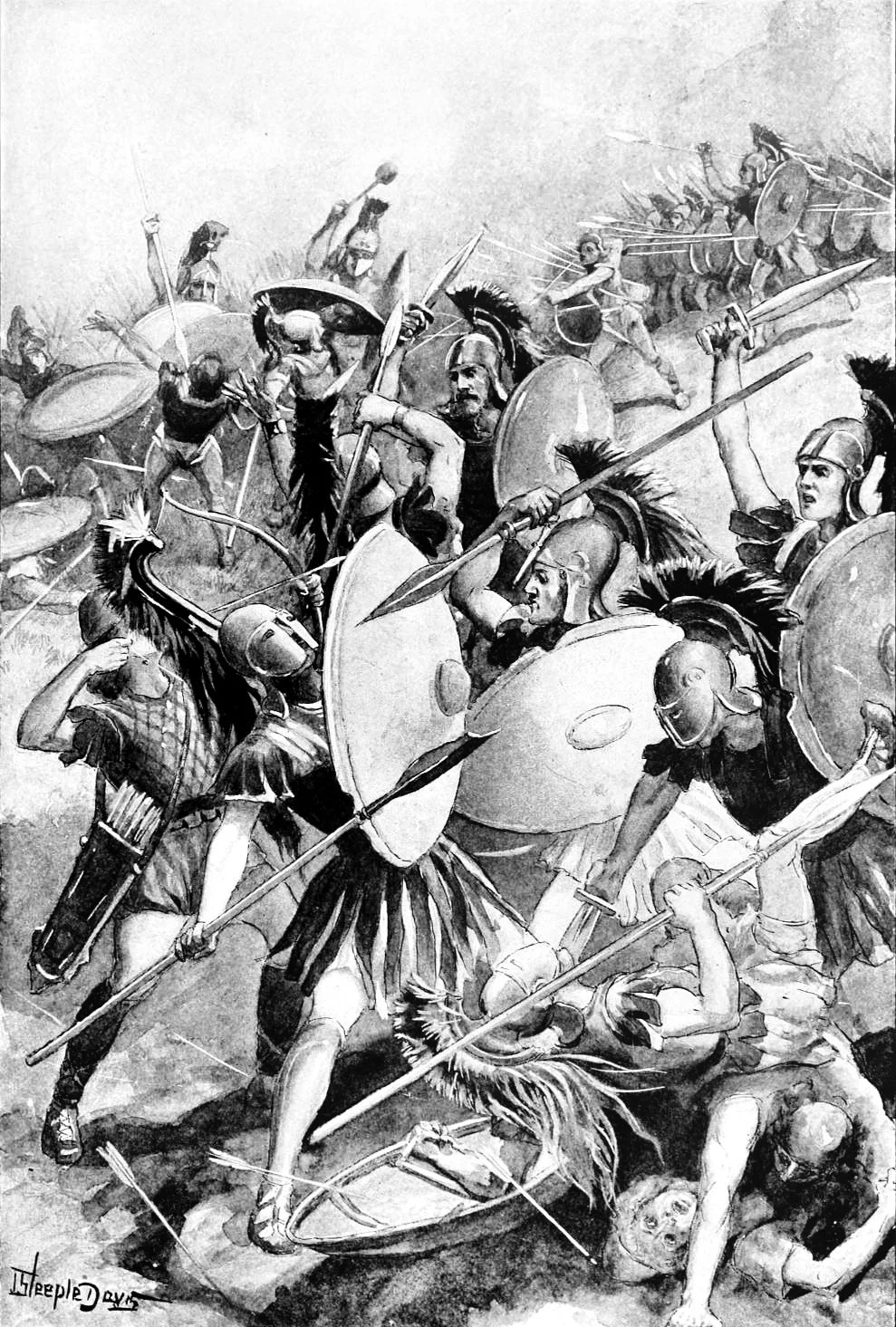
While marble defined Greek art, bronze defined Greek power. The hoplite infantryman who fought at Marathon and Thermopylae was encased in a shell of bronze armor and carried a devastating bronze-tipped spear. The production of these weapons was a highly specialized, sacred industry that pushed ancient metallurgy, fuel management, and pyrotechnology to their absolute structural limits.
                         [ THE FOUNDRY VALUE CHAIN ]
                                      │
         ┌────────────────────────────┴────────────────────────────┐
         ▼                                                         ▼
 [ THE RAW SMELTING METALS ]                              [ THE CASTING ARCHITECTURE ]
 * 90% Copper (Cyprus / Laurion)                           * Lost-Wax (Cire Perdue) Methods
 * 10% Tin (Cornwall Imports)                              * Multi-Piece Clay Investment Molds
         │                                                         │
         └────────────────────────────┬────────────────────────────┘
                                      ▼
               [ FINISHING CORE: Work-Hardening & Quenching ]
The Recipe for War: The Bronze Alloy
Bronze is an intentional alloy composed of approximately 90% copper and 10% tin. The Greek smith (chalkeus) had to manage an international trade network to source these raw elements.
Copper was mined extensively in Cyprus and the Laurion hills of Attica, but tin was exceptionally rare, requiring trade caravans to import the metal from as far away as the Atlantic coasts of Spain and Great Britain.
Pure copper is relatively soft and dulls quickly; the addition of tin alters the atomic lattice of the metal, making the resulting bronze exceptionally hard, corrosion-resistant, and capable of holding a razor-sharp edge.
The Lost-Wax Casting Revolution
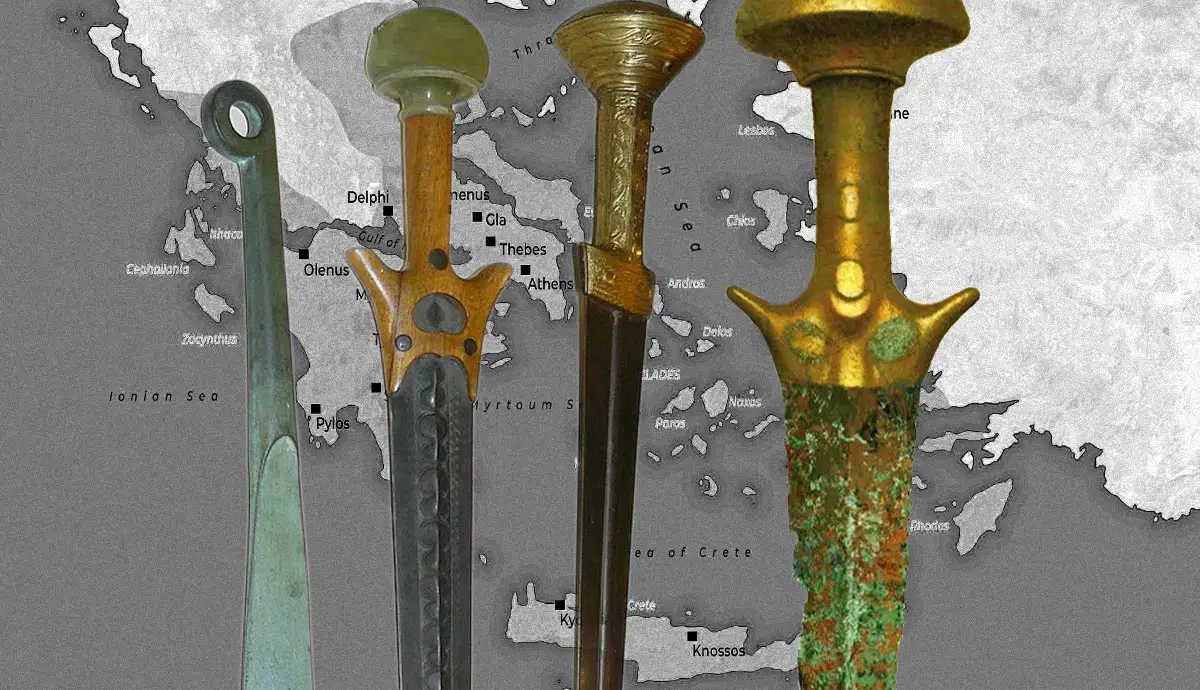
To manufacture complex, hollow shapes like the iconic Corinthian helmet or a heavy hoplite sword (xiphos), Greek smiths perfected the lost-wax method (cire perdue), a multi-step engineering process:
The Core: The smith sculpted a highly detailed core out of refractory clay, mimicking the interior dimensions of the weapon or helmet.
The Wax Layer: This clay core was coated in a uniform layer of beeswax, which the artisan carved with fine decorative lines, crest-holders, and facial contours.
The Investment: The wax-covered core was encased in a heavy outer jacket of coarse clay and bound with iron bands, creating a solid "investment mold."
The Burnout: The entire mold was baked in a kiln. The heat melted the wax, which drained out through small vent holes, leaving a highly detailed, paper-thin void between the inner clay core and the outer clay jacket.
The Pour: Molten bronze, superheated to over 1080°C in a charcoal-fired furnace using double-action leather bellows, was poured directly into the empty channel. Once the metal cooled, the outer clay mold was smashed away to reveal a flawless, hollow bronze casting.
Work-Hardening and Forging
The casting process was only half the battle. As cast, bronze is brittle and prone to shattering upon heavy impact. To transform a cast blank into a lethal weapon, the blacksmith had to perform work-hardening.
The smith took the bronze sword blade or spear tip to the anvil and systematically hammered the edges while the metal was cold. This intense compression forced the crystal structures within the bronze to interlock, drastically increasing the tensile strength and hardness of the cutting edges.
The weapon was then polished with abrasive emery powder from the island of Naxos until it possessed a mirror-like, golden sheen, creating a weapon that was both a terrifying tool of slaughter and a magnificent work of industrial art.