Nemesis is one of the most compelling figures in Greek mythology, acting not merely as a bringer of punishment, but as the cosmic "balancer" of the universe. While modern language often uses "nemesis" to describe an arch-rival, the ancient Greek concept was far more philosophical and profound.
I. The Nature of Nemesis: Divine Equilibrium
At her core, Nemesis was the personification of divine indignation—the force that reacted when mortals stepped out of their allotted place. Her role was governed by the concept of moira (fate) and the avoidance of hybris (excessive pride or arrogance).
The Check on Prosperity: The Greeks believed that when a mortal experienced sudden, extreme success or wealth, they were in danger of falling into hybris. Nemesis existed to ensure that no human remained above their station. If a person claimed too much for themselves—or too little regard for the gods—Nemesis stepped in to restore the balance.
The Inevitable Fall: She was the "enforcer" of the natural order. She did not act out of malice or cruelty; she acted out of necessity to keep the cosmos in check. If a mortal became "too big," Nemesis ensured they were brought back down to size.
II. Origins and Iconography
Nemesis is often described as the daughter of Nyx (Night), which aligns her with other primordial, chthonic forces like the Erinyes (Furies) and Thanatos (Death). This lineage emphasizes that her function is as ancient and unavoidable as the night itself.
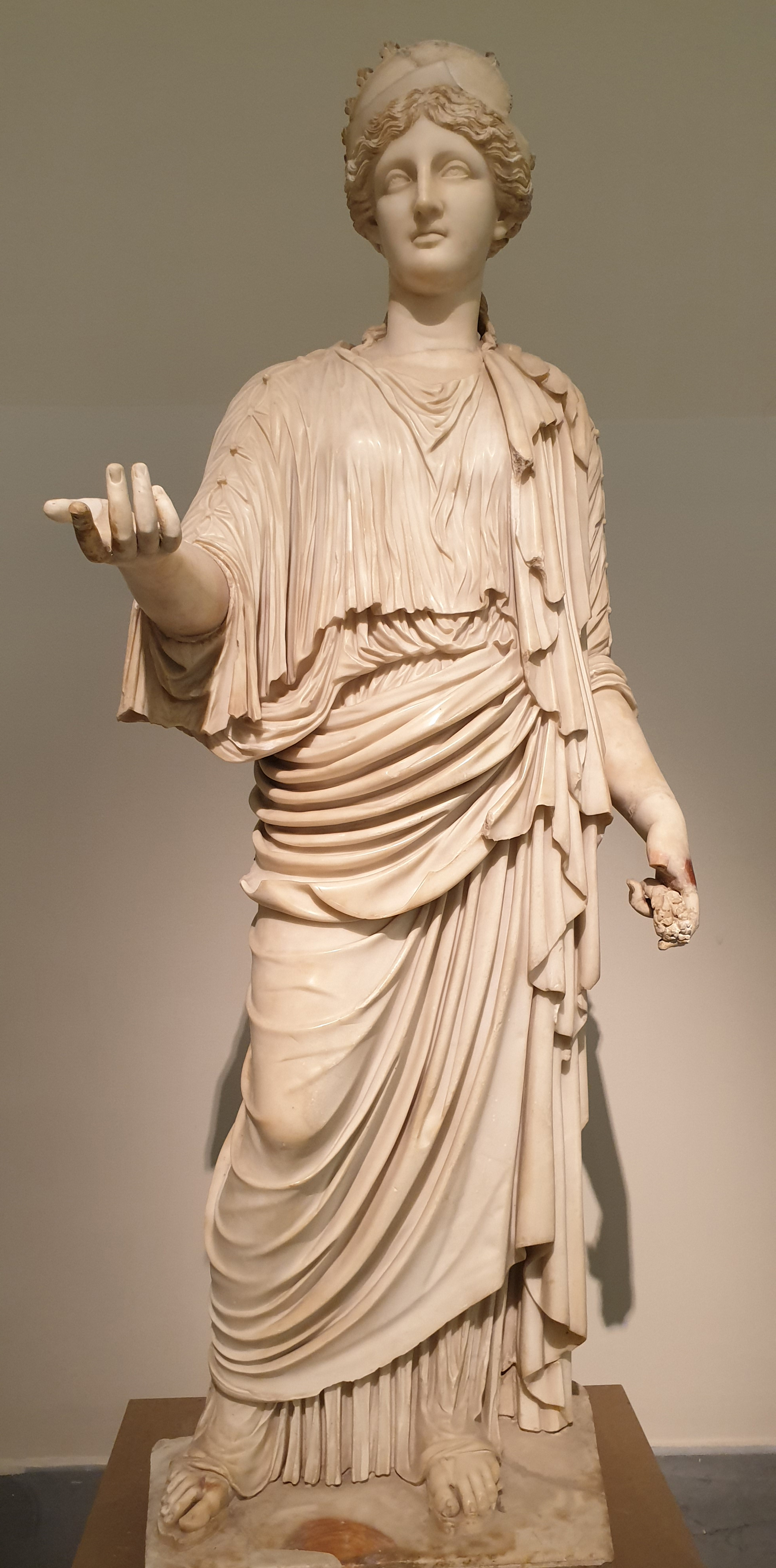
Iconography: She was frequently depicted holding a measuring rod or a bridle.
The measuring rod represents the "measure" or "portion" allotted to each individual; she measures out exactly what a person deserves.
The bridle symbolizes the restraint she imposes on those who are running wild with success or arrogance.
The Wheel: In later depictions, she is often shown with a wheel, symbolizing the turning of fortune—that which is high must eventually become low.
III. The Myth of Narcissus
One of the most famous examples of Nemesis in action is the story of Narcissus.
After Narcissus cruelly rejected the nymph Echo and many others, a spurned lover prayed to the gods for justice. Nemesis heard the prayer. She punished Narcissus by forcing him to fall in love with his own reflection in a pool of water. This punishment was perfectly calibrated to his crime: his pride and self-obsession led to his own undoing. By making him fall in love with what he could never possess, Nemesis restored the balance, showing that extreme vanity leads to absolute emptiness.
IV. Nemesis vs. the Erinyes
It is easy to confuse Nemesis with the Erinyes (Furies), but their roles were distinct:
The Erinyes were specifically concerned with crimes against family and blood-oaths; they were instruments of visceral, terrifying vengeance.
Nemesis was concerned with violation of the social and cosmic order; she was an instrument of measured, inevitable correction.
Nemesis serves as the ancient world’s reminder that the universe has a "self-correcting" mechanism. She teaches that prosperity without humility is a dangerous state, and that the higher one rises, the more critical it becomes to respect the boundaries set by the gods and by fate.