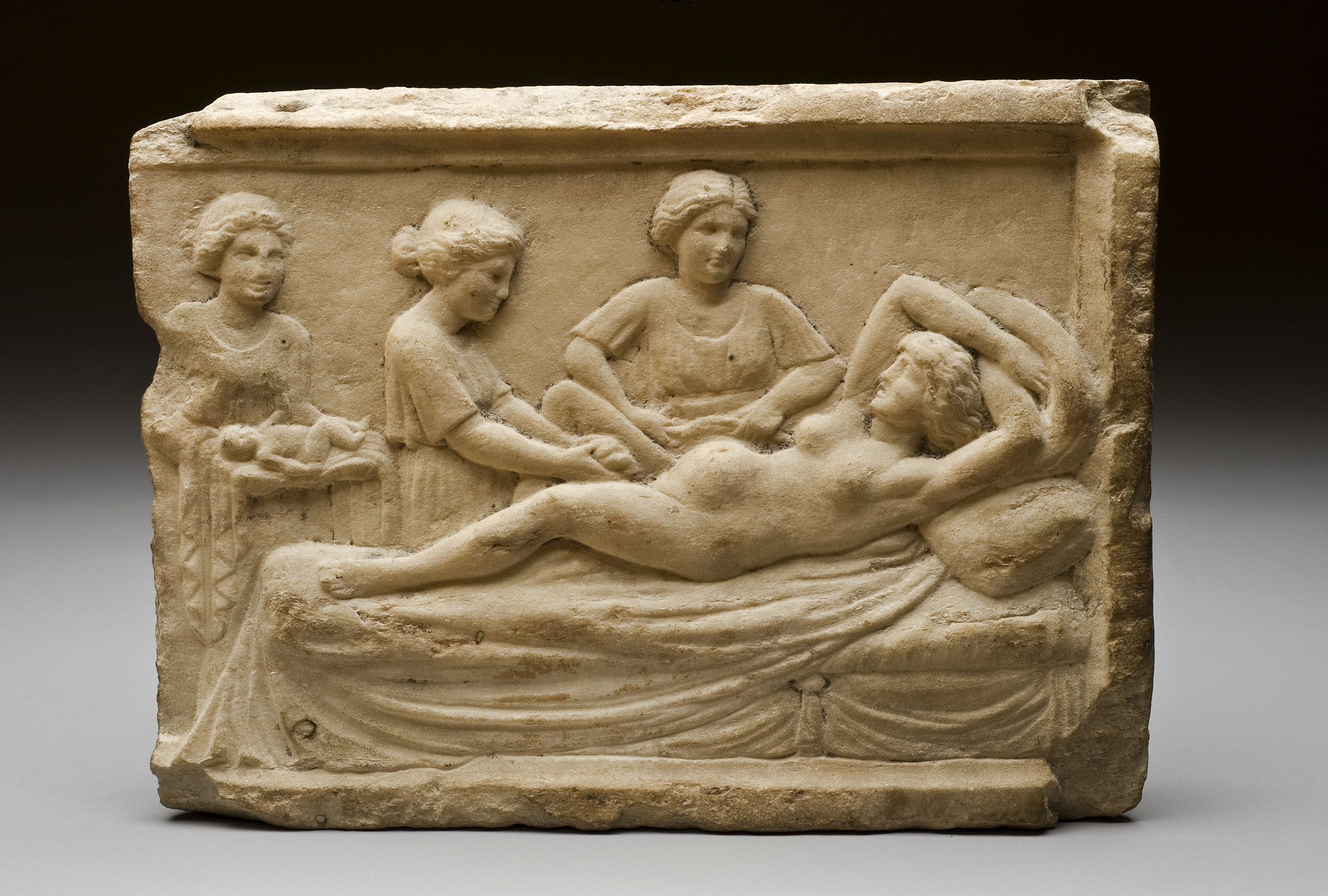
Childbirth in ancient Greece was a perilous, high-stakes medical boundary event fraught with extreme mortality rates for both mother and infant. Because male physicians trained in the Hippocratic tradition were culturally barred from entering the female quarters (gynaeceum) during active labor, the responsibility for managing pregnancy, delivery, and post-natal survival fell entirely upon the shoulders of professional midwives, known as maiai
The Hierarchical Tiers of Midwifery
Midwifery was a highly organized, professionalized trade that operated across a strict meritocratic hierarchy. According to Plato’s dialogues (his own mother, Phaenarete, was a renowned midwife), a woman could not become a maia until she had herself given birth and passed the age of menopause, ensuring that every practicing midwife possessed deep, personal empirical experience with labor.
At the pinnacle of the trade were the iatromaiai (midwife-physicians). These were highly educated women who blended traditional practical midwifery with advanced pharmacopeia and physical therapeutics. They were capable of diagnosing complex fetal presentations, administering uterine tonics, and intervening in severe medical complications that baffled ordinary practitioners.
The Material Space: The Birth Stool
During the active stages of labor, the midwife transformed the domestic bedroom into a sterile, functional clinical space. The central piece of hardware deployed was the birth stool (diphros tiktousa).
This was a custom-designed wooden chair featuring a clean, crescent-shaped circular cutout in the seat, complete with sturdy armrests for the laboring woman to grip during contractions.
The midwife sat on a low stool directly in front of the open cutout, positioning herself perfectly to manually receive the descending neonatals, apply warm oil compresses to prevent tissue tearing, and manipulate the umbilical cord.
The Obstetric Therapeutics
Midwives possessed a diverse, highly practical toolkit of natural pharmaceuticals and manual maneuvers to handle obstructed labors:
Uterine Stimulants: If contractions stalled, midwives administered herbal teas infused with dittany of Crete, pennyroyal, or crushed linseed to naturally stimulate contractions and accelerate labor.
Podalic Version: In terrifying cases of breech or transverse presentations (where the baby was positioned sideways), the iatromaia would sanitize her hands with warm olive oil, insert her arm directly into the birth canal, and carefully execute a podalic version—manually turning the fetus mid-womb to pull it out feet-first, saving the mother from fatal internal hemorrhaging.
Ritual Accompaniments: Alongside these physical interventions, midwives functioned as spiritual guardians. They burned sacred incense to invoke Artemis (the goddess of childbirth) and Eileithyia, and unknotted all ropes, hair braids, and clothing fasteners inside the room, operating on a sympathetic magical belief that any physical knot would psychically bind the mother’s cervix and prevent a successful delivery.