Ancient Greek society did not possess a single, perfectly standardized system of timekeeping comparable to the modern Gregorian calendar or the internationally coordinated system of clocks. Instead, Greeks measured time through a combination of natural observation, religious festivals, lunar cycles, solar cycles, agricultural seasons, civic calendars, and increasingly sophisticated astronomical calculations.
The ancient Greek understanding of time was therefore both practical and cultural. Farmers needed to know when to plant and harvest. Sailors needed to understand seasonal winds and the movement of stars. Religious communities needed to determine the dates of festivals and sacrifices. Governments needed to organize assemblies, courts, elections, and military campaigns.
As Greek knowledge of mathematics and astronomy developed, scholars also created increasingly complex methods for calculating the movements of the Sun, Moon, and planets.
The result was a remarkably sophisticated—but highly decentralized—system of timekeeping.
Time Before Mechanical Clocks
Ancient Greeks did not have mechanical clocks.
The mechanical clocks familiar from medieval and modern history did not exist during the Classical Greek period.
Instead, people relied upon observable natural phenomena.
The most obvious division was between:
day,
night,
dawn,
sunrise,
midday,
sunset,
and darkness.
These divisions were immediately visible.
A person did not need a written calendar to recognize the beginning of daylight.
However, more precise activities required more sophisticated systems.
The Day and Night
The Greek day was closely connected with the cycle of the Sun.
Daytime began with the appearance of light and ended with sunset.
Night followed.
However, ancient Greeks did not initially divide every day into fixed sixty-minute hours as modern societies do.
Instead, the length of an “hour” could change depending upon the season.
During longer summer days, daylight hours were longer.
During shorter winter days, daylight hours were shorter.
This system is often described as seasonal or temporal hours.
Dividing Daylight into Hours
By the Classical and Hellenistic periods, Greeks increasingly divided the daytime into twelve parts.
The same principle could be applied to the night.
Because daylight duration changed throughout the year, a daylight hour in summer could be significantly longer than a daylight hour in winter.
For example, imagine two days:
A summer day contains sixteen hours of sunlight by modern measurement.
A winter day contains eight hours of sunlight.
If both were divided into twelve daylight hours, the individual “hours” would not be equal.
The summer hour would be longer.
The winter hour would be shorter.
Modern equal-length hours developed through later systems of time measurement.
The Sundial
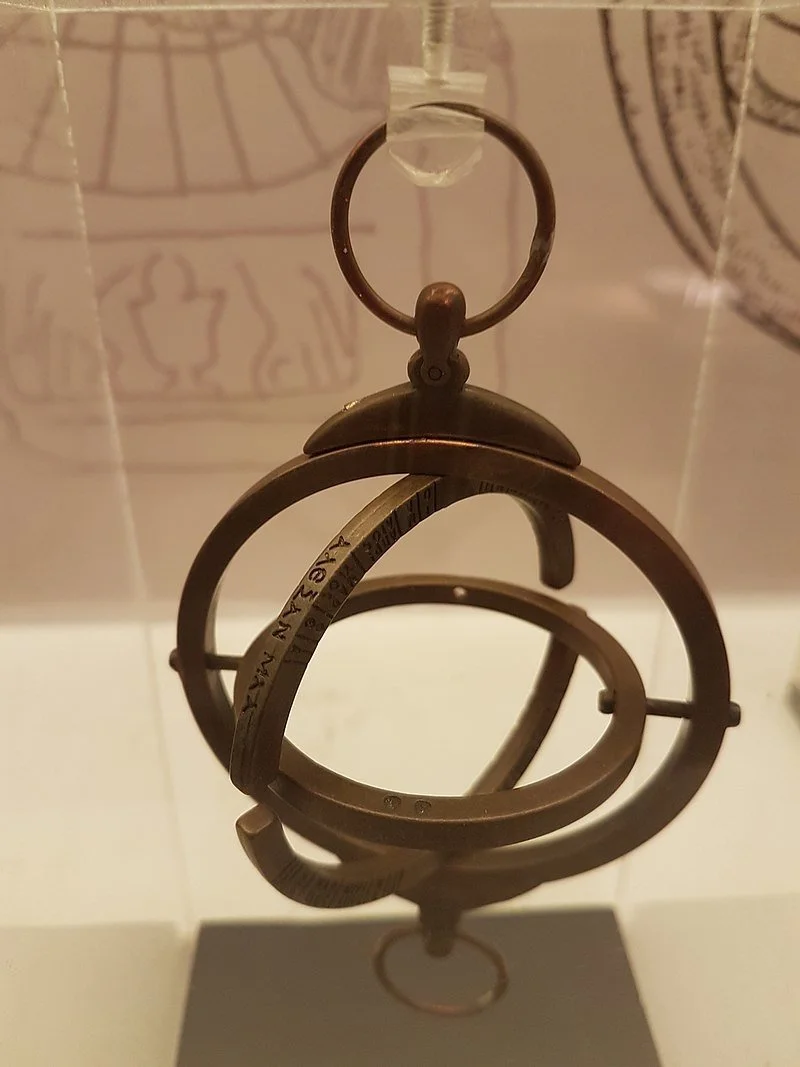
One of the most important Greek instruments for measuring time during the day was the sundial.
A sundial uses the movement of the Sun's shadow.
A vertical or angled object called a gnomon casts a shadow.
As the Sun moves across the sky, the position of the shadow changes.
By observing the shadow against marked lines, people could estimate the time of day.
Greek mathematicians and astronomers improved the geometry of sundials and developed increasingly sophisticated designs.
How a Sundial Worked
The principle was relatively simple:
Sunlight struck the gnomon.
The gnomon produced a shadow.
The shadow moved as Earth rotated.
Marked lines represented divisions of the day.
The observer estimated the time based on the shadow's position.
However, constructing an accurate sundial required astronomical and geographical knowledge.
The apparent movement of the Sun differs according to:
latitude,
season,
time of year,
and the orientation of the instrument.
Greek scientific knowledge helped improve these calculations.
The Water Clock
Another important device was the clepsydra, or water clock.
Unlike a sundial, a water clock could function without sunlight.
This made it useful at night or indoors.
A typical water clock measured time through the controlled movement of water.
Water could flow:
out of a container,
into another container,
or between marked levels.
The changing water level provided a rough measure of elapsed time.
Water Clocks in Athenian Courts
Water clocks were especially important in Athens.
Public speakers participating in legal proceedings were often limited by time.
A clepsydra could regulate the amount of time available for a speech.
When water flowed, time passed.
When the container emptied or reached a designated level, the speaker's allotted time ended.
The clock therefore served an important political and legal function.
Timekeeping was not merely scientific.
It helped regulate civic life.
The Greek Calendar Was Not Universal
One of the most important facts about ancient Greek timekeeping is that there was no single calendar used by all Greek cities.
Different city-states developed their own calendars.
Athens had its calendar.
Sparta had its own traditions.
Corinth, Delphi, and other communities also followed local systems.
This could create difficulties.
A particular month in Athens might not correspond exactly to a month with a different name in another city.
The same religious festival could also be dated differently depending on local customs.
The Lunar Month
Most Greek calendars were fundamentally lunisolar.
This means they attempted to coordinate:
the lunar cycle,
with the solar year.
The Moon was particularly useful for measuring shorter periods.
A lunar month lasts approximately 29.5 days.
Ancient calendars therefore used months containing approximately:
29 days,
or 30 days.
By alternating month lengths, calendar systems could approximate the lunar cycle.
Why Twelve Lunar Months Were Not Enough
Twelve lunar months equal approximately 354 days.
A solar year is approximately 365.24 days.
This creates a difference of about eleven days each year.
If nothing were done, the months would gradually move through the seasons.
A festival intended for spring could eventually occur during winter.
Agricultural activities would become disconnected from the calendar.
Ancient Greeks therefore needed a way to correct the difference.
The Intercalary Month
The solution was to occasionally add an extra month.
This process is called intercalation.
An intercalary month brought the lunar calendar back into approximate alignment with the solar year.
The addition of extra months was essential for maintaining a lunisolar calendar.
Different Greek communities used different systems to determine when the additional month should be inserted.
The Eight-Year Cycle
One important early system was the octaeteris, an eight-year cycle.
The system recognized that eight solar years and approximately ninety-nine lunar months are relatively close in length.
By organizing months across an eight-year period and adding intercalary months, calendar-makers could reduce the difference between lunar and solar time.
The system was not perfectly accurate by modern astronomical standards.
However, it represented a significant attempt to coordinate natural cycles mathematically.
The Metonic Cycle
A major development occurred through the work associated with the astronomer Meton of Athens in the fifth century BCE.
The Metonic cycle recognized that:
19 solar years are approximately equal to 235 lunar months.
This was an important achievement in ancient astronomical timekeeping.
By using a nineteen-year cycle and inserting seven additional lunar months during that period, calendar-makers could maintain a much closer relationship between lunar months and the solar year.
The cycle later influenced other calendar systems as well.
Months in the Athenian Calendar
The Athenian calendar is among the best documented Greek civic calendars.
Its months included names such as:
Hekatombaion,
Metageitnion,
Boedromion,
Pyanepsion,
Maimakterion,
Poseideon,
Gamelion,
Anthesterion,
Elaphebolion,
Mounichion,
Thargelion,
Skirophorion.
These names were closely connected with local religious traditions and festivals.
The year therefore did not merely divide time mathematically.
It organized religious life.
The Beginning of the Athenian Year
The Athenian civic year generally began around midsummer, after the summer solstice.
However, because the calendar was lunisolar and depended upon lunar observation and intercalation, the exact correspondence with modern calendar dates could vary.
This illustrates an important difference between ancient and modern calendars.
A modern date such as “July 15” has a fixed position within a standardized calendar.
An ancient Greek month could shift relative to the modern calendar.
Festivals as Time Markers
Religious festivals were essential markers of time.
People remembered the year through recurring celebrations.
A citizen might organize time according to events such as:
the Panathenaea,
the Dionysia,
the Eleusinian Mysteries,
agricultural festivals,
local sacrifices,
and civic ceremonies.
Time was therefore experienced socially.
A year was not simply 365 numbered days.
It was a cycle of recurring events.
Agricultural Time
Farmers often depended more heavily upon seasonal observation than official calendars.
They needed to recognize:
changes in temperature,
rainfall,
plant growth,
the behavior of animals,
and the appearance of stars.
Agricultural writers and poets described the importance of seasonal timing.
The appearance of particular stars could signal the approach of planting or harvesting periods.
The Stars as a Calendar
The rising and setting of stars provided another system for measuring the year.
Ancient observers recognized that particular stars became visible at predictable times.
The heliacal rising of a star occurs when it becomes visible shortly before sunrise after a period of invisibility.
Such events could be used as seasonal markers.
The stars therefore acted as a natural calendar.
Hesiod and Seasonal Time
The poet Hesiod's Works and Days provides an important example of how Greeks connected celestial observation with agricultural activity.
The poem discusses farming, sailing, and seasonal labor.
It reflects a world in which knowledge of the environment was essential.
The calendar was not separate from nature.
Human activity followed patterns created by:
the Sun,
the Moon,
the stars,
weather,
and the agricultural cycle.
Measuring the Year
Greek astronomers gradually developed increasingly sophisticated estimates of the solar year.
They recognized that the movement of the Sun through the annual cycle could be tracked through:
solstices,
equinoxes,
and changes in the length of daylight.
The summer solstice marked the longest day.
The winter solstice marked the shortest.
The equinoxes represented periods when day and night were approximately equal.
These astronomical events became important reference points.
The Role of Astronomy
By the Hellenistic period, Greek astronomy had developed advanced mathematical methods.
Astronomers such as:
Hipparchus,
Aristarchus,
Eratosthenes,
and later Ptolemy
contributed to increasingly detailed understandings of celestial movement.
Timekeeping became connected with geometry.
The heavens could be modeled mathematically.
The movements of the Sun and Moon could be predicted.
Hipparchus and Astronomical Precision
Hipparchus, active during the second century BCE, made important contributions to the study of astronomical cycles.
His work helped improve calculations involving:
the solar year,
lunar movement,
eclipses,
and celestial coordinates.
The ability to predict astronomical events represented a major advance in ancient science.
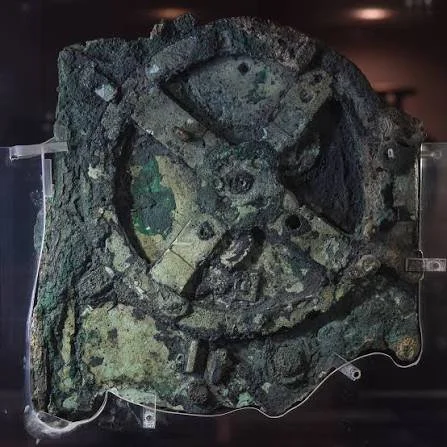
The Antikythera Mechanism
One of the most extraordinary surviving examples of Greek astronomical technology is the Antikythera Mechanism.
Recovered from a shipwreck, the device contained a complex system of gears.
Researchers have shown that it could model astronomical cycles and predict phenomena such as eclipses.
The mechanism demonstrates that Greek knowledge of time and celestial movement could be translated into mechanical form.
It was, in effect, a highly sophisticated ancient astronomical calculator.
Time and Politics
Timekeeping was also essential for government.
Greek city-states needed to organize:
assemblies,
council meetings,
court proceedings,
religious festivals,
military service,
and public administration.
Athens developed systems for dividing the civic year among different administrative groups.
The calendar therefore helped structure political participation.
The Prytanies
In Classical Athens, the political year was divided into administrative periods called prytanies.
Different tribal groups took turns performing particular governmental responsibilities.
The system created another layer of timekeeping.
A person could identify a period not only by the lunar month but also by the administrative group responsible for civic duties.
This demonstrates that ancient Greeks used multiple calendars simultaneously.
Multiple Calendars at Once
An Athenian citizen could experience time through several overlapping systems.
For example:
Lunar time
The phases of the Moon determined the month.
Festival time
Religious celebrations structured the year.
Civic time
Governmental institutions organized political activity.
Seasonal time
Agriculture followed environmental changes.
Astronomical time
Scientists measured the movement of celestial bodies.
There was no single universal clock controlling every aspect of life.
Counting Years
Greeks used several methods to identify years.
One common method was to identify a year according to an important political official.
In Athens, years could be named after the archon who held office.
Instead of saying a particular event occurred in “the year 432 BCE,” an ancient Athenian might identify the year through the name of the relevant archon.
Other Greek communities used different systems.
Olympiads
Another method eventually became important for historians.
The ancient Olympic Games occurred at four-year intervals.
A four-year period became known as an Olympiad.
Later writers could date events according to Olympiads.
For example, an event might be placed in a particular year of a particular Olympiad.
This system helped historians compare events from different Greek communities.
The Concept of the Hour
The Greek concept of the hour developed gradually.
Early societies could divide time into broad periods without needing precise equal units.
As astronomy and mathematics developed, more exact divisions became useful.
Eventually, Greek scientific traditions contributed to the development of systems that divided circles and time into smaller units.
The influence of Babylonian mathematical traditions was also important in the broader development of the sexagesimal, or base-sixty, system associated with minutes and seconds.
Why Ancient Greek Time Was Flexible
To modern people, the ancient Greek system may appear complicated.
But it was designed for a different world.
A farmer did not necessarily need to know that it was exactly 10:43 in the morning.
They needed to know:
when dawn arrived,
when the Sun reached its highest point,
when a season changed,
when rain was expected,
when a star appeared,
and when an important festival would occur.
The system was therefore practical within its historical environment.
Conclusion
Ancient Greeks measured time through an impressive combination of natural observation, civic organization, religious tradition, mathematics, and astronomy.
They watched the movement of the Sun and Moon, divided daylight into seasonal hours, used sundials and water clocks, organized months around lunar cycles, inserted additional months to maintain seasonal alignment, and developed sophisticated astronomical cycles such as the Metonic cycle.
Their calendars were not standardized across all of Greece. Instead, each community could maintain its own system while astronomers and historians developed broader methods for comparing events.
Ancient Greek timekeeping ultimately demonstrates that measuring time is not only a scientific activity. It is also a cultural one.
The Greeks measured time through the heavens, but they also measured it through festivals, harvests, political offices, athletic competitions, religious rituals, and the recurring rhythms of human life.