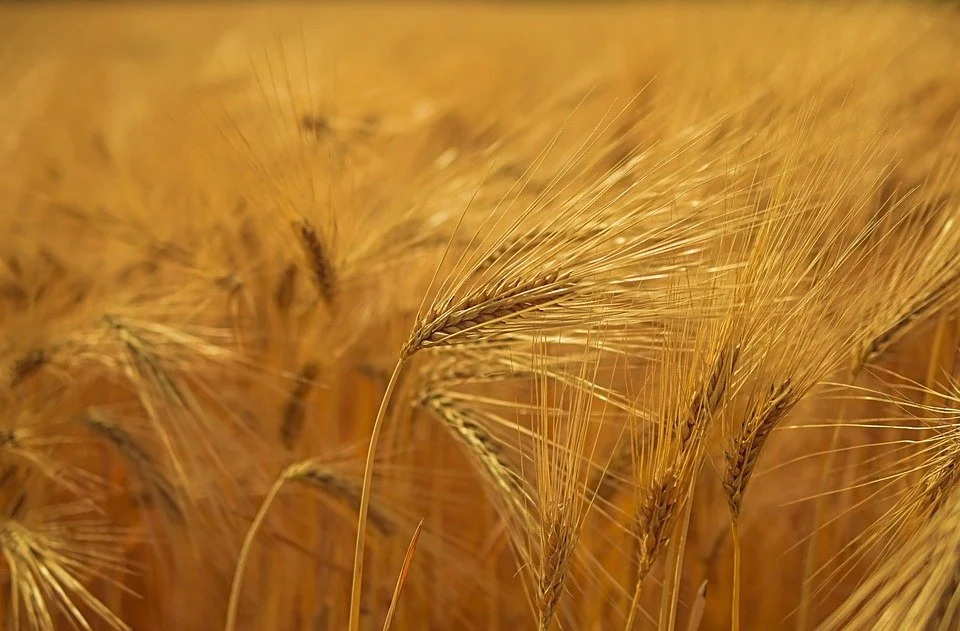
Barley was one of the most important foods in ancient Greece. Although modern discussions of Mediterranean agriculture often emphasize wheat, olives, and grapes, barley occupied a central position in the daily diet of many Greek communities. It was resilient, adaptable to difficult environmental conditions, and capable of growing in areas where other crops were less reliable.
For ordinary people, barley was not an unusual or secondary food. It was a fundamental source of energy. Greeks consumed it in several forms, including ground meal, cakes, porridge-like preparations, and especially maza, a broad category of foods prepared from barley.
The importance of barley reveals a central reality of ancient Greek life: the diet of the majority was shaped not by luxury but by geography, climate, agricultural productivity, and the practical need to produce reliable calories.
Why Barley Was Important in Greece
The geography of Greece strongly influenced agriculture.
Much of the Greek landscape consists of:
mountains,
rocky terrain,
limited plains,
thin soils,
and regions with irregular rainfall.
These conditions made large-scale grain production challenging.
Barley was valuable because it could tolerate relatively difficult growing conditions.
Compared with some forms of wheat, barley could mature more quickly and perform well in environments with less favorable soils.
This made it particularly useful in the Mediterranean world.
Barley as a Staple Crop
A staple food is a product that provides a major proportion of a population's daily energy.
In many ancient Greek communities, cereals served this function.
Barley and wheat formed the foundation of the diet, but their relative importance varied according to:
region,
period,
social status,
agricultural conditions,
and availability.
Barley was especially important for ordinary households.
It could be cultivated, stored, transported, and transformed into multiple forms of food.
The Greek Agricultural Year
Barley was part of a larger agricultural system organized around seasonal cycles.
Farmers needed to prepare the soil, sow seed, monitor crop growth, and harvest at the appropriate time.
Agriculture depended upon rainfall patterns and seasonal conditions.
A poor harvest could create serious problems.
Because ancient communities lacked modern agricultural technologies, grain production was highly vulnerable to:
drought,
excessive rain,
pests,
warfare,
and transportation problems.
The reliability of a hardy crop therefore had enormous value.
From Field to Food
Barley did not become food immediately after harvest.
It required several stages of processing.
These could include:
harvesting the grain;
separating grain from stalks and husks;
cleaning and storing it;
grinding or crushing it;
preparing it for cooking or consumption.
Each stage required labor.
In many households, food processing was part of daily life.
The production of a simple meal could involve considerable work.
Grinding Barley
Grain had to be transformed before it could be easily eaten.
One common method involved grinding or crushing the grain using stones.
The development and use of querns and grinding stones were therefore essential to ancient food production.
A household's ability to process grain influenced its daily survival.
Grinding was often repetitive and physically demanding.
Over time, technological developments improved the efficiency of this process.
Maza: A Characteristic Barley Food
One of the most important Greek foods made from barley was maza.
The term can refer to several preparations rather than one single standardized recipe.
Barley meal could be mixed with liquids or other ingredients and formed into edible portions.
Maza might be:
eaten relatively simply,
shaped into cakes,
combined with cheese,
mixed with herbs,
or accompanied by other foods.
Its flexibility made it ideal for everyday consumption.
Why Maza Was Practical
Maza did not necessarily require the same type of baking process associated with leavened bread.
This could make preparation more practical.
A household could process barley meal and combine it with water or other ingredients to create a substantial food.
For workers, farmers, travelers, and soldiers, such grain-based preparations could provide portable energy.
Barley and Wheat
Ancient Greeks were familiar with both barley and wheat.
However, the two grains did not necessarily carry identical cultural associations.
Wheat bread could be regarded as desirable or prestigious in some contexts.
Barley was often associated more strongly with ordinary daily consumption.
This should not be interpreted as meaning that barley was unimportant.
A food can be culturally less prestigious while remaining economically essential.
In fact, the importance of barley partly resulted from its practicality.
Food and Social Class
The diet of a wealthy Greek household could differ considerably from that of a poor agricultural laborer.
Wealthier individuals had greater access to:
meat,
imported goods,
fine wine,
fish,
luxury ingredients,
and more varied foods.
Ordinary people relied more heavily on staple crops.
For many households, daily meals were built around:
grain,
legumes,
vegetables,
olives,
fruit when available,
cheese,
and occasionally fish or meat.
Barley fit naturally within this pattern.
Meat Was Not an Everyday Food for Everyone
Modern representations of ancient Greece sometimes exaggerate the importance of meat.
Meat could be consumed during sacrifices, festivals, and special occasions.
However, regular access to large quantities of meat was not guaranteed for the average person.
Cereal products therefore supplied much of the everyday caloric foundation.
Barley was central to this system.
Barley and Greek Religion
Barley also had important religious functions.
Grain could be used in sacrificial rituals.
Barley grains were sometimes scattered or incorporated into ceremonial preparations.
Food and religion were closely connected in Greek society.
Agricultural products were not merely economic resources.
They could also function as offerings to the gods.
Demeter and the Importance of Grain
The goddess Demeter was closely associated with agriculture and grain.
Her myths reflected the dependence of human societies on agricultural productivity.
The cycle of planting and harvesting could be understood through divine narratives involving Demeter and her daughter Persephone.
Although Demeter was associated broadly with cultivated grain rather than exclusively with barley, her importance demonstrates the central role cereals played in Greek culture.
Without grain, cities could not easily support large populations.
Barley in Sacrifice
Barley grains could be associated with ritual preparation.
Participants in sacrifices might use grain in ceremonies surrounding the offering of an animal.
This demonstrates that barley was present not only at the dinner table but also in public religious life.
The same crop could connect:
agriculture,
household labor,
political life,
and religious practice.
Barley and the Military
Grain was particularly important for armies.
Military campaigns required reliable food supplies.
Fresh food was not always available.
Grain could be transported and stored more easily than many other foods.
Barley meal or related preparations could therefore contribute to military provisioning.
Soldiers needed calories that could survive transportation.
Grain was one of the most practical solutions.
Barley and Travel
Travelers also benefited from foods that could be carried.
A prepared barley product could be transported more easily than a freshly cooked meal.
This portability was important in a world where long-distance travel could take days or weeks.
Food preservation and transport were essential practical concerns.
The Nutritional Role of Barley
Barley provided carbohydrates, which were essential for energy.
It also contains dietary fiber, protein, and various micronutrients.
The exact nutritional contribution depended upon how the grain was processed.
Ancient diets were not evaluated through modern nutritional science, but the practical value of barley was obvious.
A productive field of grain could support a household.
Stored grain could help communities survive periods when fresh food was scarce.
Barley and Food Security
Food security was one of the most important concerns in the ancient world.
Cities needed reliable supplies.
A local crop failure could create shortages.
Some Greek city-states therefore depended upon trade to supplement domestic agricultural production.
Athens, for example, became heavily dependent on imported grain as its population and political power expanded.
Barley remained important, but grain supply became a major political issue.
Grain Trade
The transportation of grain across the Mediterranean created extensive economic networks.
Ships carried agricultural products between regions.
A city that could not produce enough food locally needed access to trade routes.
Control over grain supply could therefore influence political power.
The importance of cereal crops extended beyond the farm.
It affected diplomacy, naval strategy, taxation, and warfare.
Storage
Grain had to be protected after harvest.
Communities and households developed methods for storing agricultural products.
Storage was essential because the harvest occurred during a limited period, while food was required throughout the year.
Poor storage could result in:
spoilage,
insect damage,
theft,
or loss during conflict.
The ability to preserve grain was therefore a major component of agricultural survival.
Barley and Ancient Greek Cuisine
Barley was rarely eaten completely alone.
It could be combined with other common ingredients.
These might include:
olives,
cheese,
herbs,
vegetables,
onions,
legumes,
honey,
and occasionally fish or meat.
The Greek diet was therefore based upon combinations rather than isolated foods.
Barley supplied the energy base.
Other ingredients added flavor and nutritional variety.
The Mediterranean Diet Was Not Uniform
It is important not to imagine that every ancient Greek ate the same food.
Diet depended upon:
wealth,
location,
season,
occupation,
gender roles within food preparation,
trade access,
and religious customs.
An island community with access to abundant fish could eat differently from an inland farming village.
A wealthy Athenian could eat differently from a rural laborer.
Barley was important precisely because it could fit into many of these different environments.
Barley and Labor
Producing barley required physical work.
Farmers had to prepare land using available tools and animal labor.
Harvesting was labor-intensive.
Processing continued after the grain entered the household.
Women, enslaved people, laborers, and other household members could participate in various stages of food production depending on the social and economic structure of the community.
The final meal therefore represented the work of many people.
Archaeological Evidence
Archaeologists study ancient agriculture through several forms of evidence.
These include:
carbonized seeds,
pollen,
agricultural tools,
storage facilities,
grinding stones,
ceramic vessels,
and written records.
Barley grains can survive when they become carbonized.
Such remains provide evidence for the crops cultivated and consumed by ancient populations.
Ancient Texts and Barley
Greek literature also contains references to barley and cereal foods.
Writers discussed agriculture, sacrifice, diet, and daily life.
These texts help historians understand how food was viewed culturally.
However, literary evidence must be interpreted carefully.
A poem may emphasize symbolism rather than ordinary practice.
A wealthy author's description of a banquet may not represent the diet of ordinary farmers.
Archaeological evidence therefore provides an essential complement.
Barley as an Economic Resource
Grain could function as more than food.
It could represent wealth.
Agricultural production affected the ability of households and states to support populations.
A successful harvest could increase stability.
A failed harvest could create debt and social conflict.
The control of agricultural land was therefore deeply connected with political power.
The Everyday Importance of Barley
The greatest importance of barley may have been its ordinary nature.
It was not necessarily a rare or glamorous food.
It was important because people depended on it.
History often focuses on kings, wars, temples, and philosophers.
But ancient societies could not exist without farmers and staple crops.
Barley helped provide the daily energy required for:
labor,
travel,
military activity,
household life,
and urban survival.
Conclusion
Barley was one of the foundations of the ancient Greek diet.
Its ability to grow under challenging Mediterranean conditions, its versatility in food preparation, and its usefulness for storage and transportation made it an essential agricultural resource.
Greek people transformed barley through grinding, crushing, mixing, and cooking. One of its most characteristic forms was maza, a flexible category of barley-based food that could serve as an everyday source of nourishment.
Barley also extended beyond the household. It appeared in religious rituals, agricultural economies, military provisioning, and systems of trade.
The history of ancient Greece cannot be understood only through temples, battles, philosophers, and political institutions.
It must also be understood through the ordinary foods that sustained the people who built those institutions.
For countless Greeks, barley was not merely an ingredient.
It was one of the foundations of daily life.