Ancient Greek food was shaped by geography, climate, agriculture, trade, religion, and social class.
The Mediterranean environment produced olives, grapes, grains, herbs, vegetables, and fish, while trade introduced additional ingredients from distant regions.
However, reconstructing ancient Greek recipes is difficult.
Unlike modern cookbooks, ancient sources rarely provide exact measurements or step-by-step instructions.
Many recipes must therefore be reconstructed from literary texts, archaeological discoveries, agricultural evidence, and descriptions of ancient eating habits.
The Foundation of the Greek Diet
The traditional Greek diet was strongly based on three major products:
grain,
olives and olive oil,
and grapes and wine.
These products formed the foundation of everyday food production.
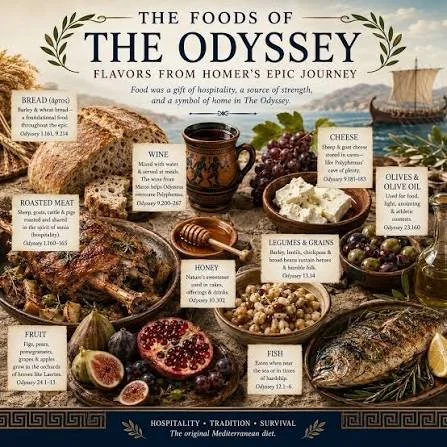
Grains could be transformed into bread, porridge, and other foods.
Olives provided food and oil.
Grapes were consumed fresh or dried and were also used in wine production.
Barley and Wheat
Barley was particularly important in many Greek communities.
It could be ground into flour or used to create porridge and cakes.
Wheat was also valuable, especially for bread.
Food preparation depended heavily on grinding.
Grain could be processed using stone tools before being mixed with water and baked.
Olive Oil
Olive oil was one of the most important ingredients in Greek life.
It was used not only for food but also for:
lamps,
cosmetics,
religious practices,
and personal care.
In cooking, olive oil could be used with vegetables, fish, bread, and other foods.
The importance of olive cultivation helped shape the economy of the Greek world.
Fish and Seafood
Because Greece possessed a long coastline and numerous islands, fish was an important food source.
Ancient Greeks consumed both fresh and preserved fish.
Fish could be:
grilled,
roasted,
dried,
salted,
or preserved using other techniques.
Salted fish could be transported and stored for longer periods.
Meat and Social Status
Meat was not necessarily consumed every day by everyone.
Large quantities of meat were often associated with:
religious sacrifices,
festivals,
wealthy households,
and special occasions.
Animals could include:
sheep,
goats,
pigs,
and cattle.
Religious sacrifice played an important role in the distribution of meat.
Herbs and Seasonings
Greek cooking used a variety of herbs and seasonings.
These could include:
oregano,
thyme,
mint,
coriander,
and other locally available plants.
Honey was an important sweetener.
Since refined sugar was not part of the ancient Greek diet, honey was used to sweeten foods and drinks.
Cheese and Dairy Products
Goat and sheep milk were important sources of dairy products.
Cheese could be stored longer than fresh milk and therefore represented a valuable food.
Different regions likely developed their own variations.
Wine and Ancient Drinking Culture
Wine was a central part of Greek social life.
It was often mixed with water before being consumed.
Drinking undiluted wine could be considered excessive in certain social contexts.
Wine was particularly important during the symposium, a social gathering involving conversation, entertainment, and drinking.
Reconstructing Lost Recipes
Because many ancient recipes have not survived in complete form, modern historians and experimental archaeologists must reconstruct them.
They study:
ancient writings,
pottery,
food remains,
animal bones,
plant remains,
and cooking equipment.
A reconstructed ancient dish may never be completely identical to the original.
However, experimentation allows researchers to better understand ancient food preparation.
The Legacy of Ancient Greek Cuisine
Ancient Greek food influenced the broader Mediterranean culinary tradition.
Olive oil, bread, wine, herbs, fish, cheese, and vegetables remain important elements of Mediterranean cuisine today.
Although many exact recipes have disappeared, the basic principles of Greek food culture continue to influence how millions of people eat.
The "lost recipes" of ancient Greece therefore represent more than forgotten meals.
They provide evidence about agriculture, trade, religion, social class, and daily life.