The Prophetess Who Was Granted Immortality but Forgot to Ask for Eternal Youth
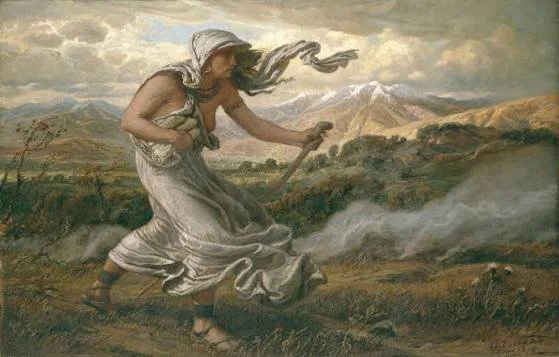
One of the strangest stories connected with ancient prophecy concerns the Sibyl of Cumae.
She was a legendary prophetess associated with the Greek colony of Cumae in southern Italy.
Her story became particularly famous because she received an extraordinary gift from the god Apollo.
But the gift contained a terrible flaw.
Who Was the Sibyl?
The word sibyl referred to a female prophetic figure.
There were traditions about multiple sibyls across the ancient Mediterranean.
The Sibyl of Cumae became especially important in Roman literature.
Apollo's Offer
According to the famous story, Apollo offered the Sibyl a wish.
She asked for as many years of life as there were grains of sand she could hold in her hand.
Apollo granted the request.
But she failed to ask for something equally important:
eternal youth.
Immortality Without Youth
The Sibyl continued aging.
Her body became increasingly weak.
She lived for centuries.
But she did not remain young.
Eventually, she became extraordinarily old.
Her physical body deteriorated.
Yet life continued.
The Seven Hundred Years
Some literary traditions emphasize the enormous length of her life.
The exact number varies by source and context.
The essential point is the same:
She possessed an extraordinarily long life but continued to age.
The Curse
The “curse” is therefore not immortality itself.
It is immortality without preservation of youth.
The story becomes a warning about careless wishes.
A person can receive exactly what they request while failing to consider its consequences.
The Sibyl and Aeneas
The Sibyl of Cumae became especially famous in Virgil's Aeneid.
She guides Aeneas into the underworld.
This gives her a major role in Roman epic.
She is no longer merely a prophetess.
She becomes a guide between the world of the living and the realm of the dead.
The Golden Bough
In Virgil's story, Aeneas must obtain the Golden Bough before entering the underworld.
The Sibyl provides guidance.
Her knowledge allows the hero to navigate a world ordinary humans cannot enter safely.
Prophecy and Authority
A prophetess possesses unusual knowledge.
She can see things ordinary people cannot.
This gives her authority.
But it also creates a tragic dimension.
She knows the future.
Yet knowing the future does not necessarily give her control over it.
The Sibylline Books
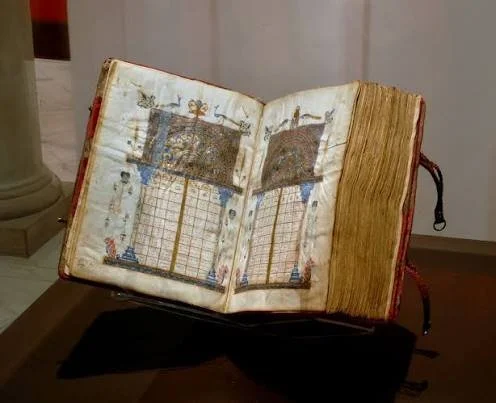
The Roman world later associated the Sibyl of Cumae with the famous Sibylline Books.
According to Roman tradition, these prophetic books were acquired by King Tarquinius Priscus or Tarquinius Superbus, depending on the version.
The historical details are wrapped in legend.
The books were consulted during crises.
Why the Story Became So Powerful
The Sibyl's fate explores an ancient fear:
What if you could live forever—but had to experience endless aging?
Modern culture frequently imagines immortality as a gift.
The Sibyl demonstrates that immortality can become terrifying.
Life without death is not necessarily the same as eternal youth.
The Deeper Lesson
The story is ultimately about unintended consequences.
Humans often desire more:
More life.
More power.
More wealth.
More knowledge.
But Greek mythology repeatedly asks whether receiving what we want is actually good for us.
The Sibyl received exactly what she requested.
And that was the problem.