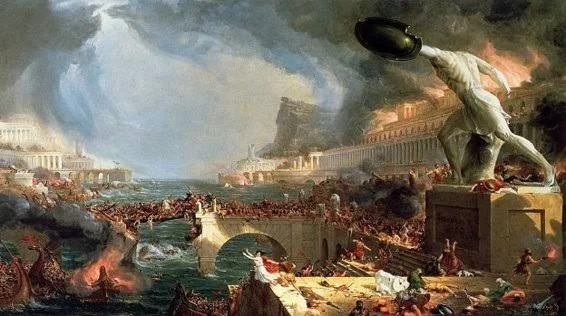
The expression "Ancient Greece" describes not a single unified country but a civilization composed of independent communities spread across mainland Greece, the Aegean islands, western Anatolia, and eventually much of the Mediterranean and Black Sea regions. Its history unfolded over many centuries, from the Bronze Age civilizations of the Minoans and Mycenaeans to the incorporation of the Greek world into the Roman sphere.
The rise of Greek civilization began long before the classical period.
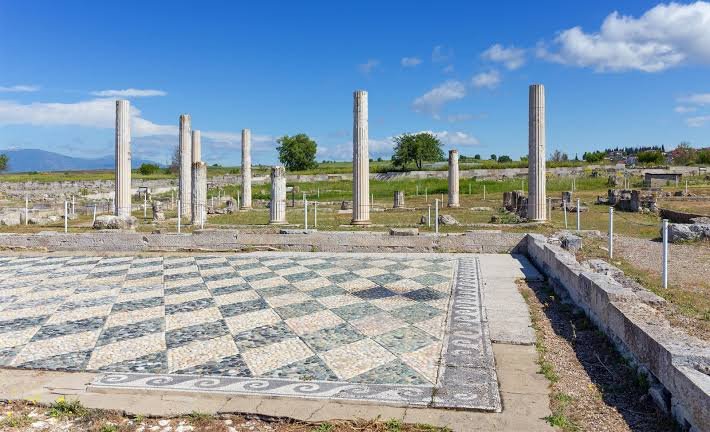
During the Bronze Age, the Minoan civilization developed on Crete. Major centers such as Knossos became important administrative and economic hubs. The Minoans participated in extensive maritime networks, connecting Crete with the Aegean, mainland Greece, Egypt, and the eastern Mediterranean.
On mainland Greece, the Mycenaean civilization emerged as another major Bronze Age society. Fortified centers such as Mycenae, Tiryns, and Pylos demonstrate the existence of complex political organizations. Linear B tablets reveal an administrative system concerned with agriculture, taxation, labor, military resources, and religious offerings.
Around the end of the Bronze Age, however, many palace centers experienced destruction or abandonment. The causes remain debated and probably involved several interconnected factors, including warfare, political instability, environmental changes, and disruption of long-distance trade.
The centuries that followed are often called the Greek Dark Ages, although the term can be misleading because Greek communities continued to exist and develop. By the eighth century BCE, population growth, renewed trade, and overseas colonization contributed to a major transformation.
Greek communities established colonies across southern Italy, Sicily, the Black Sea, North Africa, and other parts of the Mediterranean. These settlements expanded Greek economic and cultural influence far beyond the Aegean.
The polis, or city-state, became one of the defining institutions of Greek civilization.
Athens, Sparta, Corinth, Thebes, Argos, and many other poleis developed their own political systems and identities. Some became democracies, some oligarchies, some monarchies, and others adopted mixed systems.
Athens eventually developed the world's most famous ancient democracy. Reforms associated with Solon, Cleisthenes, and later leaders transformed political participation. Adult male citizens could participate directly in assemblies, vote on important matters, and sometimes serve in public offices.
Sparta followed a radically different model. Its society emphasized military discipline, communal identity, and the subordination of individual interests to the Spartan state. The contrast between Athens and Sparta became one of the most important political and cultural rivalries in Greek history.
The fifth century BCE represented a particularly influential period.
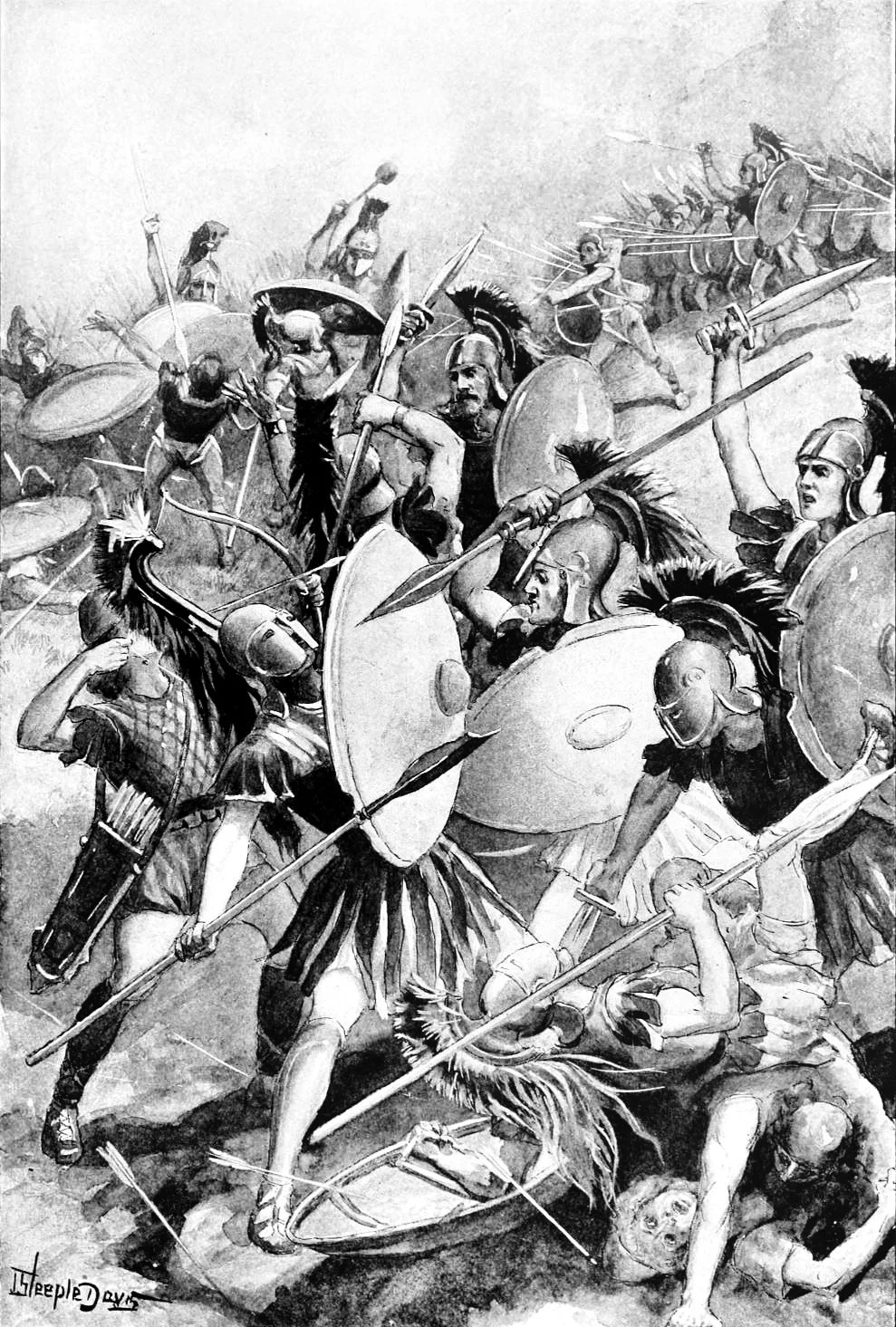
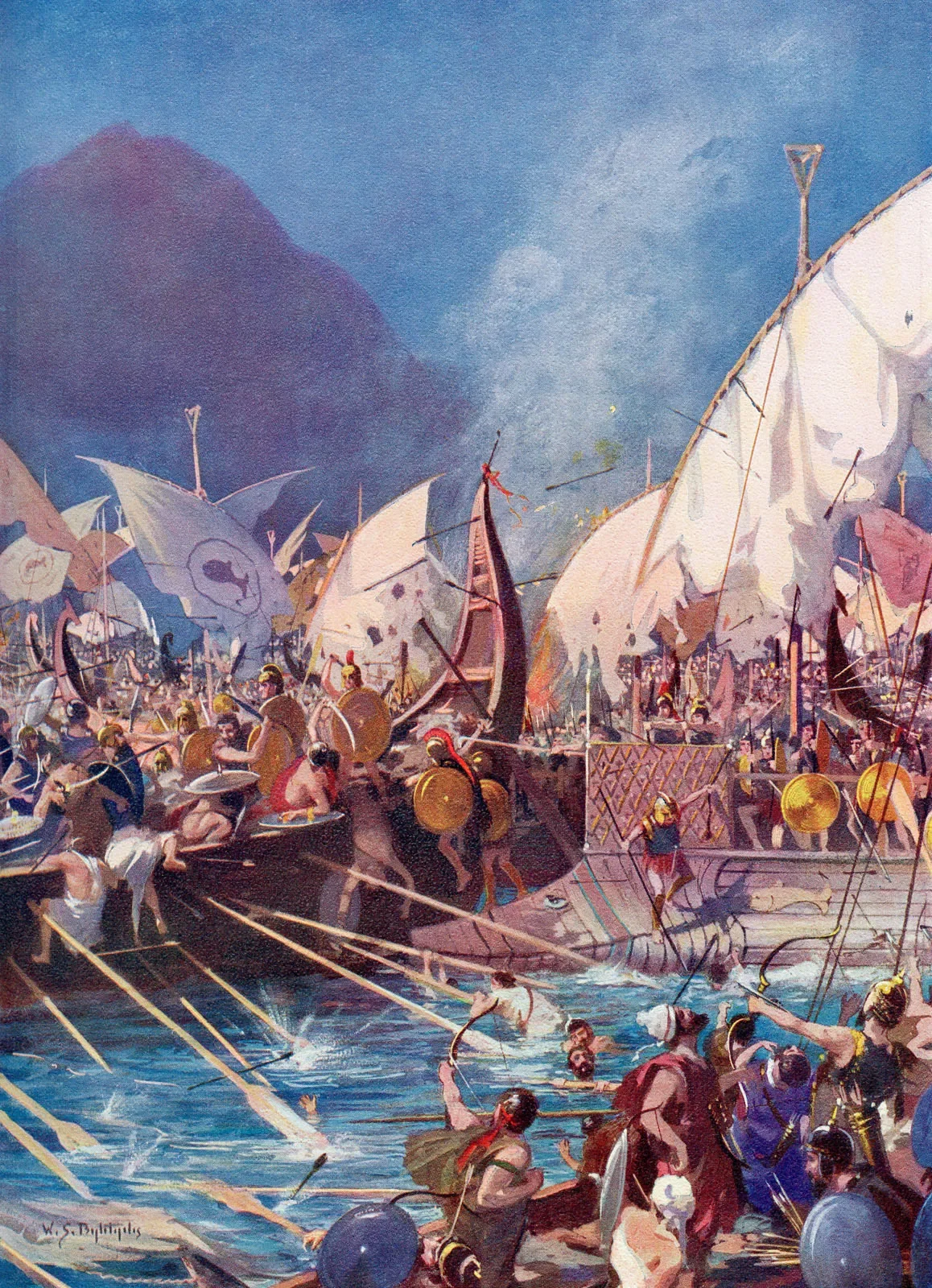
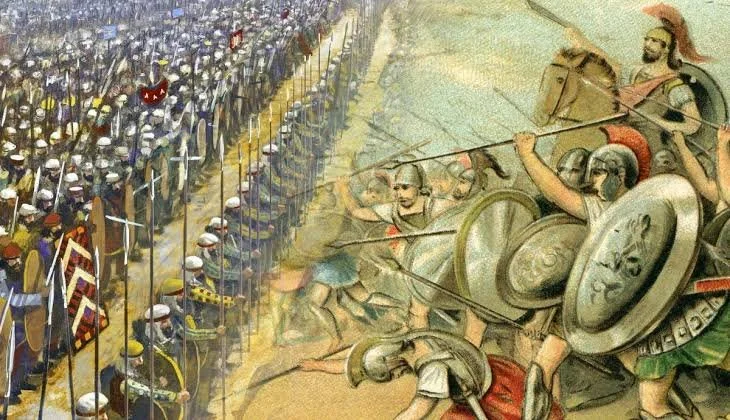
During the Persian Wars, Greek states confronted the massive Persian Empire. Battles such as Marathon, Thermopylae, Salamis, and Plataea became central to later Greek historical memory.
The Greek victory did not create political unity, however.
Instead, Athens emerged as the dominant naval power and organized the Delian League. What had initially been an alliance against Persia gradually developed into an Athenian empire. Tribute from allied communities helped finance Athens' military and monumental building programs.
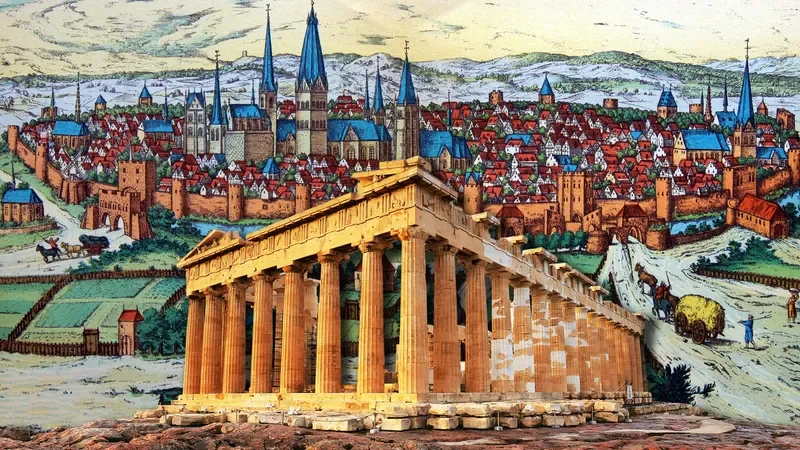
This period witnessed extraordinary cultural achievements. The Parthenon was constructed on the Acropolis. Drama flourished through playwrights such as Aeschylus, Sophocles, Euripides, and Aristophanes. Philosophers including Socrates, Plato, and later Aristotle transformed intellectual history.
But Greek power was also undermined by internal conflict.
The Peloponnesian War between Athens and Sparta lasted from 431 to 404 BCE, with periods of truce and renewed warfare. Athens suffered from plague, military disasters, and eventually the catastrophic Sicilian Expedition. Sparta ultimately defeated Athens with Persian financial support.
Sparta's victory did not produce lasting stability.
The fourth century BCE witnessed intense competition among Sparta, Athens, Thebes, and other states. The Theban victory at Leuctra in 371 BCE demonstrated that Spartan military dominance could be broken.
The changing political landscape eventually allowed Macedon to become the dominant power.
Philip II of Macedon reorganized the Macedonian army and expanded his influence over the Greek mainland. His victory at Chaeronea in 338 BCE effectively established Macedonian supremacy.
Philip's son Alexander then transformed the political geography of the ancient world.
Alexander's campaigns destroyed the Persian Empire and carried Greek language and cultural institutions deep into Egypt, Mesopotamia, Persia, and Central Asia. The Hellenistic period that followed was characterized by cultural interaction rather than simple Greek expansion.
Greek cities remained centers of learning, trade, and administration. Alexandria became one of the most important intellectual centers of the ancient Mediterranean.
The eventual "fall" of Ancient Greece therefore cannot be attributed to one event.
Greek political independence declined gradually. Macedonian rulers dominated much of the Greek world, and later Rome expanded its influence. After the Roman victory over Macedonian forces and the eventual defeat of Greek resistance, Greece became part of the Roman political order.
Yet Greek civilization did not disappear.
Greek literature, philosophy, science, architecture, political thought, and artistic traditions profoundly influenced Rome. Roman elites studied Greek literature and philosophy, while Greek remained an important language of education and intellectual life.
In this sense, the fall of Greek political independence coincided with the expansion of Greek cultural influence.
The history of Ancient Greece is therefore better understood as a transformation than a simple rise-and-fall narrative. Political systems changed, cities rose and declined, empires replaced alliances, and Greek communities became part of larger Mediterranean states.
What survived was an extraordinary cultural legacy.
The intellectual traditions developed by Greek thinkers became foundational to later philosophy and science. Greek architectural forms influenced Roman construction and eventually European architecture. Greek political experiments became important reference points for later discussions of citizenship and democracy.
Ancient Greece therefore did not simply "fall." Its political structures changed, while its cultural influence continued to expand.