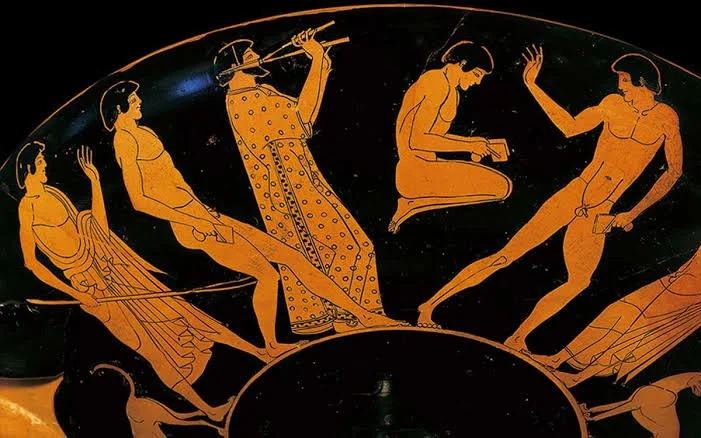
The ancient Greeks were passionate about athletic competition.
The Olympic Games are the most famous example, but Greek athletics included many events that would look unfamiliar to modern sports fans.
Some ancient competitions disappeared entirely.
Others survive only in modified forms.
The ancient sporting world was closely connected with religion, education, warfare, social status, and ideas about the ideal human body.
Understanding these sports therefore means understanding much more than competition.
The Pankration
The pankration was one of the most famous ancient Greek combat sports.
The word means approximately "all powers" or "all strength."
It combined elements of wrestling and striking.
Competitors could punch, kick, grapple, throw, and use various forms of submission.
There were rules and restrictions, however.
The pankration was not simply an unrestricted fight to the death.
Certain techniques were prohibited.
Nevertheless, it was physically demanding and could be extremely dangerous.
Why the Pankration Disappeared
The pankration disappeared along with the ancient Greek athletic festival system.
Modern combat sports sometimes resemble aspects of it.
Mixed martial arts, for example, combine striking and grappling.
But modern MMA has its own rules, equipment, weight classes, medical standards, and regulatory systems.
It should not be described as literally identical to pankration.
Chariot Racing
Chariot racing was another major ancient sport.
It was particularly associated with wealthy elites because maintaining horses and chariots required enormous resources.
Races could involve teams of horses pulling lightweight chariots around tracks.
The danger was considerable.
Collisions could occur.
Chariots could overturn.
Horses could become uncontrollable.
The event therefore combined athletic competition with enormous spectacle.
Why Chariot Racing Was Important
Chariot racing was not simply a test of the driver's physical ability.
Owners could be extremely wealthy.
A victory could enhance the prestige of a family or political leader.
The sport therefore reflected social inequality.
The person associated with victory was not always the person physically controlling the chariot.
Hoplite Racing
The hoplitodromos was a foot race in which competitors ran while carrying military equipment.
Athletes typically wore helmets and carried shields, although the precise equipment varied by period and festival.
The event connected athletics with military identity.
Running while carrying equipment required physical strength and endurance.
Why Hoplite Racing Disappeared
Modern sports generally separate military training from athletic competition.
Ancient Greek culture did not always make that distinction.
Physical fitness was connected with citizenship and warfare.
The hoplite race therefore belonged to a society in which the citizen-soldier was an important social ideal.
The Pentathlon
The ancient pentathlon included five events:
discus;
javelin;
long jump;
running;
wrestling.
The combination created a broad test of athletic ability.
The modern pentathlon is entirely different.
The ancient event was rooted in Greek athletics and emphasized skills associated with physical versatility.
The Ancient Long Jump
Ancient Greek long jumping differed from the modern event.
Athletes used halteres, weighted objects held in the hands.
These weights may have helped generate momentum.
The precise mechanics of their use remain debated.
Ancient long jump therefore should not be imagined as simply the modern event with different clothing.
Boxing
Ancient Greek boxing was extremely different from modern boxing.
Fighters did not use modern padded gloves.
They used leather straps around their hands.
These could protect the hands while still delivering powerful blows.
Matches could be brutal.
There were fewer protective conventions than modern audiences expect.
Wrestling
Wrestling was one of the oldest and most respected Greek athletic disciplines.
The goal was generally to throw an opponent or force them into disadvantageous positions.
Wrestling had both athletic and educational importance.
Young men trained physically as part of broader preparation for citizenship and military service.
The Ancient Greek Games
Athletic festivals existed across the Greek world.
The most famous major festivals included:
Olympia;
Delphi;
Isthmia;
Nemea.
These were sometimes called the Panhellenic Games.
Competitors traveled from different communities to participate.
Religion and Sport
Greek athletics were deeply connected with religion.
The Olympic Games honored Zeus.
The Pythian Games honored Apollo.
The Nemean Games were associated with Zeus.
The Isthmian Games were associated with Poseidon.
Sport was therefore part of religious festivals.
Athletic Nudity
Male athletes commonly competed nude.
The practice became an important part of Greek athletic culture.
The word gymnasium itself derives from gymnos, meaning naked.
Athletic nudity was associated with physical excellence and the Greek cultural ideal of the male body.
Athletic Fame
Victorious athletes could become famous.
Their communities might honor them.
Poets composed victory odes.
Statues could commemorate champions.
Athletic success could therefore become a form of social capital.
Women and Ancient Athletics
The ancient Greek athletic world was highly gendered.
Women were generally excluded from the principal Olympic competitions.
However, women could participate in other athletic and equestrian traditions.
The evidence demonstrates that women's involvement was more complicated than simply saying "women did not play sports."
Why Ancient Sports Matter
Ancient sports reveal the values of Greek society.
Physical strength mattered.
Competition mattered.
Honor mattered.
Community prestige mattered.
Religious identity mattered.
Military preparation mattered.
These values explain why athletic festivals became so important.
The Modern Olympic Comparison
The modern Olympic Games borrow names, symbols, and traditions from ancient Greece.
But they are not simply the ancient Games revived.
Modern Olympics involve:
international nation-states;
professional athletes;
modern technology;
standardized rules;
global media;
extensive medical support;
modern gender participation;
commercial sponsorship.
The differences are enormous.
Conclusion
Ancient Greek sports were often far more varied and culturally integrated than modern audiences realize.
Pankration combined striking and grappling.
Chariot racing combined elite wealth and dangerous spectacle.
Hoplite racing connected athletics with warfare.
The pentathlon tested multiple physical skills.
Ancient boxing and wrestling differed significantly from their modern counterparts.
These competitions disappeared because the social and religious systems that supported them eventually disappeared.
Yet their legacy survives.
Every time modern audiences celebrate athletic excellence, competition, physical discipline, and international sporting festivals, they participate in traditions that have remarkably ancient roots.