Yes.
Ancient Greeks used perfumes, scented oils, cosmetics, and grooming products as part of everyday life.
These substances were not limited to wealthy women or special occasions.
Perfumed oils could be used by men and women for personal grooming, athletic activities, religious rituals, funerals, and social events.
Archaeological evidence from pottery vessels, written sources, chemical residues, and artistic representations demonstrates that fragrance was an important component of ancient Mediterranean culture.
Perfume in Ancient Greece
Perfume was usually associated with fragrant oils rather than the alcohol-based sprays familiar today.
The basic principle was simple.
A fragrant substance was combined with oil.
The resulting product could be applied to the body.
Ingredients might include:
flowers;
herbs;
spices;
resins;
aromatic woods;
leaves;
seeds.
The Mediterranean environment provided many fragrant plants.
Long-distance trade also made exotic ingredients available to wealthy consumers.
Perfume and Trade
Perfume production depended on trade.
Some aromatic materials were not locally abundant.
The eastern Mediterranean connected Greece with Egypt, the Levant, Anatolia, Cyprus, and other regions.
Fragrance therefore belonged to the same commercial world that transported metals, textiles, spices, pottery, and luxury goods.
Perfume Containers
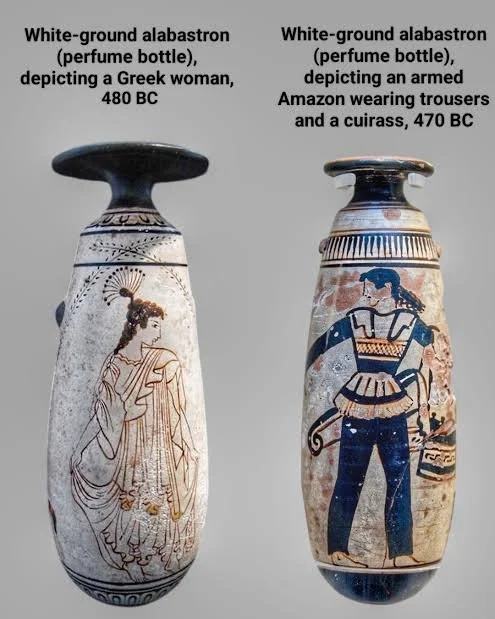
Archaeologists have discovered numerous small vessels associated with oils and cosmetics.
Among them were aryballoi, alabastra, and other small containers.
Their shapes made them practical for storing and transporting valuable liquids.
Some vessels were beautifully decorated.
This indicates that the container itself could communicate status.
Perfume and Athletics
Athletes used oil extensively.
They applied oil to the body before exercise.
After training, athletes could use a strigil to scrape away oil, sweat, and dirt.
The practice served practical and aesthetic purposes.
A well-maintained athletic body was culturally admired.
Perfume and Religion
Fragrance also had religious significance.
Oils and aromatic substances could be offered to gods.
Sacrificial rituals could involve fragrant materials.
Temples and sanctuaries might contain objects associated with perfumed substances.
The boundary between personal grooming and religious ritual was therefore not always clear.
Perfume and Funerals
Fragrant substances were also associated with death.
Bodies could be treated with oils and perfumes.
Funerary rituals emphasized respect for the deceased.
Fragrance could also help manage the practical realities associated with burial.
Archaeological discoveries of perfume vessels in tombs demonstrate the importance of scented products in funerary contexts.
Cosmetics
Ancient Greeks used various substances to alter or enhance appearance.
Cosmetic practices could include:
skin treatments;
oils;
pigments;
hair preparations;
eye cosmetics.
However, cosmetic practices varied by period and social context.
It would be misleading to imagine one standardized Greek beauty routine.
The Ancient Greek Beauty Ideal
Greek art frequently presents idealized bodies.
Smooth skin, balanced proportions, healthy hair, and youthful appearance were valued in many artistic traditions.
But idealized sculpture should not be interpreted as photographic evidence of ordinary people.
Artists constructed ideal forms.
Real Greek appearance varied considerably.
Women and Cosmetics
Literary sources sometimes criticize women for excessive cosmetics.
This criticism is itself valuable evidence.
It demonstrates that beauty practices were socially significant.
Whenever ancient writers complain about cosmetics, they indirectly reveal that cosmetics were actually being used.
Moral criticism should therefore not be mistaken for evidence that cosmetic practices were rare.
Men and Grooming
Cosmetics were not exclusively feminine.
Men also used oils and grooming products.
Athletes, wealthy men, and participants in social and religious activities could use fragrant substances.
Personal grooming was an important component of elite culture.
Fragrance and Social Status
Perfume could be expensive.
Exotic ingredients required trade networks.
Specialized production required skilled labor.
Beautiful containers required craftsmanship.
Therefore, fragrance could communicate wealth.
Wearing a rare scent could distinguish a person socially.
Medical Uses
Fragrant oils could also have practical or medicinal associations.
Ancient medical traditions included numerous preparations involving oils, herbs, and aromatic ingredients.
Not every ancient perfume was medicine.
But the categories could overlap.
A fragrant substance might be valued simultaneously for smell, bodily application, ritual meaning, and perceived therapeutic properties.
Archaeological Evidence
Archaeologists can investigate ancient cosmetics using several kinds of evidence.
Ceramic vessels can reveal storage practices.
Residue analysis can sometimes identify preserved organic compounds.
Written texts provide recipes and references.
Art depicts grooming practices.
Together, these sources help reconstruct ancient cosmetic culture.
Modern Misconceptions
One misconception is that ancient Greeks avoided elaborate grooming because they valued natural beauty.
The reality was more complicated.
Greek culture could admire natural-looking beauty while also using oils, perfumes, cosmetics, hairstyles, and clothing to enhance appearance.
Another misconception is that cosmetics were identical to modern products.
Ancient formulations were based on different ingredients and technologies.
Conclusion
Perfume and cosmetics were important parts of ancient Greek life.
Fragrance was connected with:
personal grooming;
athletics;
religion;
funerals;
social status;
trade;
medicine.
Small perfume vessels may appear insignificant beside temples and statues.
But they reveal something important.
Ancient Greeks cared about how they smelled, looked, presented themselves, and participated in social life.
Perfume therefore provides a surprisingly intimate archaeological window into the everyday experiences of ancient Greek people.