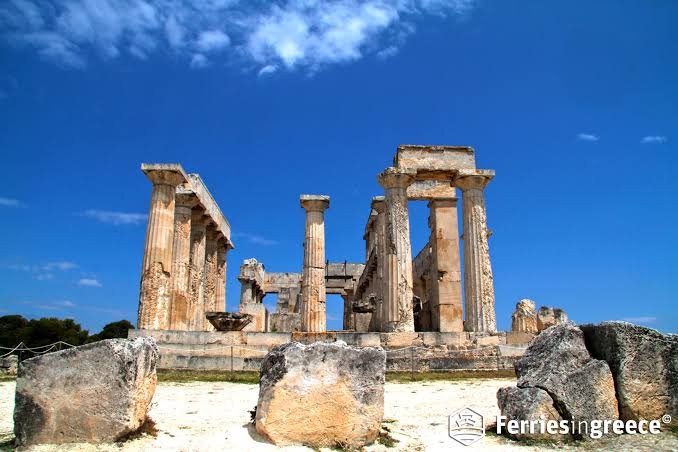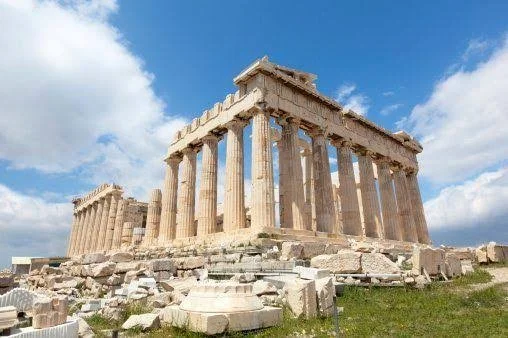
Ancient Greek civilization is often associated with philosophy, democracy, temples, mythology, and beautiful sculpture.
But everyday life could be surprisingly strange from a modern perspective.
The ancient Greeks lived according to social expectations, religious traditions, technologies, and customs that sometimes seem completely unfamiliar today.
At the same time, some of their habits feel remarkably recognizable.
Here are ten of the strangest and most fascinating aspects of ancient Greek life.
1. Drinking Wine Straight Was Often Considered Improper
Ancient Greeks commonly diluted wine with water.
The practice was especially important at the symposium.
A large mixing vessel called a krater was used to combine wine and water before it was distributed.
Drinking unmixed wine could be associated with excessive or uncivilized behavior.
The symposium was therefore not simply about becoming intoxicated.
It was a social institution.
Participants discussed philosophy, politics, poetry, relationships, and current affairs while drinking.
2. Athletes Exercised Naked
The word gymnasium comes from the Greek gymnos, meaning naked.
Male athletes commonly trained without clothing.
Athletic nudity became part of the cultural ideal surrounding physical excellence.
The practice also distinguished Greek athletics from many neighboring traditions.
Athletes used oil on their bodies and later scraped it away using a strigil.
This created an unusual combination of exercise, grooming, and social display.
3. People Used Lead to Curse Their Enemies
Ancient curse tablets are among archaeology's strangest discoveries.
Individuals could write requests to supernatural powers on thin sheets of lead.
They might ask for an opponent to lose a legal case.
Someone might seek revenge against a business competitor.
Another person might attempt to influence a romantic situation.
The tablets demonstrate that religious belief could be deeply personal.
They also reveal anxieties that written historical sources often ignore.
4. Public Speaking Was Timed With Water
Athenian legal proceedings could involve speeches.
To prevent speakers from talking indefinitely, officials could use a clepsydra, or water clock.
Water flowed through the device at a controlled rate.
When the allotted water ran out, the speaker's time was over.
This was a practical technological solution to a political problem.
5. Children Had Dolls and Miniature Animals
Ancient Greek children played with dolls, animals, rattles, balls, and other toys.
Archaeological discoveries demonstrate that childhood included imaginative play.
Some toys were made from clay.
Others were constructed from materials that have not survived as well.
The presence of children's objects gives archaeology a rare glimpse into family life.
6. Girls Could Dedicate Their Toys to Gods
One particularly interesting ritual involved girls dedicating childhood possessions to deities before marriage.
The practice symbolized the transition from childhood to adulthood.
Objects that had represented play could suddenly become ritual offerings.
This reveals how strongly Greek society associated material objects with life stages.
7. Greeks Used Perfumed Oils Everywhere
Perfume was an important part of ancient Greek life.
Fragrant oils were used for:
grooming;
religious offerings;
funerary rituals;
athletic activities;
social events.
Perfume could therefore communicate cleanliness, status, wealth, and religious devotion.
8. Athenians Could Vote to Exile Someone on Pottery
The practice of ostracism is one of the strangest political institutions of ancient Athens.
Citizens could write the name of a person on a piece of broken pottery.
If enough citizens selected the same individual, that person could be exiled for a specified period.
The process was not the same as a criminal trial.
It was a political mechanism intended partly to prevent individuals from becoming dangerously powerful.
9. People Consulted Oracles Before Major Decisions
The Delphic oracle became famous throughout the Greek world.
Individuals and states sought divine guidance.
Questions could involve:
war;
colonization;
religious matters;
political decisions.
The oracle's answers were often sufficiently ambiguous that interpretation became essential.
This meant that prophecy did not necessarily eliminate uncertainty.
It sometimes transformed uncertainty into a different kind of problem.
10. Some Greeks Believed Dreams Could Carry Messages
Dreams could have religious significance.
Ancient Greek literature contains many examples of dreams being interpreted as signs.
At healing sanctuaries such as Epidaurus, visitors could participate in practices involving sacred sleep and dreams.
They hoped the god Asklepios might provide healing guidance.
This reveals how ancient medicine could combine physical treatment, ritual, and religious interpretation.
What These Facts Tell Us
These practices reveal something important.
Ancient Greek life was not simply about philosophy and marble temples.
People were concerned with ordinary things:
health;
appearance;
food;
relationships;
children;
competition;
money;
reputation;
luck;
political conflict.
These concerns are not so different from modern life.
What differs is the cultural framework through which they were understood.
Conclusion
Ancient Greece was simultaneously familiar and strange.
People played games, wore perfume, worried about rivals, raised children, competed in sports, and attended social gatherings.
But they also consulted oracles, dedicated toys to gods, wrote curses on lead, exercised naked, and used water clocks to regulate political speeches.
These details help reconstruct ancient society at human scale.
The Greeks were not simply philosophers and warriors.
They were ordinary people living within a world shaped by religion, social expectations, technology, and traditions that could seem extraordinary to us today.