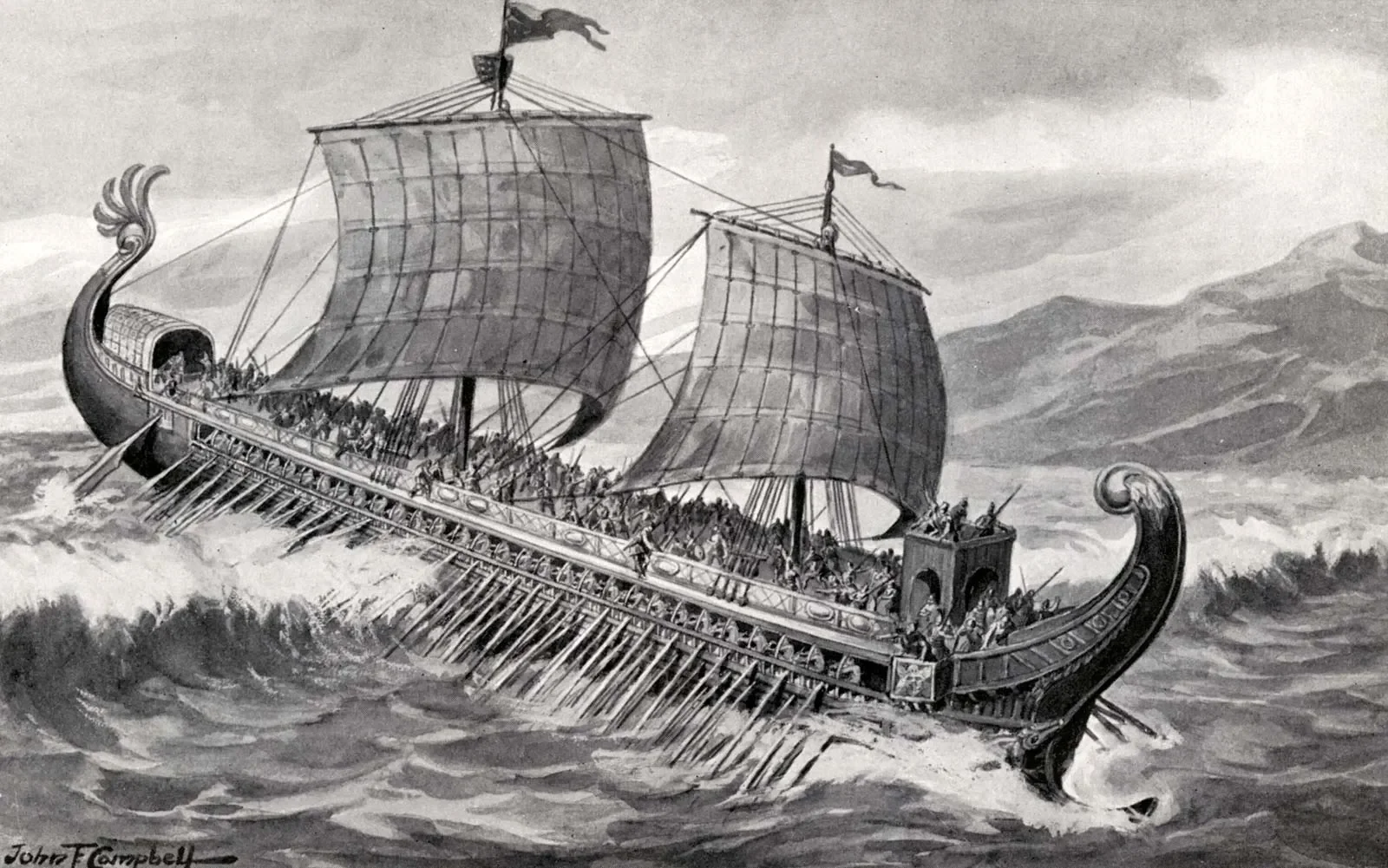
The history of ancient Greece cannot be separated from the sea.
The Greek mainland is mountainous, while the Aegean Sea is scattered with islands.
Communities were separated by mountains and water but connected through maritime routes.
Ships allowed Greeks to trade, migrate, establish colonies, wage war, transport religious pilgrims, and communicate with distant communities.
Without maritime technology, the Greek world would have been profoundly different.
Why Ships Were Essential
The sea was not simply a geographical obstacle.
It was a transportation network.
Ships connected:
mainland Greece;
the Cyclades;
Crete;
Asia Minor;
Cyprus;
Egypt;
the Black Sea;
southern Italy;
Sicily;
North Africa.
Goods could travel much more efficiently by sea than over mountainous land routes.
Early Aegean Boats
Maritime activity in the Aegean extends far into prehistory.
Bronze Age communities developed boats capable of traveling between islands.
Minoan and Mycenaean societies depended heavily on maritime connections.
Archaeological discoveries of imported materials demonstrate the existence of long-distance networks.
Merchant Ships
Merchant ships were designed around cargo capacity.
They generally had broader hulls than specialized warships.
Cargo could include:
pottery;
grain;
wine;
olive oil;
metals;
timber;
textiles;
luxury goods.
Amphorae were particularly important because they could transport liquids efficiently.
The Trireme
The most famous Greek warship was the trireme.
The trireme had three levels or arrangements of oars.
Its design emphasized speed and maneuverability.
Unlike a modern naval vessel, it depended heavily on human rowers.
The ship could accelerate rapidly.
This made it extremely effective in naval warfare.
The Battle of Salamis
The trireme became famous during the Persian Wars.
At the Battle of Salamis in 480 BCE, Greek naval forces defeated the Persian fleet.
The geography of the straits was important.
The narrow waters limited the ability of larger numbers of ships to maneuver effectively.
Greek naval tactics took advantage of the environment.
Rowers
A trireme required a large rowing crew.
The physical coordination necessary was extraordinary.
Hundreds of people had to maintain rhythm.
The ship's speed depended on synchronized effort.
This made naval warfare a form of collective physical labor.
Sails
Ships did not rely solely on rowing.
Sails could provide propulsion when winds were favorable.
Sailing reduced the physical demands on the crew.
However, wind direction and weather were unpredictable.
Captains therefore had to understand seasonal conditions.
Ancient Navigation
Ancient Greek sailors did not possess modern GPS.
They navigated using:
coastal landmarks;
stars;
the Sun;
wind direction;
currents;
known sailing routes;
accumulated experience.
Navigation was partly scientific and partly practical knowledge passed between generations.
Coastal Navigation
Many voyages remained relatively close to shore.
Sailors could use familiar landmarks.
Mountains and prominent headlands helped identify locations.
Islands functioned as stepping stones.
This made the geography of the Aegean particularly favorable for maritime navigation.
Open-Sea Voyages
Ancient sailors could undertake longer voyages.
But open-sea travel carried greater risks.
Storms could destroy ships.
Navigation could become difficult.
Fresh water and food were limited.
Piracy was another danger.
Ancient maritime travel therefore required substantial planning.
Seasonal Sailing
Ancient Mediterranean sailors understood seasonal weather patterns.
The Etesian winds, for example, affect the Aegean during summer.
Understanding prevailing winds could determine when voyages were safest or most efficient.
Travel schedules were therefore strongly influenced by nature.
Shipwrecks
Shipwrecks are some of archaeology's most valuable sources of information.
When a ship sinks, its cargo can remain together underwater.
Archaeologists can then study:
pottery;
metals;
amphorae;
anchors;
wooden components;
tools;
personal possessions.
Shipwrecks can therefore provide snapshots of ancient trade.
The Kyrenia Ship
The famous Kyrenia shipwreck from Cyprus provides important evidence for ancient merchant shipping.
Its cargo included amphorae and other materials.
The wreck dates to the Hellenistic period.
Its reconstruction has helped researchers understand ancient shipbuilding techniques.
The Antikythera Shipwreck
The Antikythera shipwreck is particularly famous.
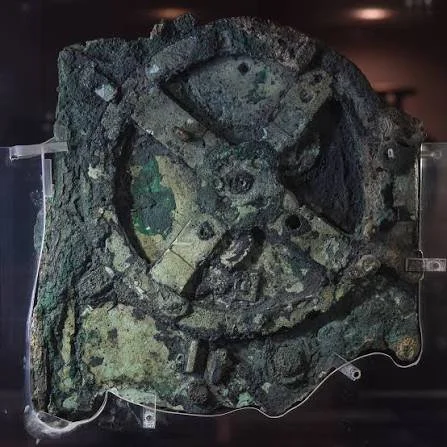
The wreck contained statues, luxury goods, coins, and the extraordinary Antikythera Mechanism.
The mechanism is a complex geared device capable of modeling astronomical cycles.
Its presence demonstrates the technological sophistication of the ancient Mediterranean.
Shipbuilding
Ancient Greek shipbuilders used sophisticated woodworking techniques.
Planks could be joined using mortise-and-tenon construction.
Frames provided additional structural support.
The exact sequence of construction varied according to period and ship type.
The Importance of Timber
Ships required enormous quantities of timber.
This connected maritime power with forestry.
A powerful navy therefore depended on access to suitable wood.
Athens' naval expansion was partly supported by access to timber from regions beyond Attica.
Athens and Naval Power
Athens became a major naval power during the fifth century BCE.
The city's fleet helped create the Athenian maritime empire.
Naval strength allowed Athens to:
protect trade;
transport troops;
project power;
control sea routes;
defend its territory.
The navy therefore became a central component of Athenian political power.
Greek Colonization
Greek maritime technology also supported colonization.
Greek communities established settlements around the Mediterranean and Black Sea.
Colonization was not a single centralized project.
Different communities established different colonies for various economic, political, and social reasons.
Ships made these movements possible.
Navigation and the Stars
Ancient sailors could use celestial observations.
The stars provided orientation during nighttime travel.
The North Star, although not directly over the geographic North Pole in antiquity, could serve as a useful northern reference.
Experienced sailors combined celestial observation with coastal landmarks.
Maritime Religion
The sea was dangerous enough to inspire religious practices.
Sailors prayed to gods such as Poseidon.
They could make offerings before voyages.
Successful return might also lead to dedications at sanctuaries.
Religion was therefore closely connected to maritime risk.
Piracy
Piracy was a persistent problem in the ancient Mediterranean.
Ships carrying valuable cargo were attractive targets.
Piracy could sometimes overlap with warfare.
The distinction between pirate and naval raider was not always as clear as it is in modern legal systems.
Conclusion
Greek civilization was fundamentally maritime.
Ships transported grain, wine, olive oil, metals, pottery, soldiers, migrants, and ideas.
Warships allowed Athens to become a major naval power.
Merchant vessels connected Greek communities with distant Mediterranean regions.
Navigation depended on stars, winds, landmarks, and accumulated knowledge.
Shipwrecks preserve evidence of this interconnected world.
The ancient Greek world was therefore not a collection of isolated mountain communities.
It was a maritime network.
The sea was one of the most important roads through which Greek civilization developed.