Death was one of the most important subjects in ancient Greek religion, mythology, literature, and philosophy.
But there was no single Greek belief about what happened after death.
Different periods, communities, religious traditions, philosophers, and individuals imagined the afterlife in different ways.
Some traditions described the dead as shadowy inhabitants of the underworld.
Others imagined rewards for the virtuous.
Some religious movements emphasized purification and the soul's continued existence.
Philosophers debated whether the soul survived death at all.
Understanding Greek attitudes toward death therefore requires recognizing diversity rather than searching for one universal belief.
Hades
The Greek underworld was commonly associated with Hades, both the god who ruled the realm and, in some contexts, the realm itself.
The dead were believed to enter the underworld after death.
Hades was not simply equivalent to the modern concept of hell.
This distinction is extremely important.
The ordinary dead were not necessarily being punished.
The underworld was the realm of the deceased.
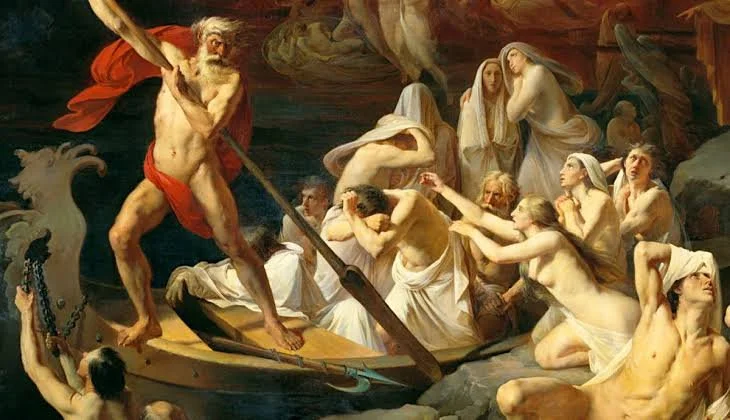
Charon
Later Greek tradition describes Charon as the ferryman who transported souls across the rivers of the underworld.
The dead were sometimes imagined as requiring payment for the journey.
This helps explain the archaeological practice of placing coins with the dead.
However, the custom varied by period and region.
It should not be treated as an unchanging Greek tradition.
The Rivers of the Underworld
Greek mythology describes several rivers associated with the underworld.
Among them were:
Styx;
Acheron;
Cocytus;
Phlegethon;
Lethe.
Each acquired different symbolic associations.
The Styx became particularly famous as a boundary between the world of the living and the dead.
The Lethe was associated with forgetfulness.
The Asphodel Meadows
In Homeric tradition, many ordinary dead inhabit a shadowy afterlife.
They exist without the full vitality they possessed in life.
This is one reason ancient Greek concepts of the afterlife can seem bleak.
The dead were not necessarily imagined as continuing earthly life in a better form.
Instead, they existed as diminished shades.
The Isles of the Blessed
Some traditions offered a more positive possibility.
Heroes and exceptionally favored individuals could reach places such as the Isles of the Blessed.
Later traditions associated the blessed with special regions of the afterlife.
This created a distinction between ordinary dead and exceptional individuals.
Elysium
Elysium, or the Elysian realm, became associated with an ideal afterlife.
The details changed across Greek literature.
In some traditions, Elysium was reserved for heroes or individuals favored by the gods.
Later traditions increasingly connected it with blessed souls.
The Judgment of the Dead
Some Greek traditions eventually developed the idea that the dead could be judged.
Figures such as Minos, Rhadamanthys, and Aeacus became associated with judging souls.
This introduced a moral dimension to the afterlife.
A person's behavior in life could affect their fate after death.
Punishment in the Underworld
Greek mythology contains dramatic stories of eternal punishment.
Sisyphus was condemned to push a stone uphill forever.
Tantalus was placed in a situation of perpetual deprivation.
Ixion was bound to a rotating wheel.
These stories transformed punishment into symbolic expressions of human wrongdoing.
The Myth of Orpheus
The story of Orpheus and Eurydice is one of the most famous Greek stories about death.
After Eurydice died, Orpheus entered the underworld to retrieve her.
The gods allowed him to take her back on one condition:
He must not look behind him until they reached the world of the living.
He looked.
Eurydice disappeared.
The story captures the Greek fascination with the boundary between life and death.
Persephone
The myth of Persephone also connects life and death.
Persephone descends into the underworld and later returns.
Her story became associated with seasonal cycles.
The myth could be interpreted as a story about:
death;
renewal;
fertility;
seasonal change;
separation;
reunion.
Burial Practices
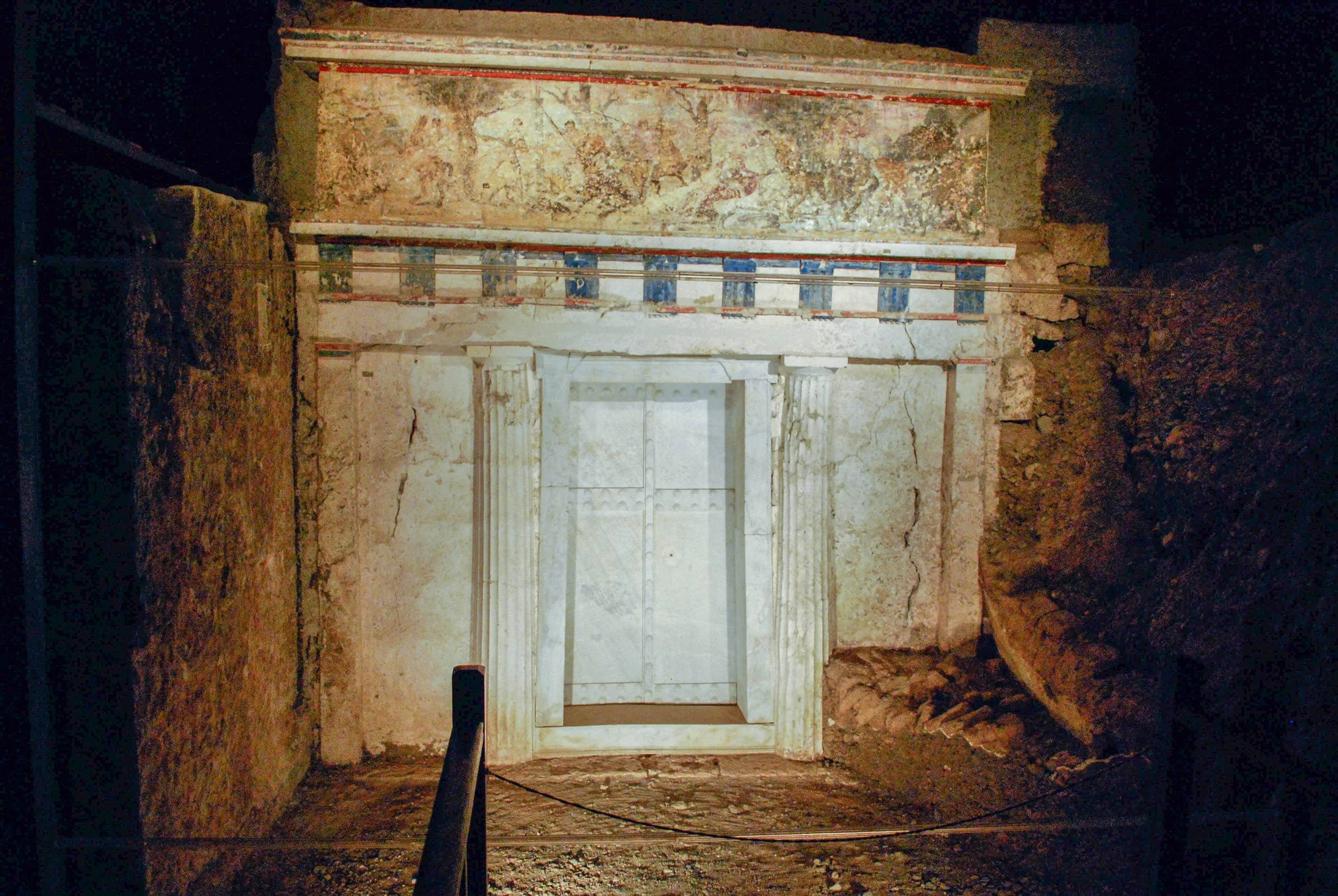
Greek attitudes toward death were also expressed through funerary rituals.
Burial practices varied across time and region.
They could involve:
washing the body;
dressing the deceased;
mourning;
procession;
burial or cremation;
offerings;
funerary monuments.
These rituals helped maintain relationships between the living and the dead.
Grave Goods
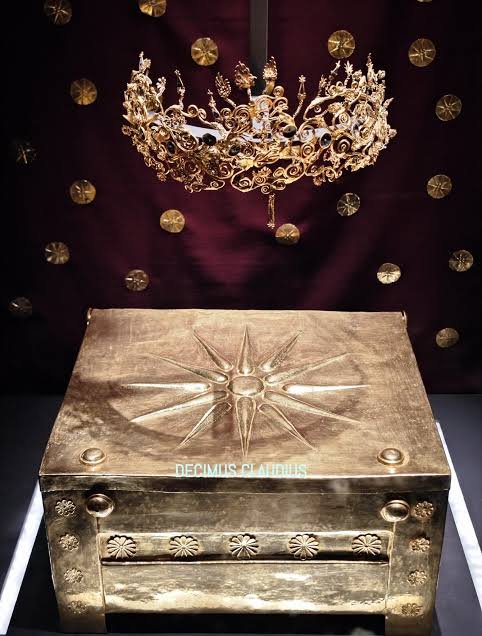
Archaeologists frequently discover objects in graves.
These may include:
pottery;
jewelry;
weapons;
coins;
mirrors;
personal objects.
Their meaning varies.
A grave object does not automatically represent something the deceased "needed" in the afterlife.
It could represent identity, status, family relationships, ritual tradition, or symbolic offerings.
The Soul
Greek philosophers debated what exactly survived death.
The Greek word psychē could refer to the soul, life force, or animating principle.
Different philosophers interpreted it differently.
There was no single Greek theory of the soul.
Socrates
In Plato's dialogues, Socrates discusses the possibility that the soul survives death.
In the Phaedo, Socrates argues that philosophy prepares a person for death.
The dialogue explores whether the soul is immortal.
The philosophical argument is complex.
It should not be treated simply as a universal Greek religious belief.
It is part of Plato's philosophical project.
Plato
Plato developed elaborate theories concerning the soul.
He described the soul as capable of existing independently of the body.
Some Platonic traditions involve reincarnation.
Souls could undergo cycles of existence depending on their moral condition.
These ideas influenced later philosophical and religious traditions.
Aristotle
Aristotle approached the soul differently.
In On the Soul, he described the soul as the form of a living body.
His position does not fit neatly into the idea that the soul is simply a ghost living independently of the body.
Aristotle's philosophy therefore demonstrates the diversity of Greek thought.
Epicurus
Epicurus took a radically different position.
He argued that the soul is material and that death ends conscious experience.
Because the dead no longer experience sensations, there is no reason to fear death itself.
This became one of the most influential philosophical arguments against fear of death.
Stoicism
Stoic philosophers emphasized living according to reason and nature.
They developed different positions regarding death, but generally treated death as part of the natural order.
The important question was not how to escape death.
It was how to live virtuously while alive.
Mystery Religions
The Eleusinian Mysteries offered initiates distinctive religious experiences concerning death and the afterlife.
The details remain unknown because participants were sworn to secrecy.
But the long-term importance of the cult demonstrates that many Greeks were deeply interested in what happened after death.
Death Was Not the End of Memory
Funerary monuments allowed families to preserve the memory of the dead.
Grave inscriptions could identify individuals and commemorate their lives.
The dead remained socially present through memory.
This created a bridge between biological death and continued family identity.
Conclusion
Ancient Greek beliefs about death were remarkably diverse.
Some traditions imagined a shadowy underworld.
Others described blessed realms.
Myths presented eternal punishments.
Mystery religions offered hope concerning the afterlife.
Philosophers debated immortality, reincarnation, and the nature of the soul.
Epicurus argued that death should not be feared because it ends conscious experience.
The Greek world therefore did not possess one single doctrine of death.
Instead, it produced an extraordinary range of ideas about what it meant to die.
And perhaps that is the most revealing fact of all.
The ancient Greeks were not only trying to understand how people should live.
They were also trying to answer one of humanity's oldest questions:
What happens when life ends?