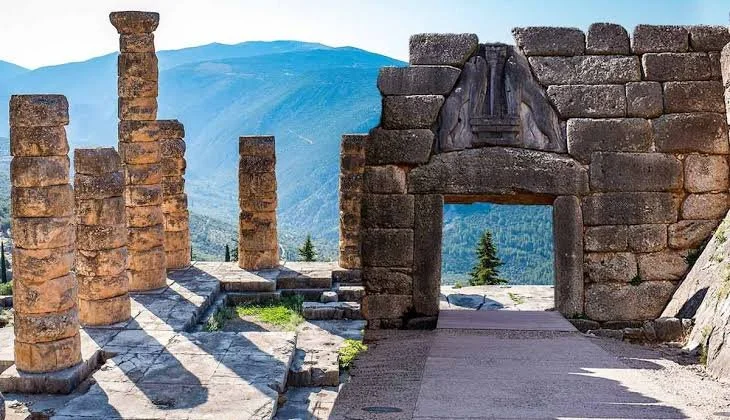
Visiting an ancient Greek archaeological site can be one of the most rewarding travel experiences in the world.
But there is a major difference between seeing ruins and understanding an archaeological site.
A casual visitor might photograph a column, read a sign, and move on.
An informed visitor asks why the building was constructed, how it was used, what happened to it, and what evidence archaeologists used to reconstruct its history.
You do not need to be an archaeologist to develop this approach.
You simply need to learn how to look.
Start With the Landscape
Before examining individual buildings, look at the landscape.
Ask:
Where is the site located?
Is it on a hill?
Near water?
Near the sea?
Inside a valley?
Along a road?
Near agricultural land?
Geography often explains why a settlement existed.
Mycenae, for example, occupied a strategically important hill.
Delphi's mountainous environment contributed to its religious character.
Olympia developed within a fertile valley.
Understanding geography makes the architecture easier to understand.
Learn the Chronology
Ancient sites often contain multiple historical periods.
Do not assume that every visible structure belongs to the same century.
A site might contain:
Bronze Age remains;
Classical Greek architecture;
Hellenistic additions;
Roman buildings;
Byzantine churches;
medieval fortifications.
Always ask:
When was this built?
This one question prevents many historical misunderstandings.
Distinguish Ancient From Reconstructed
Some archaeological sites contain reconstructed buildings.
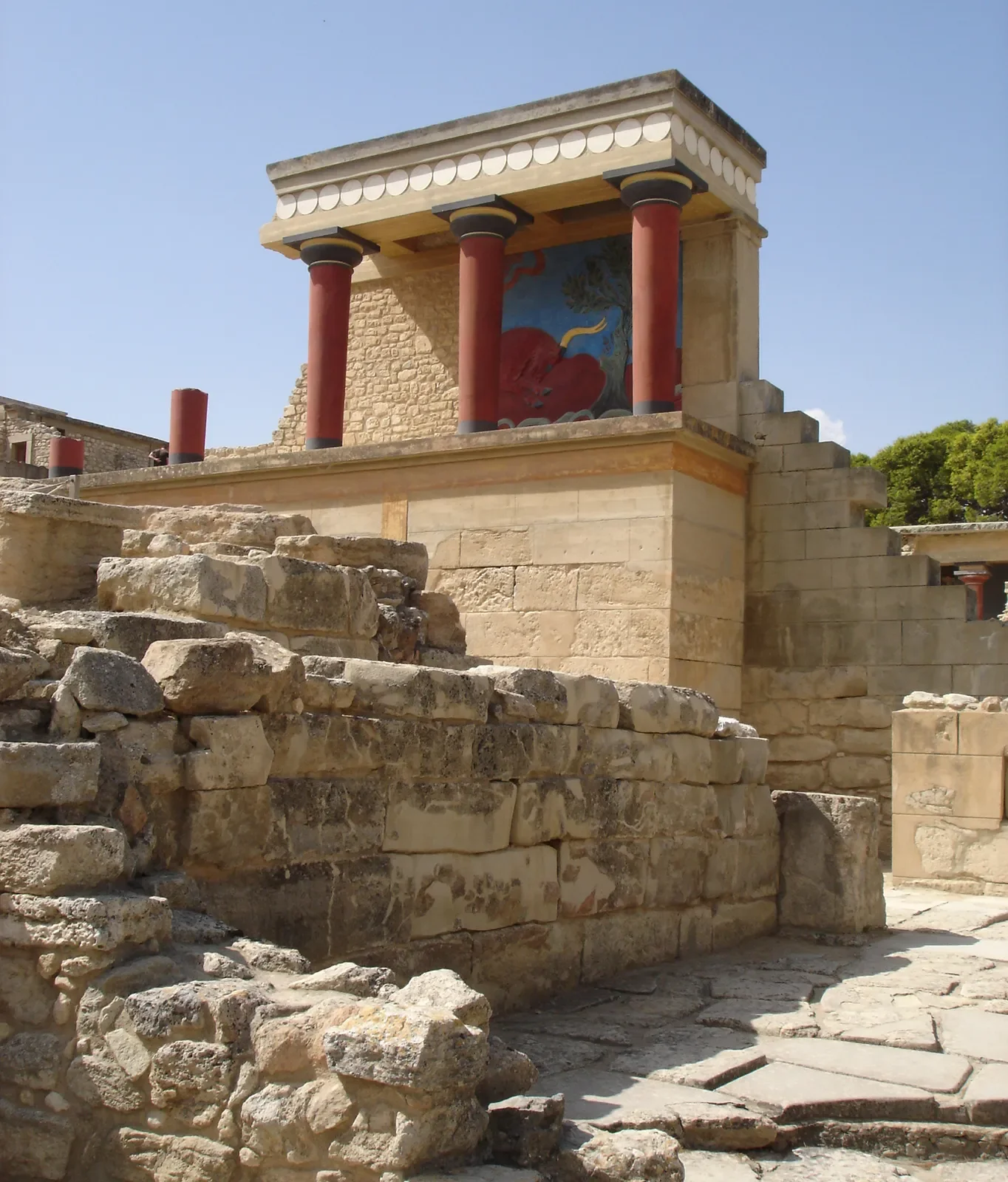
Knossos is a famous example.
Arthur Evans reconstructed portions of the palace during his excavations.
Some modern visitors mistakenly assume that every visible wall and column represents untouched Bronze Age architecture.
That is not the case.
Look for information explaining reconstruction.
Understanding what is original and what has been restored is part of archaeological literacy.
Read the Site Plan
If a site provides a map, use it.
Do not simply follow the crowds.
A site plan can reveal relationships between buildings.
You may discover that what appears to be an isolated temple was actually part of a larger sanctuary.
A forum may connect to markets, administrative buildings, and temples.
A palace may contain storage facilities, workshops, courtyards, and ceremonial spaces.
The plan reveals the city as a system.
Understand the Function of Buildings
When you encounter a ruin, ask:
What was this for?
Was it:
a temple?
theater?
house?
bath?
market?
tomb?
administrative building?
fortification?
workshop?
sanctuary?
Function changes interpretation.
A column beside a temple tells a different story from a column reused inside a medieval church.
Look at Ordinary Objects
Do not focus only on monumental architecture.
Small artifacts can reveal everyday life.
Pottery can reveal:
cooking;
storage;
trade;
dining.
Coins can reveal:
economic activity;
political authority;
trade connections.
Tools can reveal:
crafts;
agriculture;
construction.
Bones can reveal:
diet;
animal use;
ritual activity.
The ordinary can sometimes be more informative than the spectacular.
Look for Water Systems
Water is one of the most important clues to ancient settlement.
Look for:
wells;
fountains;
cisterns;
aqueducts;
drainage channels.
Large ancient cities required sophisticated water management.
A drainage system can reveal surprisingly advanced engineering.
At Knossos, for example, water management was an important component of palace architecture.
Look at Roads
Roads tell you how people moved.
Ask where the road leads.
Does it connect a city gate to a forum?
Does it approach a sanctuary?
Does it follow a coastline?
Does it connect agricultural areas to the settlement?
Road networks reveal economic and political organization.
Examine Building Materials
Stone type can sometimes reveal where materials came from.
Marble may have been transported from distant quarries.
Imported stone can indicate trade networks.
Local limestone can reveal regional geology.
Roof tiles can reveal construction practices.
Bricks can indicate Roman building methods.
Materials are evidence.
Read Inscriptions
Ancient inscriptions are among the most valuable archaeological sources.
They can reveal:
names;
political offices;
religious dedications;
laws;
commemorations;
funerary information;
building projects.
Even when you cannot read ancient Greek, translations can help.
Visit the Museum After the Site
One of the best strategies is to visit the museum after seeing the ruins.
The site gives you geography.
The museum gives you objects.
Once you have seen the buildings, a small artifact suddenly has context.
A pottery vessel becomes something used by people who lived in the houses you just explored.
A coin becomes evidence of the economy that supported the city.
Compare Written Sources With Archaeology
Ancient authors can be invaluable.
But they must be treated critically.
Writers had their own perspectives.
They could exaggerate.
They could misunderstand events.
They could write centuries after the events they describe.
Archaeology provides another category of evidence.
The strongest historical reconstruction often comes from combining texts and material evidence.
Do Not Treat Myth as History
Greek archaeological sites are surrounded by mythology.
Mycenae is associated with Agamemnon.
Knossos is associated with the Minotaur.
Delphi is associated with Apollo's oracle.
Olympia is associated with Zeus.
These stories are historically important.
But mythology and archaeology are not the same thing.
A myth can reveal how later Greeks understood a landscape without proving that every event in the myth actually occurred.
Look for Change
The most interesting question is often:
What changed?
Why was a building rebuilt?
Why did a settlement expand?
Why did a sanctuary decline?
Why was a temple converted into a church?
Why were stones reused?
Archaeological sites are records of change.
Respect the Site
Good archaeological tourism means protecting the evidence.
Do not:
climb fragile ruins;
touch paintings unnecessarily;
remove objects;
move stones;
cross restricted areas;
damage vegetation around structures.
The site is not simply scenery.
It is evidence.
Take Better Notes
Instead of photographing everything, record observations.
Write down:
date;
location;
structure;
approximate period;
function;
interesting details;
questions.
Then research afterward.
This turns travel into an ongoing historical project.
Conclusion
Exploring Greek archaeological sites like a professional does not require a university degree.
It requires curiosity.
Look at geography.
Understand chronology.
Distinguish reconstruction from original remains.
Study buildings according to function.
Read inscriptions.
Visit museums.
Compare written evidence with archaeology.
Question assumptions.
Most importantly, remember that ruins were once living places.
People walked those streets.
They cooked food.
They prayed.
They argued.
They traded.
They governed.
They raised families.
They died.
When you begin looking at archaeological sites as evidence of human lives rather than simply collections of old stones, Greece becomes an entirely different historical experience.