Introduction
In ancient Greek religion, Asclepius was the god associated with healing and medicine. Sanctuaries dedicated to him became important destinations for people seeking relief from illness, religious assistance, and opportunities to participate in healing rituals.
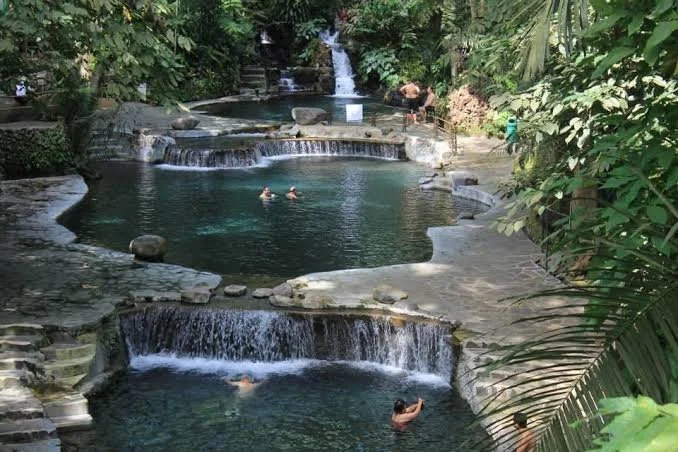
Water was central to many ancient healing traditions. Springs, baths, and sacred water sources could be incorporated into religious practices, while their practical use also reflected ancient knowledge of bathing, cleanliness, and the properties of local environments.
Phthiotis, a region of central Greece, contains a varied landscape of mountains, valleys, plains, and water sources. The possibility of Asclepius-related springs in its valleys invites investigation into the relationship between healing cults, local geography, and religious practice.
However, an individual spring should not be identified as an Asclepius sanctuary without supporting evidence.
Asclepius and Ancient Healing
Asclepius became one of the most widely recognized healing deities in the Greek world. His sanctuaries, known as Asclepieia, could include temples, courtyards, sleeping areas, and facilities associated with ritual preparation.
Visitors might travel to a sanctuary because of illness, religious devotion, or the hope of receiving divine guidance.
Healing practices varied between sanctuaries and periods. They could involve offerings, prayers, purification, incubation, and consultation with religious personnel.
Ancient healing should not be understood as simply equivalent to modern medicine. It combined religious belief, practical care, ritual, and culturally specific ideas about the body.
Water and Purification
Water had many roles in ancient Greek religious life.
It could be used for washing before entering sacred spaces, preparing offerings, and performing purification rites.
Some healing sanctuaries were located near springs or incorporated bathing facilities. Water might also be valued because of its temperature, mineral content, or association with a particular deity.
Yet the presence of a spring near a sanctuary does not automatically demonstrate that the water was believed to possess supernatural healing properties. Archaeological and textual evidence is necessary to establish the nature of its use.
Phthiotis and Sacred Geography
Phthiotis lies within central Greece and includes diverse environments. Springs and valleys could provide water for agriculture, settlement, travel, and livestock.
In antiquity, religious sites were often connected to local geography. A sanctuary might be placed near a spring, a mountain pass, a cave, or a prominent natural feature.
The landscape could influence religious experience by shaping how visitors approached a sanctuary and how the sacred site related to nearby communities.
Archaeological Evidence for a Healing Sanctuary
Researchers investigating a possible Asclepius sanctuary would look for multiple types of evidence:
inscriptions naming Asclepius
votive offerings associated with healing
architectural remains
ritual deposits
bathing or water-management installations
coins and ceramics
references in ancient texts
An inscription or a clearly identified cult object can be especially useful, although the wider archaeological context remains important.
A spring containing mineral-rich water is not sufficient evidence on its own.
Medicine, Religion, and Community
Healing sanctuaries could function as important social institutions. They attracted visitors, supported religious personnel, and connected communities through shared rituals.
Offerings left by visitors may reveal how people understood illness and recovery. Some dedications might describe a healing experience, while others express gratitude or ask for divine assistance.
The study of such evidence can illuminate ancient attitudes toward suffering, disability, health, and divine intervention.
Natural Springs and Scientific Analysis
Modern hydrogeology can investigate the chemical composition and flow of springs. Researchers can examine mineral content, temperature, and seasonal changes.
These characteristics may help explain why particular springs attracted ancient visitors.
However, modern water chemistry cannot independently prove an ancient healing cult. Scientific analysis must be combined with archaeological and historical evidence.
Conservation and Heritage
Springs and valleys can be vulnerable to construction, pollution, agricultural runoff, and changes in groundwater extraction.
If archaeological remains are present, development can destroy both the structures and the environmental context needed to interpret them.
Conservation should therefore protect the water source and its surrounding landscape rather than focusing exclusively on individual artifacts.
Conclusion
The possibility of Asclepius-related springs in Phthiotis provides a valuable starting point for studying ancient healing, water, and sacred landscapes. Greek healing sanctuaries demonstrate how religious practice and practical approaches to health could coexist. Nevertheless, a particular valley or spring should be linked to Asclepius only when supported by inscriptions, architecture, offerings, or reliable historical documentation. Combining archaeology, religious history, and environmental science can reveal how ancient communities understood the relationship between water, healing, and divine power.