Introduction
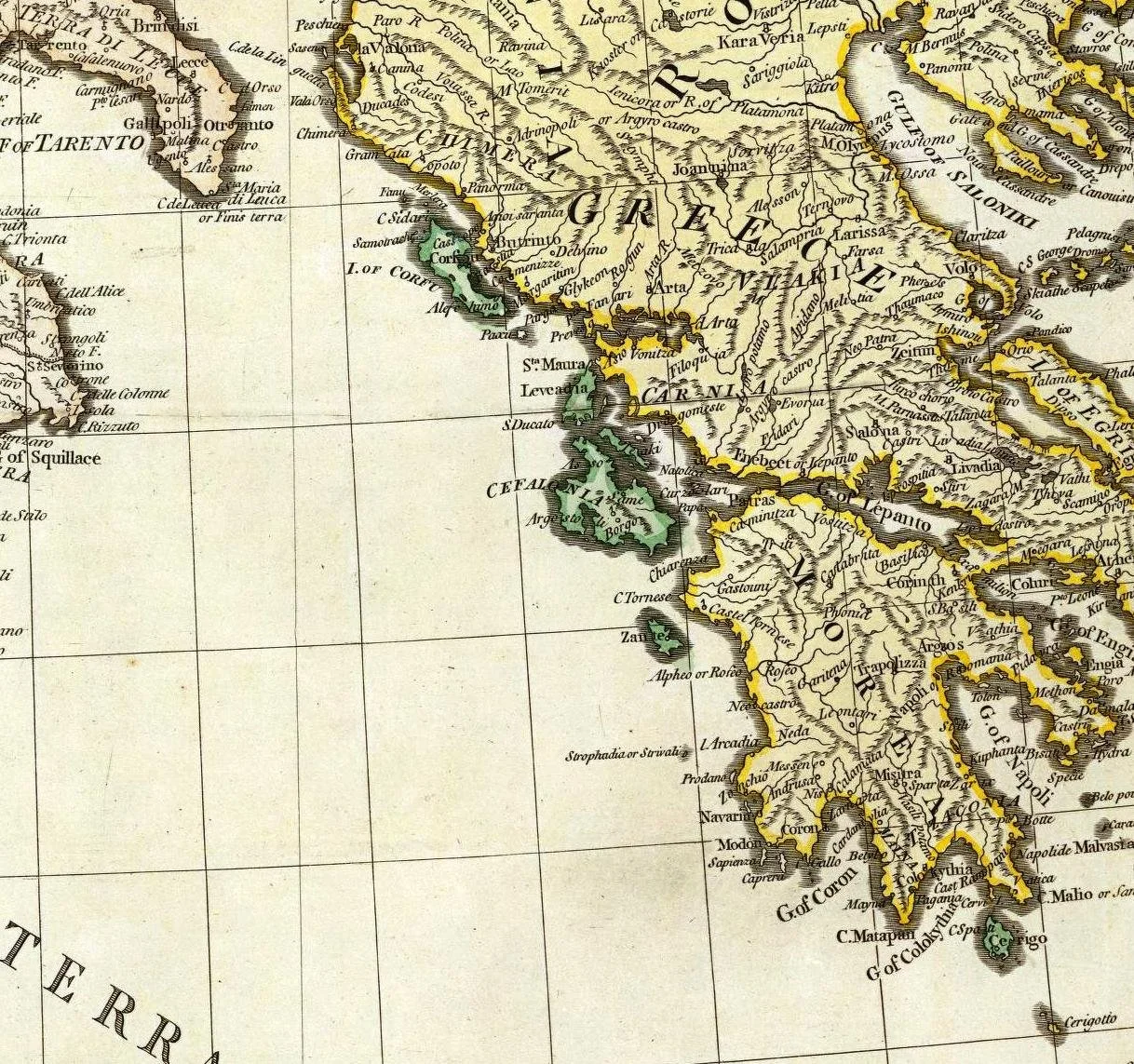
The northern Aegean Sea contains a network of islands that connected the Greek mainland with the Balkans and Anatolia. Throughout antiquity, these islands supported fishing communities, agricultural settlements, maritime trade, and religious practices shaped by the sea and the changing seasons.
The Moon played an important role in many ancient Mediterranean cultures. Its changing appearance provided a visible way to measure time, organize calendars, and associate particular periods with religious observances. Ancient Greek communities recognized lunar cycles in their calendars, while certain deities and religious traditions acquired associations with night, fertility, protection, and the boundaries between the human and divine worlds.
The idea of lunar rites on the northern Aegean's lesser-known islands offers an opportunity to investigate these relationships. However, it is important to distinguish documented lunar worship from modern interpretations of ancient ritual landscapes. Not every island sanctuary or nighttime ceremony was dedicated to the Moon.
The Moon in Ancient Greek Religion
The Moon was personified by Selene, a goddess commonly depicted driving a chariot across the night sky. Artemis and Hecate also acquired lunar associations in different religious and literary traditions, although their identities and functions were not identical to Selene's.
Artemis was associated with wilderness, hunting, transitions, and the protection of young people. Hecate became associated with crossroads, night, boundaries, and certain forms of ritual practice. Their later associations with the Moon reflect the development of Greek religious traditions over time rather than a single original system.
These distinctions matter because ancient religion was diverse. A sanctuary dedicated to Artemis cannot automatically be classified as a lunar sanctuary simply because later traditions connected Artemis with the Moon.
Lunar Calendars and Island Communities
Many Greek calendars were based on lunar months, with adjustments needed to keep the calendar aligned with the solar year. The new moon and full moon could therefore be important temporal markers for public festivals, sacrifices, and community activities.
Island communities depended heavily on seasonal conditions. Fishing, sailing, planting, and harvesting required careful attention to weather, tides, and the rhythms of the natural environment.
Lunar observation may have contributed to practical knowledge, although the precise influence of the Moon on particular economic activities varied. Ancient sailors did not rely on lunar phases alone; winds, currents, stars, coastlines, and navigational experience were also essential.
Sacred Landscapes of the Northern Aegean
The northern Aegean contains islands with long histories of religious activity. Samothrace, for example, was famous for the Sanctuary of the Great Gods, while Thasos developed important sanctuaries and participated in extensive maritime commerce.
Smaller islands and coastal settlements also maintained local religious traditions. Archaeological remains can include sanctuaries, altars, votive offerings, inscriptions, and objects associated with ritual activity.
To identify a specific lunar cult, researchers would need evidence connecting a site with a lunar deity or a documented calendrical practice. An isolated altar, cave, or nighttime gathering place is not sufficient proof.
Nighttime Rituals and Religious Experience
Nighttime ceremonies could create a distinctive religious atmosphere. Darkness changed how participants experienced sound, fire, movement, and the surrounding landscape.
Torches and lamps were practical sources of illumination, but they could also carry ritual significance. Processions, offerings, and ceremonies conducted after sunset may have helped mark particular religious occasions.
Nevertheless, archaeological evidence for lamps or fire pits does not establish that a ceremony was lunar in character. Their function must be considered within the wider context of a site.
Women, Fertility, and Lunar Symbolism
Modern interpretations sometimes connect lunar rites with women, fertility, and reproductive cycles. Ancient Greek religion did contain goddesses associated with childbirth, marriage, agriculture, and transitions in life.
However, the relationship between lunar phases and women's religious activities cannot be generalized across every community. Such interpretations must be supported by texts, inscriptions, ritual objects, or other relevant evidence.
The broader lesson is that religious symbolism can change across time. Later writers may associate a goddess with the Moon in ways that differ from earlier worship.
Archaeological Methods
Investigating possible lunar rites involves several methods. Archaeologists may examine inscriptions naming deities, votive offerings, sanctuary architecture, astronomical alignments, and evidence of repeated ritual activity.
Archaeoastronomy can help determine whether a structure was aligned with a celestial event. Yet an alignment alone does not prove intentional design. Researchers must consider the structure's orientation, the horizon, measurement uncertainty, and the possibility of coincidence.
Written sources can provide context, but ancient literary accounts often describe religious practices from a particular cultural or political perspective.
Conclusion
Lunar symbolism formed part of the wider religious and calendrical world of ancient Greece, and the islands of the northern Aegean provide a rich setting for investigating its possible expressions. Yet claims about specific forgotten lunar rites require direct evidence. By combining archaeology, religious history, astronomy, and regional studies, researchers can distinguish documented practices from interpretations inspired by the mysterious appearance of the night sky.