Introduction
Samos, an island in the eastern Aegean, occupied an important position in ancient Greek maritime, political, and religious history. Its sanctuaries, settlements, and coastal connections linked the island with mainland Greece, Anatolia, and the wider Mediterranean.
Hecate, a goddess associated in different periods with crossroads, boundaries, night, and certain forms of ritual activity, provides an interesting subject for examining the relationship between poetry and religious practice. The idea of Hecate hymns performed during Samian night festivals raises questions about local worship, musical performance, and the transmission of sacred traditions.
However, a specific annual Samian festival devoted to Hecate cannot be established merely from the goddess's wider associations with nighttime rituals. Such a claim requires evidence from inscriptions, ancient texts, or archaeological discoveries.
Hecate in Ancient Greek Religion
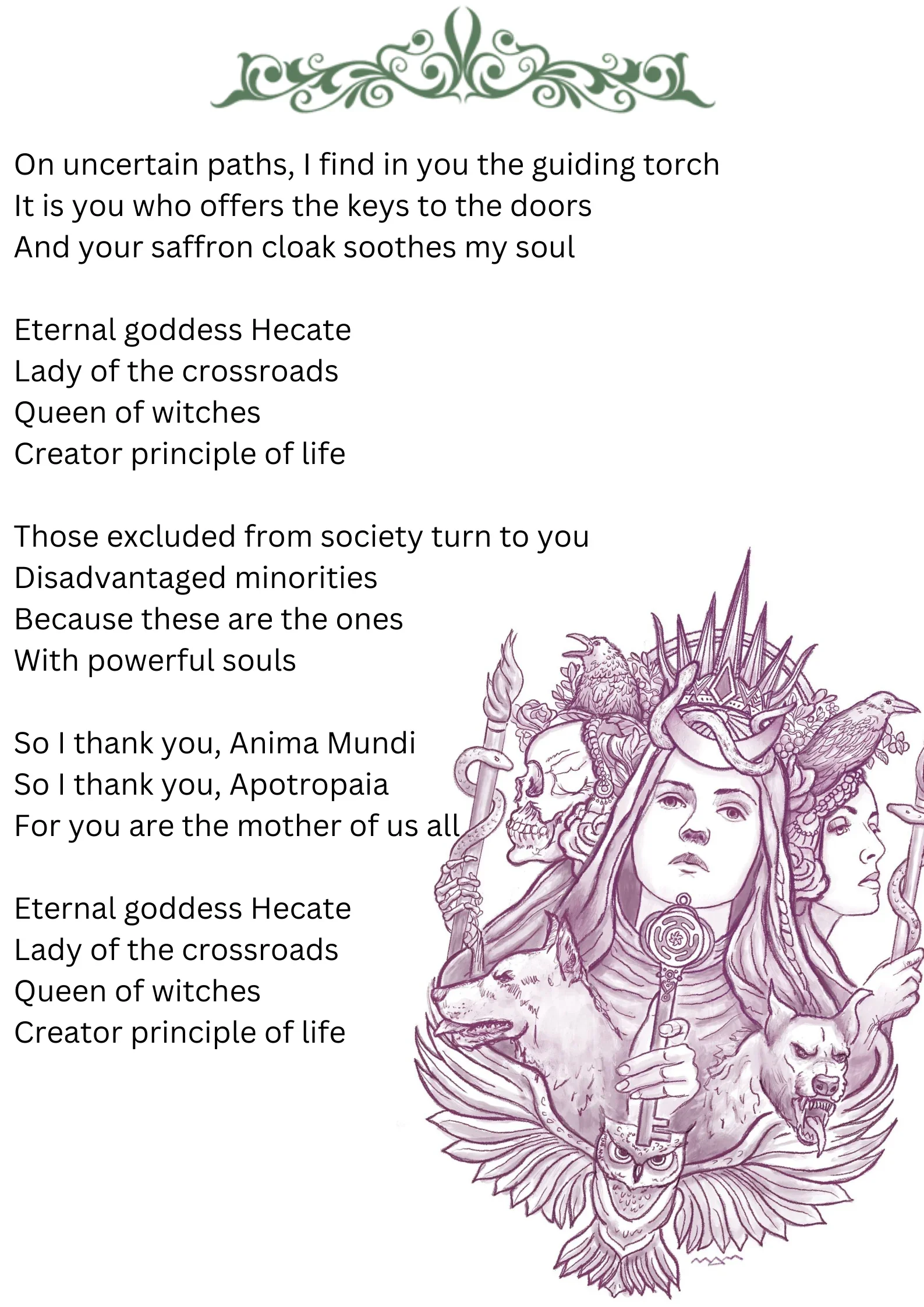
Hecate occupied a distinctive position in Greek religion. Her associations varied over time and between communities, and she could be connected with protective boundaries, crossroads, entrances, nighttime activity, and certain ritual practices.
In some traditions, Hecate was associated with torches and movement through darkness. Her imagery could suggest guidance through uncertain spaces or protection at the edges of settlements and households.
Her later associations with magic and the supernatural became especially prominent in some literary traditions. These later developments should not be projected without qualification onto every earlier representation of the goddess.
Samos as a Religious Center
Samos was home to the important sanctuary of Hera, known as the Heraion. The sanctuary developed over many centuries and became one of the major religious centers of the eastern Aegean.
Its history demonstrates the scale and complexity of religious life on the island. Offerings, monumental architecture, and evidence of regional connections show that Samian worship was linked with wider Mediterranean networks.
The importance of Hera's sanctuary does not exclude the worship of other deities. Ancient communities could maintain multiple cults, each serving different religious and civic functions. Nevertheless, a specific Hecate festival must be documented independently rather than inferred from the presence of a major sanctuary.
Hymns and Sacred Music
Hymns were important in ancient Greek religious life. They could praise a deity, recount divine achievements, request protection, or accompany a ritual occasion.
Some hymns were performed by individuals, while others could involve groups of singers. Music, rhythm, movement, and poetry helped organize religious experiences and make traditions memorable.
The term hymn covers a range of forms. A surviving literary hymn may not represent the exact words performed during a local ceremony, and a festival could include musical performances without having a surviving written text.
Nighttime Rituals and Torchlight
Night could change the character of religious activity. Torchlight, shadows, music, and processions created an atmosphere different from daytime public ceremonies.
Hecate's associations with torches and boundaries make nighttime ritual a plausible theme for investigating her worship. Yet the use of lamps or torches at an archaeological site does not prove that a ceremony was dedicated to her.
Researchers would need to identify a connection between the objects, the deity, and the activity through inscriptions, literary testimony, iconography, or a securely interpreted ritual context.
The Role of Local Tradition
Greek religion was not uniform across every island and city. Communities could develop local stories, titles, festivals, and rituals for the same deity.
A local hymn might emphasize a goddess's protective functions, relationship with a particular landscape, or role in community welfare. Such traditions could change over time as political circumstances and religious practices evolved.
Oral transmission could preserve verses or stories, but it could also transform them. Later accounts might combine different deities or reinterpret an older tradition according to contemporary beliefs.
How Researchers Could Investigate Samian Hecate Worship
A historical investigation would begin with inscriptions, sanctuary records, ancient literary references, and archaeological catalogues from Samos.
Researchers could examine whether any inscriptions name Hecate, identify a festival, or mention a hymn or musical performance. Figurines, reliefs, lamps, and other objects might provide additional context, although their interpretation would depend on date and location.
Comparative research could then examine how Hecate was worshipped elsewhere in the Aegean. Such comparison can generate useful questions, but similarities between islands do not prove that their rituals were identical.
Folklore and the Modern Imagination
Stories about forgotten night festivals are appealing because they combine ancient religion with mystery. They can inspire literature and heritage interpretation, but they should not be presented as established historical events without evidence.
Local legends can still be valuable. They reveal how later communities imagined the ancient past and how religious landscapes acquired new meanings.
Conclusion
Hecate hymns in Samian night festivals offer a rich theme for exploring ancient Greek music, religious poetry, and the significance of nighttime worship. Hecate's associations with torches and boundaries provide a relevant historical context, while Samos's religious heritage makes the island an important setting for investigation. However, a particular Samian festival or hymn dedicated to Hecate requires direct documentation. Careful study of inscriptions, archaeological finds, and ancient literature can clarify what is known while leaving room for responsible exploration of local tradition.