Introduction
The Pontic Greek diaspora is associated most strongly with communities originating around the southern and eastern shores of the Black Sea, particularly the historical region of Pontus in northeastern Anatolia. During the nineteenth century, migration, commerce, education, religious institutions, and political change shaped Greek-speaking communities across the Ottoman Empire.
Thrace, located between the Balkans, the Aegean, and the Black Sea approaches, was an important region of movement and settlement. Its towns and villages contained diverse populations whose identities were influenced by language, religion, local traditions, economic activity, and political allegiance.
Studying Pontic Greek migration into Thrace requires distinguishing documented settlement patterns from the broader movement of Greek-speaking people throughout the Ottoman world.
Who Were the Pontic Greeks?
Pontic Greeks were communities with historical roots around the Black Sea's southern coastline. They developed distinctive linguistic, musical, religious, and cultural traditions while maintaining connections with other Greek-speaking populations.
Their history was shaped by the political structures of the Byzantine Empire, the Ottoman conquest, regional trade, and changing relationships between local communities and imperial authorities.
The term "Pontic Greek" describes a historical and cultural identity, but individuals and families experienced that identity in different ways.
Why People Migrated
Migration during the nineteenth century could result from several overlapping factors.
Economic opportunities encouraged movement toward towns with growing markets, ports, schools, and administrative institutions. Merchants and craftspeople could relocate to establish new businesses or strengthen family trading networks.
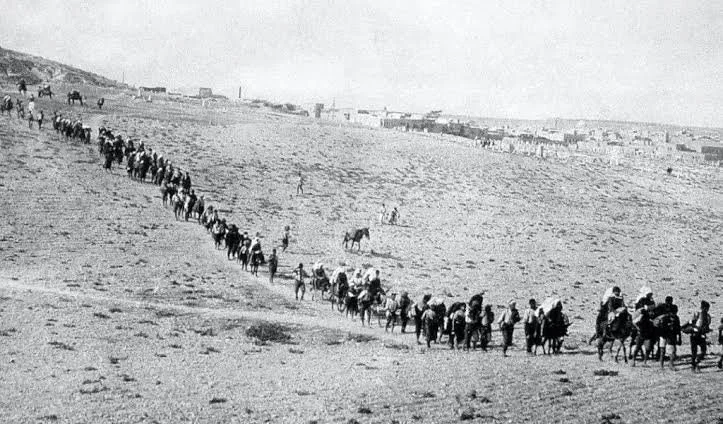
Political instability, local insecurity, taxation, and conflict could also influence movement. Some migration was temporary or seasonal, while other families settled permanently in new locations.
It is important not to assume that all migration occurred for the same reason or followed a single route.
Thrace as a Region of Settlement
Thrace connected the Balkans with Constantinople, the Aegean, and Black Sea transportation routes. Its towns supported agriculture, commerce, crafts, and regional exchange.
Greek-speaking residents could participate in these economies through trade, education, religious institutions, and professional activity.
However, identifying a community specifically as Pontic requires more than evidence that Greek was spoken there. Family records, community documents, church registers, inscriptions, oral histories, and migration records can help establish geographic origins.
Religious and Educational Networks
Orthodox Christian churches and schools played important roles in many Greek-speaking communities during the Ottoman period. Religious institutions could support literacy, communal organization, charitable activity, and the transmission of cultural traditions.
Schools and churches also helped maintain connections between migrants and their places of origin.
Yet language, religious affiliation, and geographic ancestry did not always correspond perfectly. Communities could be multilingual, and identities could change across generations.
Trade and Family Connections
Family networks were important to migration and commercial activity. Relatives could provide accommodation, business contacts, credit, and information about employment opportunities.
Merchants sometimes developed connections across multiple towns, allowing goods and information to move through regional networks.
The Black Sea and Aegean maritime systems helped connect communities over considerable distances.
Cultural Continuity and Adaptation
Migration did not necessarily erase cultural identity. Music, food, storytelling, religious practices, and family traditions could be maintained in new environments.
At the same time, migrants adapted to local conditions. They formed relationships with neighboring populations, learned new languages, and participated in changing political and economic systems.
Diaspora communities should therefore be understood as dynamic rather than frozen remnants of a distant homeland.
Researching the Diaspora
Historians can investigate nineteenth-century migration through Ottoman administrative records, church registers, school documents, commercial archives, family histories, and contemporary travel accounts.
Archaeology may contribute through cemeteries, churches, residential buildings, and material culture, although objects alone rarely establish an individual's ethnic identity.
Oral history is particularly valuable when conducted carefully and compared with documentary evidence.
Conclusion
The Pontic Greek diaspora in nineteenth-century Thrace belongs to the wider history of migration and cultural exchange in the Ottoman Balkans. Economic opportunity, family connections, political conditions, and religious institutions could all influence movement. A detailed reconstruction must identify particular communities and migration routes through evidence rather than assuming that every Greek-speaking settlement contained a Pontic population. Such research can illuminate how migrants preserved cultural traditions while adapting to new social and political environments.