Introduction
The Pindus Mountains form one of the most important geographic regions of mainland Greece. Their steep slopes, high plateaus, forested valleys, and seasonal pastures shaped the lives of agricultural and pastoral communities for centuries.
Among the communities associated with pastoral life in this region are the Vlachs, many of whom historically practiced forms of transhumance—the seasonal movement of livestock between different grazing areas.
The trails used by shepherds were not simply paths across mountains. They formed part of a broader system of environmental knowledge, household economies, trade, and social relationships.
Who Are the Vlachs?
The term "Vlach" has been used in different historical contexts for Romance-speaking populations of southeastern Europe. In Greece, Aromanian-speaking communities developed distinctive linguistic and cultural traditions while participating in the region's wider Greek-speaking social and economic world.
Vlach identity has never been completely uniform. Communities differed in language use, occupations, settlement patterns, and relationships with neighboring populations.
It is therefore important to avoid treating all Vlachs as one centralized group or assuming that every pastoral community in the Pindus Mountains was Vlach.
Transhumance and Seasonal Movement
Transhumance involves moving livestock between seasonal pastures.
In mountainous environments, lower elevations may provide better conditions during winter, while higher pastures become suitable during warmer months.
This system allows herders to exploit different vegetation zones over the course of a year.
Movement requires detailed knowledge of pasture quality, water sources, weather, terrain, animal health, and the timing of seasonal changes.
The Pindus Landscape
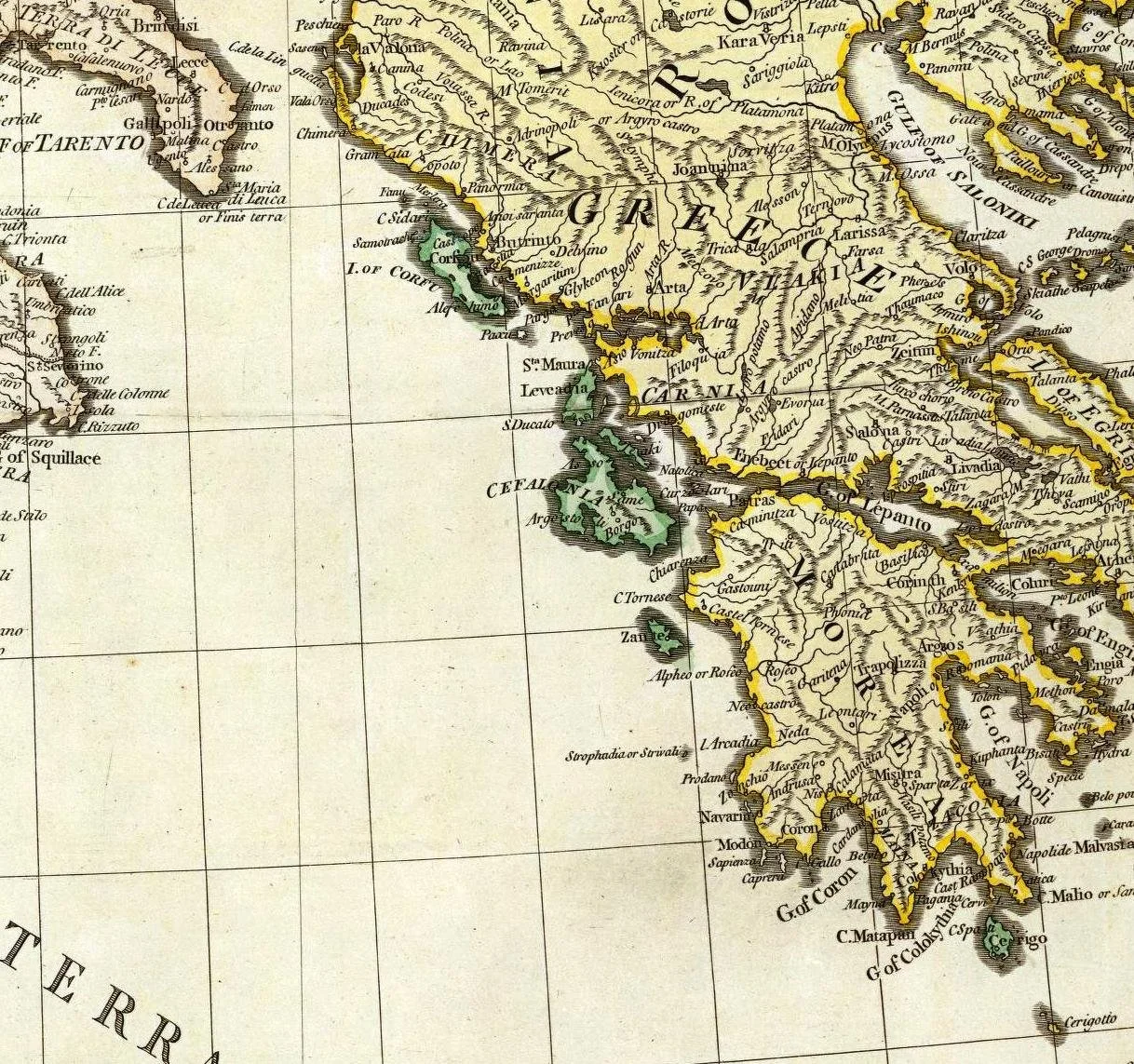
The Pindus Mountains contain numerous valleys, ridges, and passes connecting settlements in Epirus, Thessaly, and other parts of mainland Greece.
Routes were influenced by slope, snow cover, water availability, and access to grazing land.
Some trails connected villages with summer pastures, while others linked pastoral communities to markets where animals, dairy products, wool, and other goods could be sold.
The routes could change over time as land ownership, political boundaries, and environmental conditions shifted.
Pastoral Economies
Sheep and goats were important sources of meat, milk, cheese, wool, and other materials. Herding also supported trade and household economies.
Pastoral families needed to coordinate animal care, labor, shelter, and transportation. Family members often performed different tasks according to age, experience, and seasonal requirements.
The movement of livestock could create relationships with settled agricultural communities. Herders might exchange animal products for grain, tools, textiles, and other necessities.
Trails as Cultural Landscapes
A trail acquires meaning through repeated use.
Shepherds could remember springs, shelters, dangerous slopes, reliable pastures, and places where livestock could rest. Knowledge of these locations could be passed between generations.
Some routes also became connected with songs, stories, place names, and family memories.
These traditions demonstrate that pastoral landscapes were cultural environments as well as physical spaces.
Archaeological Evidence
Pastoral trails may leave subtle material traces.
Researchers can investigate stone enclosures, seasonal shelters, abandoned huts, watering structures, paths worn into slopes, and temporary occupation sites.
Ceramics, animal bones, hearths, and other materials can help establish when particular places were used.
However, a mountain path cannot automatically be identified as a Vlach shepherd trail. Its association with a particular community requires historical, ethnographic, or archaeological support.
Modern Changes
Road construction, tourism, changes in livestock economies, rural depopulation, and new land-use policies have altered many traditional pastoral landscapes.
Some seasonal routes remain in use, while others have become less important.
Recording these landscapes can preserve knowledge of historical movement and environmental adaptation.
Conclusion
Vlach shepherd trails across the Pindus Mountains illustrate the close relationship between mobility, mountain ecology, and cultural identity. Transhumance allowed pastoral communities to use seasonal resources while maintaining economic relationships with settled populations. Through oral history, landscape archaeology, and documentary research, scholars can reconstruct these networks while recognizing the diversity of Vlach communities and the broader pastoral traditions of Greece.