Introduction
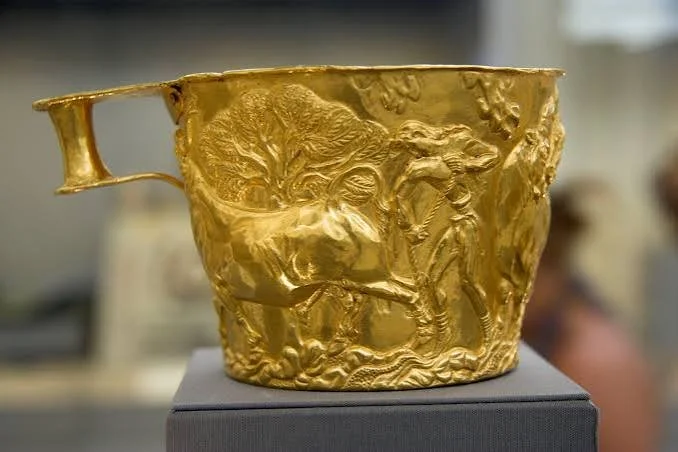
Vaphio, located in the region of Laconia in the southern Peloponnese, is famous for its Bronze Age burial discoveries, particularly the remarkable gold cups found in a tholos tomb. The site provides important evidence of elite culture and artistic exchange during the Mycenaean period.
Ivory was another prestigious material used in the Bronze Age Aegean. It could be carved into figurines, decorative plaques, furniture ornaments, and small luxury objects.
The possibility of Minoan-style ivory objects in an extended archaeological area around Vaphio raises questions about cultural interaction between Crete and mainland Greece. Such finds would be particularly valuable for investigating the movement of artistic traditions and specialized craftspeople.
Vaphio and Its Bronze Age Significance
Vaphio is associated with a famous tholos tomb discovered in the nineteenth century.
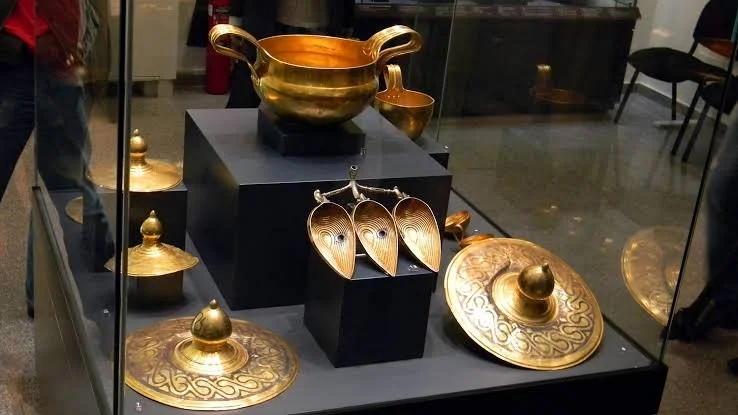
The burial contained valuable objects, including two gold cups decorated with scenes involving bulls. These objects demonstrate the high level of craftsmanship and the connections between elite communities in the Bronze Age Aegean.
The tomb's contents have long attracted scholarly attention because they reflect artistic traditions and social relationships extending beyond the immediate region.
Vaphio should therefore be understood within the wider Mycenaean landscape of Laconia and the southern Peloponnese.
Ivory in Bronze Age Craft Production
Ivory was highly valued because of its smooth texture, ability to take detailed carving, and distinctive appearance.
Bronze Age craftspeople used it to create small sculptures, decorative inlays, combs, handles, and other luxury objects.
Elephant ivory was obtained through long-distance networks, while hippopotamus ivory was also used in parts of the ancient Mediterranean.
Because these materials were not equally available everywhere, ivory objects often provide evidence of trade and elite consumption.
Minoan Artistic Traditions
Minoan civilization developed on Crete during the Bronze Age and produced distinctive forms of painting, pottery, sculpture, and decorative craftsmanship.
Minoan art frequently represented natural subjects, including animals, plants, marine life, and human figures.
The movement of Minoan artistic styles beyond Crete is visible in archaeological material from the Cyclades and mainland Greece.
Minoan-style objects found at a mainland site may reflect trade, imitation, diplomatic exchange, or the movement of craftspeople.
They do not automatically demonstrate direct Minoan political control.
Ivory Objects and Artistic Influence
Minoan-influenced ivory objects could incorporate naturalistic figures, intricate patterns, and carefully shaped decorative elements.
Small ivory pieces might have been attached to furniture, boxes, ceremonial equipment, or personal ornaments.
Their interpretation depends on surviving attachment marks, surface decoration, and archaeological context.
A fragment of carved ivory may preserve only a small portion of its original design, making reconstruction difficult.
Comparisons with better-preserved objects from Crete and other Aegean sites can help identify stylistic relationships.
The Meaning of an Archaeological Extension
The phrase "Vaphio extension" requires precise geographical and archaeological definition.
It might refer to a wider settlement area, a cemetery beyond the famous tholos tomb, or an additional excavation zone associated with the ancient landscape.
A specific assemblage of ivory objects should not be attributed to this area without published excavation records.
The distinction is important because objects discovered in nearby locations may belong to different buildings, graves, or chronological phases.
Mycenaean and Minoan Cultural Interaction
The relationship between Minoan Crete and Mycenaean mainland Greece changed over time.
During the Late Bronze Age, the two cultural spheres interacted through trade, artistic exchange, and political developments.
Mainland communities adopted and adapted elements of Minoan material culture, including pottery forms, decorative motifs, and certain architectural traditions.
Ivory objects could have circulated within these networks as finished products or raw materials.
Local artisans may also have reproduced Minoan-inspired designs using their own techniques.
Scientific Study of Ancient Ivory
Modern researchers can identify the type of ivory through microscopic examination of its internal structure.
This can help distinguish elephant ivory from other materials, although fragmentation and surface damage may complicate identification.
Chemical analysis and high-resolution imaging can reveal manufacturing techniques and traces of pigments or adhesives.
Researchers may also examine tool marks to understand how the object was carved.
These methods can help establish whether a piece was produced using techniques associated with particular workshop traditions.
Conservation of Ivory Artifacts
Ivory is an organic material that can deteriorate when exposed to fluctuating humidity and temperature.
It may crack, warp, or become brittle as it loses moisture.
Ancient ivory objects require carefully controlled storage conditions and professional conservation.
Cleaning must be especially cautious because surface details, pigments, and traces of original decoration may be fragile.
Conclusion
Minoan-style ivories associated with an extended Vaphio archaeological area would offer a valuable opportunity to investigate elite craftsmanship and cultural exchange in the Late Bronze Age.
Their designs and materials could reveal connections between Crete and mainland Greece, while scientific analysis might help identify their origin and manufacturing techniques.
However, the specific claim of a documented ivory assemblage from a Vaphio extension requires verification through secure excavation records. The broader archaeological significance of Vaphio provides an important setting for exploring the circulation of luxury objects and artistic traditions in the Bronze Age Aegean.