Introduction
The Ionian region of western Greece occupies an important position between the Greek mainland, the Adriatic Sea, and wider European transportation and communication networks.
As digital services expand, the need for secure data storage and identity verification continues to grow.
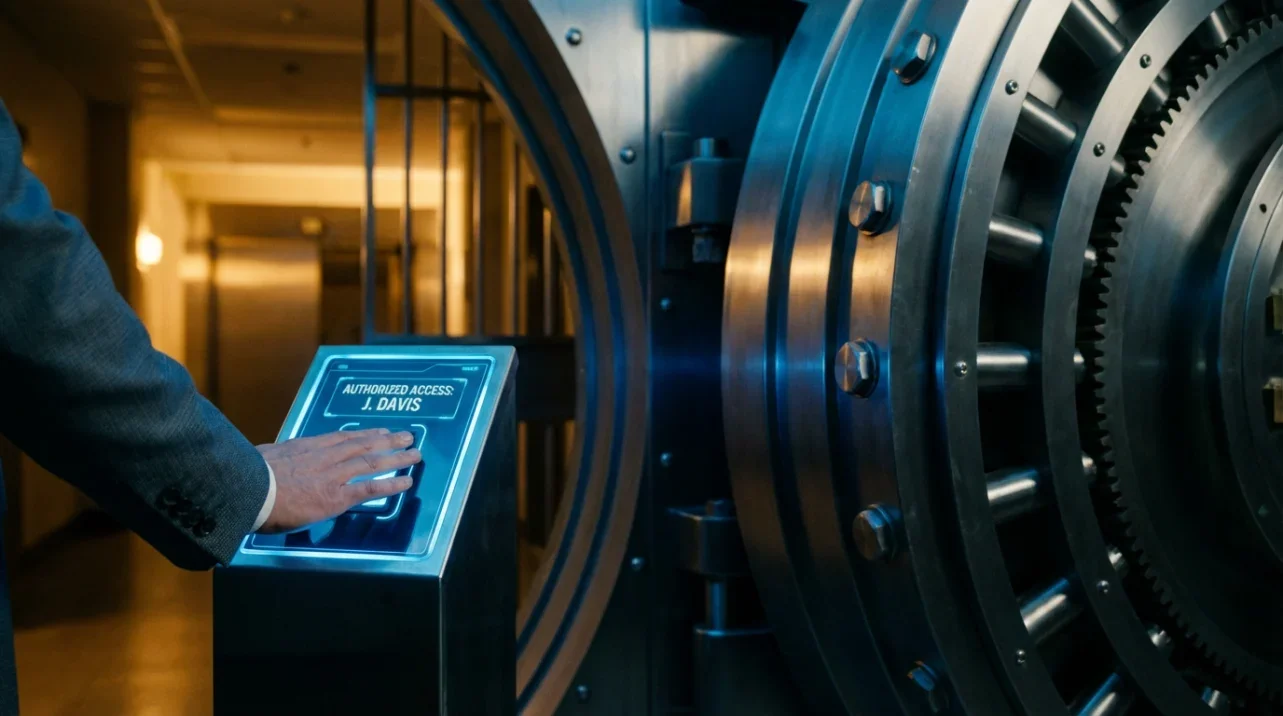
The concept of Biometric Vaults in Ionian Data Centers explores facilities that combine secure computing infrastructure with biometric authentication technologies.
The phrase "biometric vault" is descriptive rather than a recognized category of facility. There is no basis for assuming that a network of specialized biometric vaults currently operates across the Ionian Islands. Nevertheless, the underlying technologies are already used in digital security and could become increasingly relevant to European data infrastructure.
What Are Biometric Systems?
Biometrics refers to the measurement of physical or behavioral characteristics that can help verify identity.
Common examples include fingerprints, facial recognition, iris patterns, and voice characteristics.
Some systems also examine behavioral signals, such as typing patterns or movement.
Biometric authentication is frequently used in smartphones, banking applications, border-control systems, and secure workplace environments.
The Meaning of a Digital Vault
A digital vault is a protected environment designed to store sensitive information.
It may contain encrypted files, authentication credentials, identity records, financial information, or confidential organizational data.
Access is restricted through carefully managed permissions and security controls.
A biometric system can serve as one layer of authentication, but it should not be the only protection.
Why Data Centers Matter
Data centers provide the physical infrastructure behind cloud computing, digital communications, business applications, and online services.
They contain servers, storage systems, networking equipment, backup power, cooling systems, and physical security controls.
A modern data center must protect information against unauthorized access, equipment failure, cyberattacks, and natural disasters.
Biometric authentication can help control entry into sensitive areas.
Potential Ionian Advantages
The Ionian region could be considered for digital infrastructure because of its position within the broader European and Mediterranean network.
However, establishing a data center requires more than geographic convenience.
Reliable electricity, telecommunications connectivity, cooling capacity, suitable land, skilled personnel, and disaster planning are essential.
Coastal locations also require careful consideration of flooding, humidity, corrosion, and extreme weather.
Biometric Security Inside Data Centers
Biometric technology could support several layers of facility security.
For example, authorized technicians might use fingerprint or iris verification to enter restricted server rooms.
A facility could combine biometric checks with smart access cards, security staff, surveillance, and time-limited permissions.
The objective is to reduce the risk of unauthorized physical access.
Biometrics can also be used to authenticate administrators accessing sensitive digital systems, although the physical and digital security functions should remain distinct.
Protecting Biometric Information
Biometric data creates special privacy risks.
Unlike a password, a fingerprint or facial characteristic cannot easily be replaced if compromised.
A responsible system should therefore avoid storing unnecessary raw biometric information.
Secure templates, encryption, access restrictions, retention limits, and independent security audits can reduce exposure.
Where possible, biometric matching should occur locally on trusted devices rather than transferring sensitive information to centralized systems.
European Privacy Requirements
Data centers operating in Greece must consider European data-protection requirements.
The General Data Protection Regulation establishes strict rules for processing personal information.
Biometric data used for uniquely identifying individuals is treated as a special category of personal data under the regulation, subject to specific legal conditions and safeguards.
Organizations must therefore establish a lawful basis for processing and ensure that the system is proportionate to its purpose.
Resilience and Disaster Recovery
A secure data center must remain operational during disruptions.
This includes backup power, redundant network connections, fire protection, cooling redundancy, and disaster-recovery procedures.
Facilities in the Ionian region would also need to assess earthquake exposure and other local environmental risks.
Biometric security is only one part of a larger resilience strategy.
Conclusion
Biometric Vaults in Ionian Data Centers represent a possible intersection of digital infrastructure, identity verification, and information security.
Biometric authentication can strengthen access control, but it also introduces serious privacy responsibilities.
Any future facility would need to combine strong cybersecurity, physical protection, regulatory compliance, and environmental resilience.
The most valuable development would not simply be a highly secure building. It would be a trustworthy digital infrastructure system that protects both the information it stores and the people whose identities it processes.