Introduction
Thessaloniki is one of Greece's most important urban centers, with a dense metropolitan population, a long history of underground infrastructure, and an expanding interest in sustainable development. The idea of Vertical Farms Under Thessaloniki Metro Lines imagines agricultural facilities operating beneath the city's streets, potentially using otherwise underutilized underground spaces.
The concept is technically interesting, but it is important to distinguish between a possible future application and an established project. There is no confirmed basis for claiming that commercial vertical farms currently operate inside Thessaloniki's metro tunnels or stations.
Nevertheless, underground agriculture offers an opportunity to examine how cities might combine transportation infrastructure, controlled-environment farming, and resource-efficient food production.
Thessaloniki's Underground Infrastructure
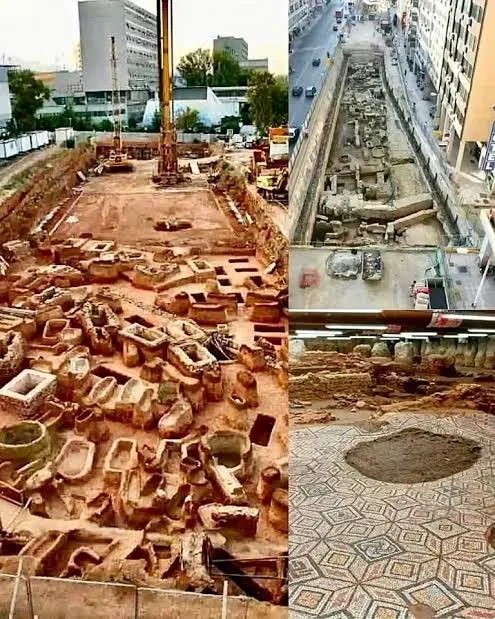
Thessaloniki's metro system introduced a major new layer of transportation infrastructure beneath the city.
Constructing an underground railway involves tunnels, stations, technical rooms, ventilation systems, emergency exits, and maintenance facilities.
These spaces are designed primarily for passenger safety and railway operations. Their structural, electrical, and environmental requirements make them very different from ordinary commercial buildings.
However, the wider development of underground infrastructure raises questions about whether selected non-operational spaces could eventually support other urban functions.
The Concept of Underground Vertical Farming
Vertical farming involves growing crops in stacked layers within controlled indoor environments.
Instead of relying entirely on sunlight and natural rainfall, these facilities regulate lighting, temperature, humidity, nutrients, and water circulation.
Common systems include hydroponics, where plants grow using nutrient-rich water, and aeroponics, where roots receive a controlled mist of nutrients.
An underground facility could theoretically use artificial lighting and carefully managed environmental systems to produce vegetables throughout the year.
Why Underground Spaces Are Attractive
Underground agriculture could offer several advantages.
It may reduce exposure to extreme weather, allow production close to urban consumers, and make use of spaces that cannot easily support conventional construction.
A controlled environment can also reduce some agricultural risks associated with drought, seasonal temperature changes, and certain pests.
However, these benefits depend on the building's design, energy supply, ventilation, water access, and operating costs.
Lighting and Energy Requirements
One of the greatest challenges is artificial lighting.
Plants require specific wavelengths and intensities of light for photosynthesis and healthy development.
LED grow lights can provide targeted illumination, but operating them across multiple growing levels consumes substantial electricity.
Cooling and ventilation also require energy because lighting and equipment generate heat.
For an underground farm to be economically viable, electricity costs and energy efficiency would need to be carefully evaluated.
Renewable electricity could improve the environmental performance of such a facility, although the availability of renewable power would not automatically make the operation sustainable.
Food Production Opportunities
Underground vertical farms are generally better suited to compact, fast-growing crops than to large field crops.
Potential products include lettuce, herbs, leafy greens, microgreens, and selected seedlings.
These crops can be harvested frequently and distributed to nearby restaurants, supermarkets, and food businesses.
Growing wheat, corn, or other crops requiring extensive space would generally be less practical.
Challenges Around Metro Infrastructure
Operating an agricultural facility near an underground railway creates technical and regulatory challenges.
Metro infrastructure must maintain strict safety standards.
Any proposed agricultural space would need to avoid interference with passenger circulation, emergency systems, railway equipment, ventilation, and maintenance access.
Water management is another concern. Leaks, humidity, and condensation could damage infrastructure if not properly controlled.
A farm would therefore require a physically separated and independently engineered environment.
Could Thessaloniki Benefit?
Thessaloniki has a substantial food economy, supported by restaurants, markets, universities, and regional agricultural production.
An urban farm could provide a specialized source of fresh produce while offering opportunities for research and education.
Universities and agricultural technology companies could potentially use controlled-environment facilities to study plant growth, energy efficiency, and water conservation.
The strongest case would likely involve a pilot project in a suitable building or dedicated underground space rather than directly inside active railway tunnels.
Conclusion
Vertical Farms Under Thessaloniki Metro Lines represent a speculative but technically interesting vision for future urban agriculture.
The metro system itself should remain dedicated to safe transportation, and no operating underground farm should be assumed without evidence.
However, the broader concept of integrating food production into carefully selected urban spaces deserves attention.
With efficient lighting, renewable energy, reliable water systems, and appropriate building design, underground agriculture could become one component of Thessaloniki's wider strategy for sustainable urban development.