Introduction
Chalkidiki, in northern Greece, is known for its forests, mountainous landscapes, coastal ecosystems, and agricultural production.
Its natural environments provide opportunities for scientific research into biodiversity, plant biology, ecology, and biotechnology.
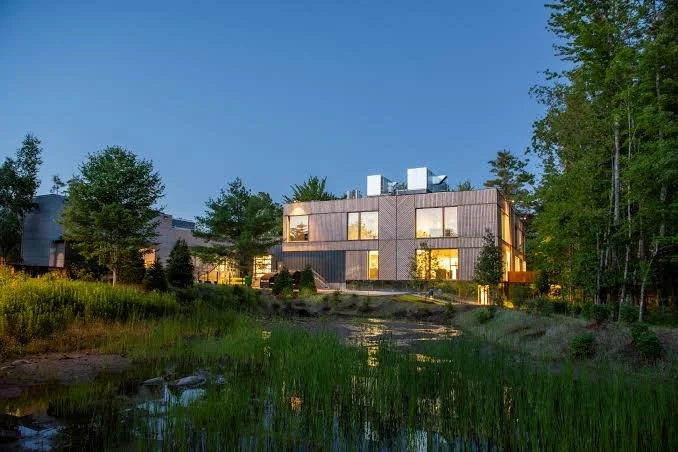
The concept of Biotech Labs in Chalkidiki Forest Outposts imagines small research facilities located near forest ecosystems, where scientists could study plants, microorganisms, fungi, and other biological resources.
The title describes a possible research model rather than a confirmed network of biotechnology laboratories operating throughout Chalkidiki's forests.
What Is Forest Biotechnology?
Forest biotechnology applies biological and technological methods to the study and management of forest ecosystems.
It can involve molecular biology, microbiology, genetics, plant tissue culture, environmental monitoring, and the study of biological compounds.
Researchers may investigate how plants respond to drought, disease, temperature changes, and other environmental pressures.
The goal is to develop scientific knowledge that can support conservation, agriculture, medicine, and sustainable resource management.
Chalkidiki's Natural Environment
Chalkidiki contains a variety of habitats, including pine forests, mixed woodland, coastal vegetation, and agricultural landscapes.
These ecosystems support diverse plant and animal communities.
Their environmental conditions vary according to elevation, soil composition, exposure, and proximity to the sea.
Such variation makes the region potentially valuable for ecological and biological research.
Studying Forest Microorganisms
Forests contain complex microbial communities.
Bacteria and fungi live in soil, around plant roots, on leaves, and within decaying organic matter.
Some microorganisms help plants obtain nutrients, tolerate environmental stress, or resist certain pathogens.
Researchers can study these relationships using soil sampling, laboratory cultures, DNA sequencing, and controlled experiments.
Understanding forest microorganisms could contribute to more sustainable land management.
Plant Tissue Culture
Plant tissue culture allows scientists to grow plant cells, tissues, or small plant sections under controlled laboratory conditions.
The method can be used to propagate selected plants, study plant development, and preserve valuable genetic material.
A research facility near Chalkidiki's forests could potentially investigate native plant species and their responses to environmental stress.
However, laboratory propagation should not be confused with permission to collect or commercialize protected wild plants.
Medicinal Plant Research
Many plants contain compounds that are scientifically interesting.
Researchers may investigate their chemical composition, biological activity, and potential applications.
This does not mean that a plant has proven medicinal benefits simply because it has been traditionally used or contains a biologically active compound.
Scientific validation requires controlled testing, safety evaluation, and, where relevant, clinical research.
Forest biotechnology should therefore avoid exaggerated claims about natural cures.
Monitoring Climate Change
Forests are affected by changing temperatures, drought, wildfire risk, pests, and shifting rainfall patterns.
Biotechnology and environmental monitoring can help scientists understand these changes.
Researchers could examine genetic variation among plant populations and identify characteristics associated with environmental resilience.
Field sensors, satellite imagery, and laboratory analysis could work together to create a more complete picture of forest health.
The Role of Small Research Outposts
A forest research outpost does not need to be a large industrial laboratory.
It could consist of a small field station with sample-processing equipment, environmental sensors, storage facilities, and communication systems.
More advanced molecular analysis could take place at a university or centralized laboratory.
This distributed model would allow researchers to work close to the ecosystems they study while reducing the need for large permanent structures inside sensitive habitats.
Conservation and Ethical Research
Biological research in forests must follow environmental regulations and conservation principles.
Researchers need appropriate permits for collecting samples, studying protected species, or conducting experiments.
Facilities should minimize waste, avoid habitat fragmentation, and use responsible energy and water systems.
Local communities can also contribute valuable ecological knowledge and benefit from research partnerships.
Opportunities for Education and Regional Development
Biotechnology research could create opportunities for collaboration between universities, environmental organizations, agricultural businesses, and local communities.
Students could participate in field studies and laboratory training.
Research could also support forest restoration, sustainable agriculture, ecological tourism, and biodiversity conservation.
However, long-term success would require stable funding, skilled personnel, and clear research priorities.
Conclusion
Biotech Labs in Chalkidiki Forest Outposts present a vision of scientific research closely connected to the natural environment.
The region's forests and varied ecosystems could support investigations into plant biology, soil microorganisms, biodiversity, and climate resilience.
A responsible approach would use small, carefully designed field stations connected to established research laboratories.
By combining modern biotechnology with ecological conservation, such facilities could contribute to scientific understanding while helping protect the natural landscapes that make Chalkidiki distinctive.