Introduction
The Palace of Knossos on Crete is one of the most recognizable archaeological sites associated with the ancient Minoan civilization.
Its complex architecture, long history of excavation, and connection with the myth of the Minotaur have made it a central subject in archaeology, art, and popular imagination.
The concept of Metaverse Knossos Labyrinth Recreations explores how immersive digital environments could allow people to experience reconstructed versions of the palace and its surrounding landscape.
Although virtual reconstructions of ancient sites are not new, the term "metaverse" describes a broader vision of persistent, interactive digital environments where visitors can explore, learn, and communicate.
Knossos and the Minoan Civilization
Knossos is located near modern Heraklion in Crete.
It was a major center of Minoan civilization, which developed during the Bronze Age.
The palace complex underwent several phases of construction and reconstruction.
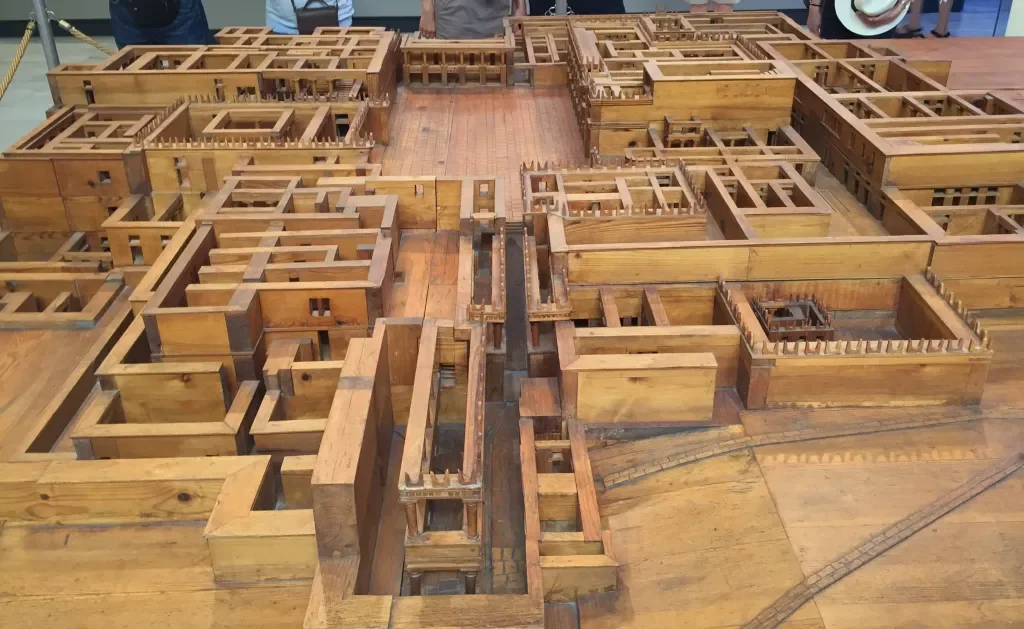
Its architecture included courtyards, corridors, storage areas, workshops, ceremonial spaces, and elaborate decorative features.
Knossos was not simply a royal residence. It was part of a larger settlement and administrative landscape.
The Labyrinth Tradition
In Greek mythology, Knossos is associated with King Minos, the Minotaur, and the labyrinth designed by Daedalus.
The myth describes a maze-like structure in which the Minotaur was confined.
The archaeological palace's complex layout may have helped inspire later interpretations of the labyrinth.
However, the myth should not be treated as a literal architectural description of the excavated building.
What a Metaverse Reconstruction Could Offer
A digital reconstruction could allow users to explore Knossos at different points in its history.
Visitors might move through courtyards, corridors, storage rooms, and ceremonial spaces.
Interactive displays could explain how archaeologists interpret the function of different rooms.
The environment could also provide historical timelines and comparisons between surviving structures and reconstructed architectural features.
Building the Digital Model
A reliable digital reconstruction would require detailed archaeological information.
Photogrammetry and three-dimensional scanning can record surviving architectural elements.
Archaeological plans, excavation records, historical photographs, and architectural analysis can provide additional information.
Digital artists and historians could use these materials to create models of the palace.
The reconstruction would need to distinguish between directly documented structures and hypothetical features.
Reconstructing Different Historical Periods
Knossos changed significantly over time.
A single digital model would risk presenting the palace as though it existed in one unchanging form.
A more sophisticated experience could allow visitors to move between different chronological phases.
Users might compare earlier architectural arrangements with later rebuilding and examine how the settlement evolved.
This approach would make the digital environment an educational tool rather than merely a visual attraction.
Mythology as an Interactive Layer
The Minotaur story could be included as a separate mythological experience.
Visitors might follow a narrative inspired by ancient Greek tradition while also accessing historical explanations.
The experience should clearly distinguish mythology from archaeological evidence.
This would allow the story to remain engaging without presenting the legendary labyrinth as a proven physical structure.
Education and Accessibility
A digital Knossos environment could support schools, universities, museums, and remote learners.
People who cannot travel to Crete could explore the palace virtually.
Accessibility features could include subtitles, audio descriptions, multiple languages, adjustable movement controls, and simplified navigation.
Teachers could use interactive activities to explain Minoan society, architecture, religion, trade, and artistic traditions.
Challenges of Digital Archaeology
A realistic digital reconstruction is not necessarily an accurate historical reconstruction.
Digital environments can create a false sense of certainty when missing information is filled with artistic interpretation.
Developers should therefore include source notes, uncertainty labels, and clear explanations of how individual structures were reconstructed.
Long-term maintenance is another challenge because software platforms, hardware, and digital formats change.
Conclusion
Metaverse Knossos Labyrinth Recreations offer an opportunity to combine archaeology, mythology, immersive technology, and digital education.
A carefully designed experience could allow visitors to explore different phases of the palace and understand how researchers reconstruct ancient architecture.
Its greatest value would come from historical transparency.
By separating archaeological evidence from mythological storytelling and artistic interpretation, a digital Knossos could become an engaging educational environment while preserving the complexity of one of Crete's most important ancient sites.