Introduction
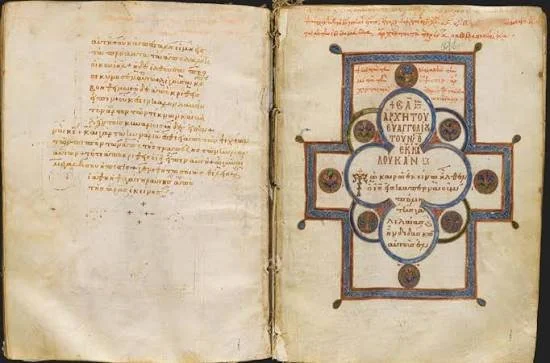
Byzantine manuscripts preserve an extraordinary record of religious, philosophical, scientific, literary, and administrative knowledge. Produced over centuries by scribes, scholars, monks, and imperial institutions, these handwritten documents provide valuable insight into the intellectual life of the Byzantine Empire.
Today, libraries, universities, museums, and religious institutions use digital technology to preserve and share manuscript collections. High-resolution imaging allows researchers to examine fragile pages without repeatedly handling the originals.
The title Blockchain Scans of Byzantine Manuscripts explores a possible combination of manuscript digitization and blockchain technology. Although blockchain cannot replace traditional conservation or scholarly authentication, it could provide a system for recording the history, integrity, and authorized use of digital manuscript copies.
The Importance of Byzantine Manuscripts
The Byzantine Empire preserved and developed many traditions inherited from the ancient Greek and Roman worlds.
Manuscripts contained religious texts, historical chronicles, medical writings, philosophical works, scientific observations, legal documents, and literary compositions.
Some were copied repeatedly over generations.
Others survive as unique witnesses to texts that might otherwise have disappeared.
Their value extends beyond the words written on their pages. Materials, handwriting, decorative elements, corrections, marginal notes, and binding structures can reveal information about the people and institutions that produced them.
Digitizing Fragile Manuscripts
Digitization involves creating detailed digital representations of physical documents.
Libraries commonly use specialized cameras, lighting systems, and imaging equipment to capture manuscript pages.
High-resolution images allow researchers to enlarge small details, compare handwriting, examine faded ink, and study decorative features.
Multispectral imaging can sometimes reveal writing that is difficult to see under ordinary lighting.
Digital preservation also reduces the need to handle fragile originals during routine research.
However, a digital image is not a complete replacement for the physical manuscript. Texture, material composition, binding construction, and certain conservation details may require direct examination.
Understanding Blockchain Technology
A blockchain is a distributed digital ledger that records information in linked blocks.
Depending on its design, the ledger may be maintained by multiple participants rather than controlled by a single institution.
Once information is recorded and confirmed, altering earlier entries can become difficult because the system uses cryptographic methods to connect records.
Blockchain technology is used in different applications, including digital asset systems, transaction records, and certain forms of supply-chain tracking.
For manuscript preservation, its most relevant potential use is recording verifiable information about digital files and their histories.
Creating Digital Provenance Records
A digitized manuscript could receive a digital record containing information such as:
the institution responsible for digitization,
the date of imaging,
the manuscript's catalogue identifier,
the imaging equipment or procedure,
the responsible conservation department,
and the version of the digital file.
A cryptographic hash could also be generated from the image file.
A hash is a fixed-length digital value calculated from data. If the file changes, even slightly, its hash will generally change as well.
The hash could be recorded on a blockchain, allowing researchers to compare a later file against the original registered version.
This would help detect unauthorized alterations to a digital copy.
Blockchain Does Not Prove Historical Authenticity
One of the most important limitations is that blockchain cannot independently establish whether a manuscript is genuinely Byzantine.
If an institution uploads an incorrectly identified document and records its hash, the blockchain only preserves the record of that submitted file.
It does not verify the manuscript's age, origin, authorship, or historical authenticity.
Those questions still require scholarly investigation.
Palaeographers, historians, conservators, material scientists, and other specialists must examine the physical document and its historical context.
Blockchain can support the documentation process, but it cannot replace expert judgment.
Protecting Digital Copies and Usage Rights
Manuscript images may be subject to different ownership, copyright, and access arrangements.
Some institutions make digital collections freely available.
Others restrict commercial use, reproduction, or redistribution.
A blockchain-based system could record licensing information and permissions associated with a particular digital file.
It might also document when an institution grants access or authorizes a particular use.
However, the ledger would not automatically enforce copyright law or prevent someone from copying an image outside the system.
Legal agreements and institutional policies would remain necessary.
Applications for Byzantine Scholarship
A reliable digital provenance system could benefit several areas of research.
Researchers comparing different manuscript versions could verify that they are examining the same registered digital files.
Libraries could maintain records of imaging updates.
Conservation teams could document the creation of new digital copies after restoration work.
International research projects could share standardized records even when manuscripts are held in different countries.
Such systems might be particularly useful for manuscripts that have been digitized by several institutions or appear in multiple scholarly databases.
Challenges of Implementation
Blockchain systems introduce technical and administrative challenges.
Institutions must decide which information should be stored directly on the ledger and which should remain in conventional databases.
Storing large manuscript images directly on a blockchain would generally be inefficient and expensive.
A more practical design would store the images in secure digital repositories while recording hashes and selected metadata on the blockchain.
Long-term access is another concern. Digital formats, storage systems, and blockchain platforms can become obsolete.
Libraries would therefore need migration strategies and preservation policies extending beyond the lifespan of any individual technology.
A Hybrid Preservation Model
The most realistic approach would combine traditional manuscript conservation with digital preservation and cryptographic verification.
Physical manuscripts would remain under the care of qualified conservators.
Digital repositories would maintain high-quality image files and descriptive records.
Blockchain could provide an additional layer of integrity verification and provenance tracking.
This approach recognizes that no single technology can preserve an entire historical document.
Conclusion
The Blockchain Scans of Byzantine Manuscripts concept explores how modern cryptographic systems might strengthen the preservation and documentation of historical texts.
Digitization makes fragile manuscripts more accessible, while blockchain can potentially help verify that digital files have not been altered since a particular record was created.
However, blockchain does not establish historical authenticity, replace conservation, or automatically resolve copyright issues.
Its greatest value would come from supporting trusted institutional records, transparent digital provenance, and cooperation between libraries, universities, museums, and research organizations.
The preservation of Byzantine manuscripts ultimately depends on combining technological innovation with careful historical scholarship.