Introduction
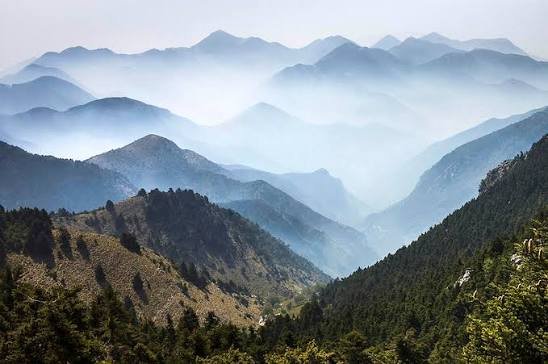
Mount Taygetus is one of the most prominent mountain ranges in the Peloponnese region of southern Greece. Its steep slopes, high ridges, and changing elevations create a variety of ecological environments. The mountain is known for its distinctive landscapes, including rocky summits, forests, and vegetation adapted to Mediterranean climatic conditions.
At higher elevations, clouds and mist can influence the availability of moisture. In some mountainous environments, persistent cloud contact creates what scientists describe as cloud forests or fog-influenced forests. These ecosystems depend on more than rainfall alone because trees and other vegetation can capture moisture directly from passing clouds.
The idea of fog forests on Mount Taygetus provides an opportunity to explore the relationship between mountain weather, forest ecology, and biodiversity. However, the presence of a formally recognized cloud-forest ecosystem on its summits would require specific ecological and meteorological documentation.
The Geography of Mount Taygetus
Mount Taygetus extends through the southern Peloponnese, forming a dramatic landscape between the regions surrounding Sparta and the western side of the peninsula.
Its highest peak, Profitis Ilias, rises to approximately 2,407 meters above sea level. The range contains steep slopes, deep valleys, exposed rocky areas, and forested sections that support different plant and animal communities.
Elevation strongly influences local environmental conditions. Temperatures generally decrease with height, while exposure to wind and moisture varies according to slope orientation and surrounding terrain.
These variations create ecological zones. Lower elevations may support Mediterranean shrubland and woodland, while higher areas contain different forest types, mountain vegetation, and exposed summit habitats.
Understanding Fog Forests
A fog forest is an ecosystem in which vegetation regularly receives moisture from clouds and mist. Unlike ordinary forests that depend mainly on rainfall, fog-influenced forests can capture water droplets directly from the atmosphere.
Trees with dense branches and leaves intercept tiny droplets carried by wind. The collected moisture may drip onto the ground or be absorbed by mosses, lichens, and other organisms.
This process is sometimes called cloud-water interception or fog harvesting. It can supplement rainfall and help maintain moisture during periods when precipitation is limited.
Fog forests are found in several parts of the world, including tropical mountains, coastal ranges, and some temperate regions. Their ecological characteristics depend on local climate, vegetation, and the frequency of cloud immersion.
How Mountain Fog Develops
Mountain fog often forms when moist air moves toward elevated terrain. As the air rises, it expands and cools. If it reaches the appropriate temperature and humidity conditions, water vapor condenses into small droplets that form clouds or mist.
Mountains can therefore create localized cloud zones. The position and frequency of these zones depend on wind direction, atmospheric moisture, temperature, and topography.
On Mount Taygetus, the combination of elevation and Mediterranean weather systems may produce periods of mist and cloud cover. However, occasional summit fog is not sufficient to establish the presence of a fog forest.
For a forest to be classified as fog-dependent, researchers would need evidence that cloud-water interception contributes meaningfully to its moisture supply over an extended period.
Vegetation and Forest Ecology
Mount Taygetus supports vegetation adapted to strong seasonal contrasts. Summers in the wider region are typically dry, while wetter conditions occur during cooler months.
Forests on mountain slopes may contain species adapted to temperature changes, seasonal rainfall, and varying soil conditions. The composition of vegetation changes with elevation and exposure.
Trees can influence local moisture conditions by providing shade, reducing wind near the ground, and creating habitats for mosses, lichens, insects, and fungi.
In areas frequently exposed to mist, epiphytes and moisture-dependent organisms may benefit from additional atmospheric water. Their presence can provide clues about local humidity, although they do not independently prove that a site is a cloud forest.
The Role of Fog in Mountain Biodiversity
Fog can influence biodiversity by creating moist microhabitats. Mosses and lichens may grow on tree trunks and rocks, while fungi and small invertebrates benefit from humid conditions.
These organisms contribute to nutrient cycling and the decomposition of organic matter. They can also provide food and shelter for other species.
Mountain forests may serve as refuges for organisms that cannot tolerate the hotter and drier conditions found at lower elevations. Changes in temperature and moisture can therefore influence where species survive.
Studying fog-influenced habitats may help researchers understand how mountain ecosystems respond to climate change and seasonal drought.
Measuring Fog and Atmospheric Moisture
To determine whether fog plays a significant ecological role on Mount Taygetus, researchers would need long-term environmental monitoring.
Fog collectors can be installed in exposed locations to capture water droplets carried by wind. Their measurements can provide estimates of atmospheric moisture collected over time.
Meteorological stations can record temperature, humidity, rainfall, wind speed, and cloud conditions. These observations help distinguish ordinary precipitation from moisture supplied by fog.
Researchers may also measure soil moisture and compare vegetation growth between exposed and sheltered locations. This can reveal whether cloud-water interception contributes to the water balance of particular forest communities.
Climate Change and the Future of Mountain Forests
Mountain ecosystems are sensitive to changes in temperature and precipitation. As climatic conditions shift, the elevation and frequency of cloud formation may also change.
If fog becomes less frequent, forests that depend on atmospheric moisture could experience additional water stress. Conversely, changes in rainfall patterns may create new environmental pressures even where fog remains common.
Rising temperatures can also alter the distribution of plant species. Some organisms may move toward higher elevations, while species already living near mountain summits may have limited space to adapt.
Monitoring mountain moisture conditions is therefore important for understanding the future of Mount Taygetus and other Mediterranean mountain ecosystems.
Conservation and Research Opportunities
Protecting mountain forests requires attention to both vegetation and the environmental conditions that sustain them. Forest fires, grazing pressure, soil erosion, and land-use changes can affect the health of mountain habitats.
Researchers can combine ecological surveys with remote sensing and climate monitoring to identify vulnerable areas. Satellite observations may help track vegetation changes, while field studies provide detailed information about species composition and soil conditions.
Local conservation programs can also support sustainable tourism, forest management, and public awareness of mountain biodiversity.
Conclusion
Mount Taygetus provides a valuable setting for investigating the relationship between mountain topography, atmospheric moisture, and forest ecology. Its elevation and varied landscapes create conditions in which fog and cloud cover may influence local habitats.
However, the presence of fog on a mountain summit does not automatically establish a fog forest. Demonstrating such an ecosystem requires long-term measurements of cloud-water interception, vegetation responses, and local moisture conditions.
Further research could clarify whether particular areas of Mount Taygetus support forests significantly influenced by fog. Such work would contribute to understanding Mediterranean mountain biodiversity and the effects of changing climate conditions on high-elevation ecosystems.