Introduction
The Miocene Epoch, which lasted from approximately 23 million to 5.3 million years ago, was a period of significant environmental and geological change. During this time, the Mediterranean region experienced changing coastlines, marine ecosystems, and sedimentary conditions that preserved evidence of ancient life. The island of Zakynthos, located in the Ionian Sea, forms part of a geologically complex region shaped by tectonic movement and marine sedimentation.
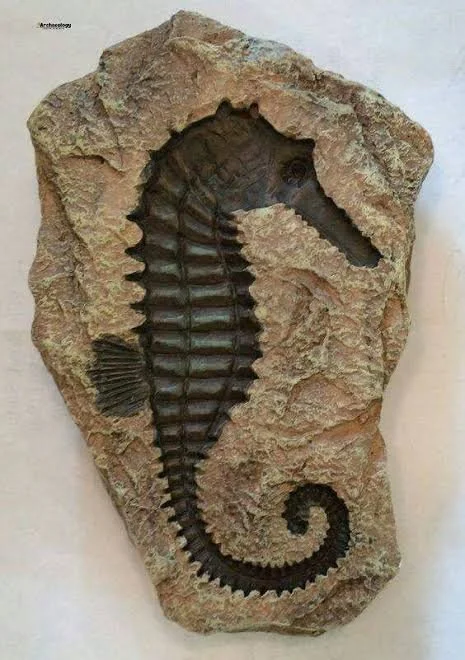
The possibility of seahorse fossils in Miocene layers raises interesting questions about the ancient marine environments of the eastern Mediterranean. Seahorses belong to the genus Hippocampus, a group of fish known for their distinctive body shape, upright swimming posture, and unusual reproductive behavior. However, a specific claim of Miocene seahorse fossils from Zakynthos requires verified fossil specimens and geological documentation. The broader subject offers an opportunity to examine how delicate marine organisms may be preserved in ancient sediments.
The Miocene Mediterranean Environment
During the Miocene, the Mediterranean Sea supported a diverse range of marine organisms. Its environments included shallow coastal waters, seagrass habitats, reefs, deeper marine basins, and areas influenced by river systems.
Sea levels fluctuated throughout the epoch, while tectonic movements gradually reshaped the region. These changes influenced the distribution of marine habitats and the movement of species between different parts of the Mediterranean.
The Mediterranean was not environmentally uniform. Local conditions varied according to water depth, temperature, salinity, sediment supply, and circulation. These differences affected which organisms could survive in particular areas.
Such environmental variation is important when investigating possible seahorse fossils. Modern seahorses are commonly associated with shallow coastal habitats containing seagrasses, algae, mangroves, or other structures that provide shelter and attachment points.
Seahorses and Their Fossil Record
Seahorses are members of the family Syngnathidae, which also includes pipefishes and seadragons. Their distinctive anatomy includes an elongated snout, a curved neck, a prehensile tail, and a body protected by bony plates rather than ordinary overlapping fish scales.
Their fossil record is relatively limited compared with that of many other fish groups. Small, delicate skeletons can be difficult to preserve because they may be destroyed by scavenging, decomposition, wave action, or sediment disturbance.
Some ancient syngnathid fossils provide evidence of the evolutionary history of seahorses and their relatives. However, identifying a fossil specifically as a seahorse requires careful examination of anatomical features. A fragmentary fish skeleton cannot reliably be classified as Hippocampus merely because it has an unusual shape.
Geological Layers of Zakynthos
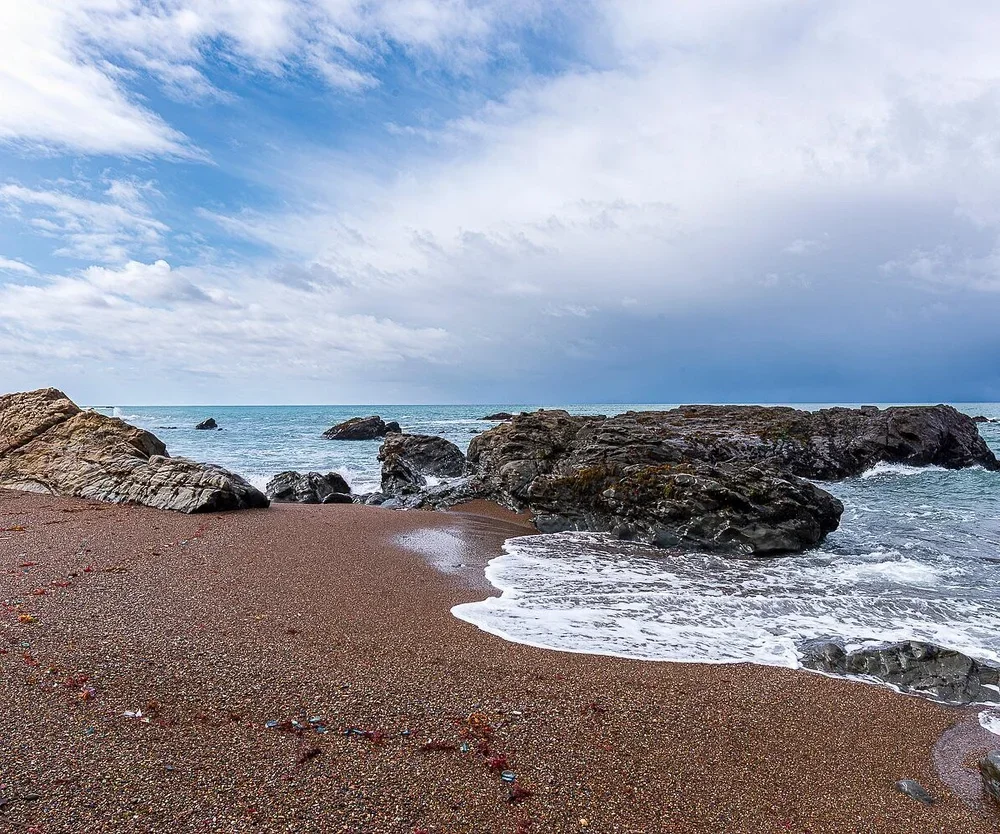
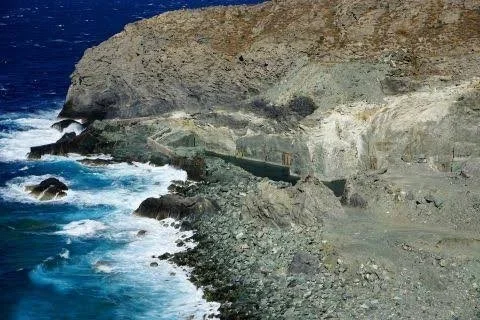
Zakynthos is part of the Hellenic geological region, which has been shaped by complex interactions between the African and Eurasian tectonic plates. Its geology includes sedimentary formations and structures associated with marine deposition, folding, faulting, and uplift.
Miocene sediments in the wider Ionian region may preserve fossils of marine organisms that inhabited ancient coastal and offshore environments. Depending on the location, deposits can include limestone, marl, sandstone, and other sedimentary materials.
These layers are valuable because they provide information about former marine conditions. Fossils within them can help reconstruct ancient food webs, water depths, and environmental changes.
To establish whether a particular Zakynthos formation contains Miocene seahorse fossils, researchers would need to document the exact geological layer, fossil specimen, collection location, and anatomical identification.
How Delicate Fish Fossils Are Preserved
Fish fossils may form when an organism becomes buried rapidly in sediment. Burial can protect the remains from scavengers, oxygen exposure, and physical disturbance.
Fine-grained sediment is particularly important because it can preserve small anatomical details. In some environments, low oxygen levels slow decomposition and improve the chances that a skeleton will survive.
Minerals may gradually replace or fill the original biological material. This process can preserve bones, scales, and other structures over geological time.
However, seahorses have small and fragile skeletons. Their preservation requires favorable conditions, and even when fossilization occurs, the resulting specimens may be incomplete.
Identifying a Possible Seahorse Fossil
Fossil identification begins with detailed anatomical examination. Researchers may compare the specimen with modern seahorses and other syngnathid fish.
Important features include the arrangement of bony plates, the shape of the skull, the structure of the tail, and distinctive elements of the body skeleton. Microscopic imaging and high-resolution scanning may reveal features that are difficult to observe with the naked eye.
The specimen must also be studied in its geological context. Its surrounding sediment, associated fossils, and stratigraphic position can help determine its age and original environment.
A reliable identification should be supported by a formal scientific description, comparative anatomical evidence, and a documented fossil collection.
Reconstructing Ancient Coastal Habitats
If seahorse fossils were confirmed in Miocene deposits from Zakynthos, they could provide valuable information about the ancient coastal ecosystems of the region.
Seahorses are associated with structured habitats where they can anchor themselves and avoid strong currents. Their presence might therefore suggest the existence of vegetation, algae, or other suitable underwater structures.
Other fossils could help reconstruct these habitats. Mollusks, corals, marine plants, and microscopic organisms may provide evidence about water depth, salinity, and environmental conditions.
Nevertheless, a fossil's presence does not necessarily indicate the exact habitat in which the animal lived. Remains can be transported after death, and sedimentary processes may move fossils away from their original environment.
The Importance of Further Geological Investigation
Investigating possible Miocene seahorse fossils in Zakynthos would require cooperation between paleontologists, geologists, and marine biologists.
Field surveys could identify fossil-bearing formations, while laboratory analysis could determine the composition and anatomy of collected specimens. Stratigraphic studies would establish the geological age of the deposits.
Researchers could also compare any confirmed specimens with other fossil syngnathids from the Mediterranean and neighboring regions. Such comparisons might help clarify the evolutionary history and geographical distribution of the group.
Conclusion
The possibility of Miocene seahorse fossils in Zakynthos is an intriguing subject because it connects the island's geological history with the evolution of marine life. The region's sedimentary formations provide opportunities to investigate ancient Mediterranean environments, although a specific seahorse discovery must be supported by documented fossil evidence.
Seahorse fossils are particularly valuable because their delicate skeletons are not easily preserved. If specimens were identified in Zakynthos, they could contribute to understanding ancient coastal habitats and the evolutionary history of syngnathid fish.
Until verified specimens and geological descriptions are available, the proposed discovery should be treated as an investigative possibility rather than an established fossil record.