Introduction
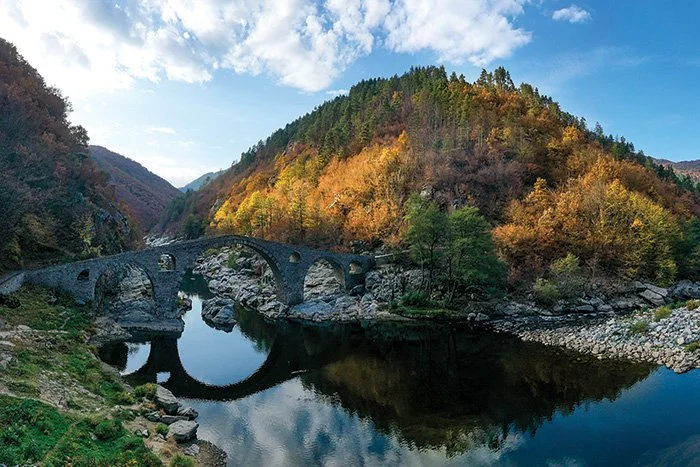
The Rhodope Mountains extend across southeastern Europe, covering parts of northern Greece and southern Bulgaria. Their complex geological history includes ancient metamorphic rocks, igneous intrusions, fault systems, and mineral deposits formed through different geological processes.
Among the minerals that attract attention in mountain regions are varieties of banded chalcedony commonly marketed as onyx. These materials can display alternating layers of different colors and may be valued for ornamental carving, jewelry, and decorative objects.
The possibility of onyx veins along the Rhodope Mountain slopes provides an opportunity to explore mineral formation, geological exploration, and the distinction between true geological onyx and other banded stones. Specific deposits in the Rhodopes, however, require mineralogical confirmation rather than assumption based on the region's general geological complexity.
The Geological Character of the Rhodope Mountains
The Rhodope Mountains form part of a major geological region known for its complicated tectonic history. Their rocks include metamorphic formations that were subjected to high temperatures and pressures deep within the Earth's crust.
The region also contains igneous rocks and mineralized zones associated with ancient geological processes. These formations developed over long periods as tectonic plates moved, crustal materials were buried and transformed, and molten rock intruded into existing structures.
Faults and fractures created pathways through which mineral-rich fluids could move. Under suitable conditions, these fluids deposited minerals within cracks and cavities.
The resulting mineral deposits vary widely in composition and economic significance.
Understanding Geological Onyx
The term onyx is used for banded varieties of chalcedony, a microcrystalline form of quartz. Geological onyx commonly displays parallel bands of contrasting colors, often involving white, black, brown, or reddish layers.
It is important to distinguish geological onyx from marble onyx, a commercial name sometimes used for banded calcite or aragonite. These materials may resemble one another visually but have different mineral compositions and formation processes.
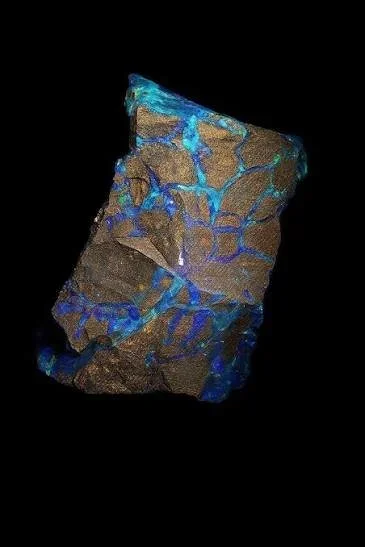
Chalcedony forms when silica-rich fluids deposit microscopic quartz crystals within cavities, fractures, or other open spaces in rock.
Repeated changes in fluid chemistry can produce bands of different colors and textures. Iron and other impurities may contribute to reddish, brown, or yellow coloration.
How Mineral Veins Form
Mineral veins develop when fluids move through fractures in existing rock and deposit minerals as temperature, pressure, or chemical conditions change.
The process can occur in several geological settings. Hydrothermal fluids may circulate through fractures, while groundwater can transport dissolved silica and other minerals at lower temperatures.
When these fluids enter an open cavity, minerals may gradually accumulate along the walls. Repeated episodes of mineral deposition can create layered structures.
The appearance of a vein depends on the composition of the fluid, the surrounding rock, and the conditions under which minerals crystallize.
If banded chalcedony occurs in the Rhodope region, its formation would need to be investigated through petrographic and geochemical analysis.
Mineral Occurrences Along Mountain Slopes
Mountain slopes can expose mineral veins that would otherwise remain hidden beneath soil and vegetation. Erosion, landslides, and stream activity may reveal fractured bedrock and mineralized zones.
Geologists investigate these exposures by mapping rock types, measuring fracture orientations, and collecting representative samples.
A mineral occurrence does not necessarily indicate an economically valuable deposit. A small vein may contain attractive material but lack the size, continuity, or quality required for commercial extraction.
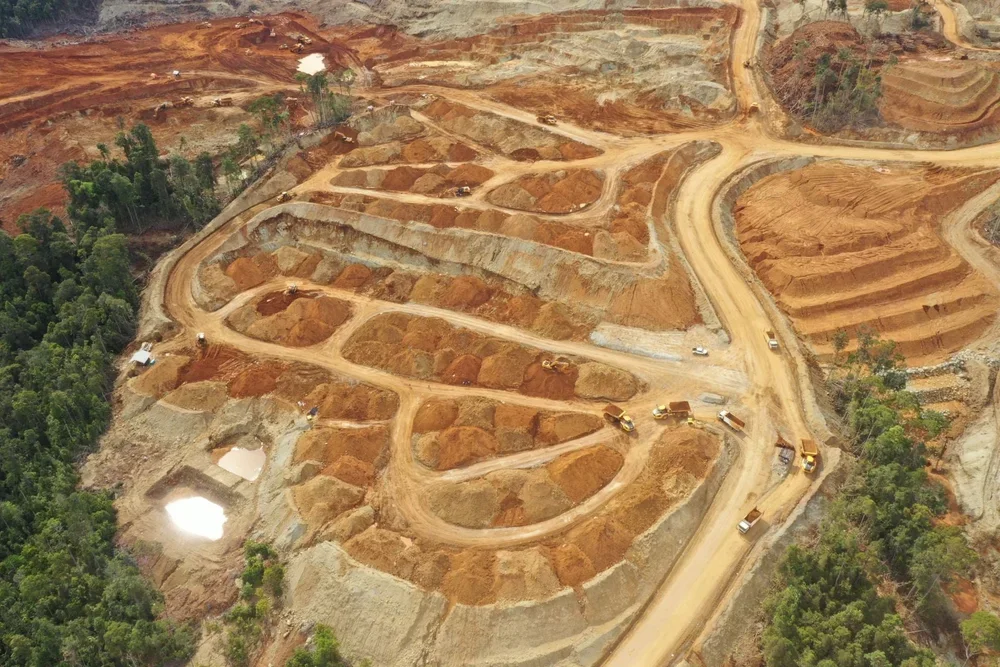
Determining whether a deposit is suitable for mining requires geological surveys, sampling, laboratory analysis, and environmental assessment.
Identifying Onyx in the Field
Visual inspection can provide an initial indication that a rock contains banded chalcedony, but appearance alone is not sufficient for reliable identification.
Geologists examine hardness, fracture patterns, luster, translucency, and banding. Chalcedony is relatively hard and typically displays a waxy appearance when polished.
Laboratory methods can establish mineral composition. X-ray diffraction may identify crystalline mineral phases, while microscopy can reveal the structure of the material.
Chemical analysis can also help determine the elements responsible for coloration and identify impurities that influence the appearance of the stone.
These methods are particularly important when distinguishing chalcedony onyx from banded calcite, marble, or other decorative stones.
Historical Uses of Banded Stones
Banded stones have been valued for decorative and artistic purposes in many ancient societies. Their contrasting colors make them suitable for small carvings, beads, seals, ornaments, and inlaid objects.
The value of an ornamental stone depends not only on its appearance but also on its hardness, workability, availability, and cultural associations.
Archaeological finds can sometimes reveal whether particular stones were obtained locally or transported through trade networks.
If confirmed onyx deposits existed in the Rhodope region and were exploited in antiquity, evidence might include extraction marks, unfinished objects, workshop debris, or geological sources matching archaeological artifacts.
However, the presence of an attractive mineral deposit does not establish that ancient communities mined it.
Modern Geological Exploration
Modern exploration combines field mapping with laboratory testing and remote sensing. Geological maps help researchers identify formations likely to contain silica-rich mineral veins.
Geophysical techniques may reveal structures beneath the surface, while geochemical sampling can identify areas with unusual mineral concentrations.
Once a potential deposit is identified, detailed sampling helps establish its size, quality, and continuity.
In the Rhodope Mountains, any exploration must also consider environmental protection. Mountain ecosystems, watersheds, and local communities can be affected by excavation, quarrying, and mineral processing.
Conservation and Sustainable Mineral Management
Mineral deposits are part of a region's geological heritage. Even when a stone has commercial value, extraction can permanently alter natural exposures and landscapes.
Responsible management requires assessing environmental effects before mining begins. This includes evaluating soil disturbance, water contamination, waste disposal, and impacts on biodiversity.
Geological sites may also have educational and scientific value. Some exposures provide important evidence of regional tectonic history and should be protected from unnecessary damage.
Conclusion
The Rhodope Mountains possess a complex geological history that makes them an important region for mineralogical research. Their fractured and metamorphic formations provide opportunities to investigate how mineral-rich fluids moved through ancient rocks and formed veins.
Banded chalcedony known as onyx is an interesting possibility for geological investigation, but a specific onyx deposit on the Rhodope slopes must be confirmed through mineralogical analysis and documented fieldwork. The distinction between chalcedony onyx and banded calcite is particularly important.
By combining geological mapping, laboratory testing, and responsible resource management, researchers can better understand the mineral diversity of the Rhodope Mountains while protecting their scientific and environmental value.