Introduction
The discovery of mammoth remains can provide valuable information about the prehistoric environments of southeastern Europe. Mammoths were large members of the elephant family that lived across parts of Europe, Asia, and North America during the Pleistocene Epoch. Their fossil remains include teeth, bones, and tusks, which can preserve evidence about ancient climate, vegetation, and animal behavior.
The Philippi region, located in eastern Macedonia in northern Greece, is known for its archaeological importance and its position within a landscape shaped by geological and environmental change. The surrounding plains and basins provide an interesting setting for investigating Pleistocene environments. However, a specific discovery of mammoth tusks near the Philippi Plains requires verified fossil records and documented excavation evidence.
This subject explores the possibility of proboscidean remains in the region while examining how paleontologists identify, date, and interpret ancient tusks.
Mammoths During the Pleistocene
The Pleistocene Epoch began approximately 2.58 million years ago and ended about 11,700 years ago. It was characterized by repeated cycles of glacial and interglacial conditions.
During colder periods, large areas of northern and central Europe experienced extensive ice cover or cold steppe environments. Mammoths adapted to a range of habitats, including grasslands and open landscapes.
Several mammoth species lived during the Pleistocene. The woolly mammoth, Mammuthus primigenius, is among the best-known, although other species occupied different regions and periods.
Their large bodies, thick coats, and specialized teeth helped them survive in environments where vegetation and climate changed dramatically.
Mammoth Tusks and Their Structure
Mammoth tusks were elongated upper incisor teeth that continued growing throughout an animal's life. Unlike ordinary teeth, they were not replaced after reaching maturity.
Tusks consisted primarily of dentin, a mineralized tissue that formed in layers. Their growth could preserve information about the animal's development and environmental conditions.
The curved shape of mammoth tusks varied according to species, age, and individual characteristics. Some were relatively short and gently curved, while others developed dramatic spirals or long arcs.
Because tusks are composed of dense material, they can sometimes survive in sedimentary deposits where other remains have deteriorated. Their preservation depends on soil chemistry, moisture, temperature, and burial conditions.
The Geological Environment Around Philippi
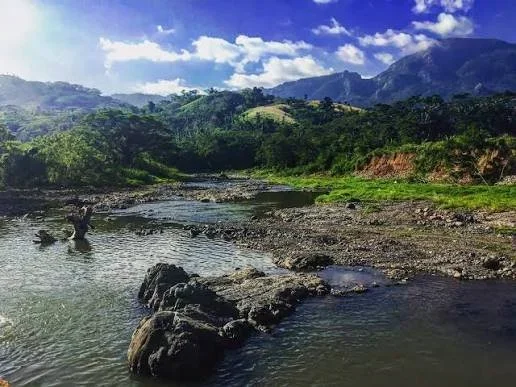
Philippi lies in eastern Macedonia, within a region containing plains, hills, river systems, and sedimentary basins. The wider area has experienced tectonic activity and environmental changes that influenced the development of its landscape.
During the Pleistocene, northern Greece experienced significant climatic fluctuations. Changes in temperature and precipitation affected vegetation, water availability, and the distribution of large mammals.
Open grasslands, wooded areas, wetlands, and river environments may have existed in different parts of the region at different times.
If mammoth remains were discovered in deposits near Philippi, the surrounding sediments could help reconstruct the environment in which the animals lived or died.
How Mammoth Tusks Become Fossils
Fossilization begins after an animal dies. Its remains may be buried by river sediments, lake deposits, mud, sand, or other materials.
Rapid burial can protect remains from scavengers and physical disturbance. Over time, groundwater carries minerals through the surrounding sediment and may contribute to the preservation of bones and tusks.
However, tusks can deteriorate when exposed to fluctuating moisture, oxygen, or acidic conditions. Some become fragile and may crack or lose their original structure.
The preservation of a tusk therefore depends on the specific environment in which it was buried. Fossils recovered from waterlogged or mineral-rich deposits may require careful conservation to prevent damage after excavation.
Identifying Mammoth Remains
Paleontologists distinguish mammoth tusks from other fossil remains by examining their shape, internal structure, growth patterns, and anatomical characteristics.
The curvature and cross-sectional form may help distinguish different proboscidean groups. Microscopic examination can reveal the structure of dentin and growth layers.
Comparisons with known mammoth specimens are essential. Researchers may also use computed tomography to examine internal features without damaging the fossil.
The exact species and age of a specimen cannot always be determined from a fragment. A complete scientific identification requires anatomical evidence and a reliable geological context.
Dating Fossils Near the Philippi Plains
Dating a mammoth tusk can help establish when the animal lived. Radiocarbon dating may be possible for specimens within the method's effective age range, provided that enough suitable organic material remains.
Other dating techniques may be applied to the surrounding sediments. These can include luminescence dating or other methods appropriate to the geological context.
Researchers must also consider whether the fossil has been transported from its original location. River systems can move bones and tusks downstream, meaning that the place where a specimen is found may not be where the animal originally died.
Stratigraphic analysis is therefore essential for interpreting the fossil's history.
What Tusks Can Reveal About Ancient Environments
Mammoth tusks can preserve information about growth and environmental conditions. Their growth layers may reflect changes in food availability, stress, and seasonal conditions.
Chemical analysis of tusk material can sometimes provide clues about diet and movement. Stable isotope measurements may help reconstruct aspects of an animal's habitat and water sources.
Researchers can compare these findings with pollen, plant remains, sediment samples, and fossils of other animals.
Together, these sources can help reconstruct the landscapes that existed in northern Greece during the Pleistocene.
Conservation and Scientific Importance
Large mammal fossils are vulnerable to damage during excavation and storage. Tusks may be heavy, fractured, or chemically unstable, requiring specialized conservation techniques.
Excavators must document the position and orientation of a specimen before removal. Its relationship to surrounding sediment and other fossils can be as important as the tusk itself.
Museums and research institutions can preserve specimens for future study. Detailed documentation also allows researchers to compare fossils from different regions and investigate changes in mammoth distribution.
Conclusion
Mammoth tusks offer a valuable record of the prehistoric environments that existed across southeastern Europe. Their structure, growth layers, and chemical composition can help researchers investigate ancient animal biology, climate, and landscape change.
The Philippi Plains and surrounding region provide an interesting setting for examining Pleistocene environments in northern Greece. However, a specific mammoth-tusk discovery near Philippi should only be described as confirmed when supported by a documented fossil specimen and reliable geological information.
Further paleontological investigation could clarify the distribution of large Pleistocene mammals in the region and contribute to a broader understanding of Greece's prehistoric natural history.