Introduction
Orchomenos, located in Boeotia, was an important center during the Bronze Age and one of the major archaeological sites associated with Mycenaean civilization.
Its monumental architecture, including the famous tholos tomb known as the Treasury of Minyas, demonstrates the wealth and influence of the ancient settlement.
The title Mycenaean Linear B from Orchomenos Outskirts raises the possibility of discovering additional clay tablets or inscriptions written in Linear B beyond the best-known areas of the ancient settlement.
Linear B is one of the most important writing systems in early Greek history because it records an early form of the Greek language.
However, specific undiscovered Linear B tablets from the outskirts of Orchomenos should not be presented as confirmed finds without archaeological documentation.
Orchomenos During the Mycenaean Period
Orchomenos was a major center in prehistoric Boeotia.
Its importance is associated with regional political power, monumental construction, and connections with other Mycenaean settlements.
The settlement formed part of a wider network of communities that participated in trade, administration, religious activity, and craft production.
Its archaeological remains provide evidence of a sophisticated Bronze Age society.
What Is Linear B?
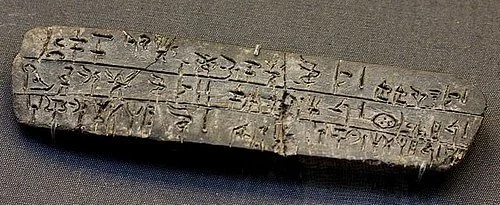
Linear B was a writing system used by Mycenaean administrative centers during the Late Bronze Age.
It was deciphered in 1952 by Michael Ventris, with important contributions from John Chadwick and earlier scholars.
The script records an early form of Greek.
Most surviving texts are administrative documents written on clay tablets.
They include information about agricultural production, livestock, personnel, land, offerings, and the distribution of goods.
How Linear B Tablets Were Used
Linear B tablets were not generally intended as permanent books.
They functioned primarily as administrative records.
Scribes used clay tablets to record information required for managing large institutions and their resources.
Many tablets were accidentally preserved when fires destroyed buildings and hardened the clay.
This unusual preservation process explains why so many surviving examples come from burned palace archives.
Why Additional Tablets Would Matter
A new collection of Linear B tablets from Orchomenos could provide important evidence about the organization of the settlement.
Records might reveal information about agricultural production, landholding, workers, religious offerings, or relationships with neighboring communities.
They could also help researchers compare administrative practices between Orchomenos and other Mycenaean centers.
However, the discovery would need to be securely dated and authenticated.
The Challenges of Finding Linear B
Linear B tablets are fragile and relatively uncommon.
They survive under particular archaeological conditions, often in contexts where fired clay was preserved.
Researchers must carefully examine deposits associated with administrative buildings and other structures.
Fragments may be difficult to recognize because they can resemble ordinary pieces of baked clay.
A tablet fragment becomes especially valuable when it preserves identifiable signs or can be connected to a known scribal tradition.
Reading the Script
Linear B uses a combination of syllabic signs and ideograms.
Syllabic signs represent combinations of consonants and vowels.
Ideograms represent categories of goods, animals, people, or commodities.
Because the script was designed for an administrative language, it does not represent Greek pronunciation in the same way as the later Greek alphabet.
Specialist knowledge is required to interpret surviving texts.
What the Records Can Reveal
Linear B documents can help reconstruct aspects of Mycenaean society.
They provide evidence for centralized administration, economic organization, and the movement of resources.
Some tablets record religious offerings and names of deities.
Others provide information about workers, livestock, and agricultural products.
Together, these records offer a rare written perspective on the Bronze Age.
Scientific and Digital Documentation
Modern archaeological research can combine photography, imaging techniques, microscopic analysis, and digital epigraphy.
High-resolution images may reveal faint impressions that are difficult to see with the naked eye.
Three-dimensional recording can preserve the tablet's shape and surface.
Digital databases allow researchers to compare signs, scribal styles, and vocabulary across different archaeological sites.
Conclusion
Mycenaean Linear B from Orchomenos Outskirts represents a significant archaeological possibility because additional written records could transform understanding of Bronze Age administration in Boeotia.
Orchomenos was an important Mycenaean center, and Linear B is firmly established as an early written form of Greek.
However, any specific claim about new tablets from its outskirts requires verifiable archaeological evidence.
If such material were discovered, it could provide valuable information about the political, economic, and religious organization of one of the most important prehistoric communities in central Greece.